


Astronomers Capture Two Galaxies On A Collision Course In A Stunning Deep-Space Image
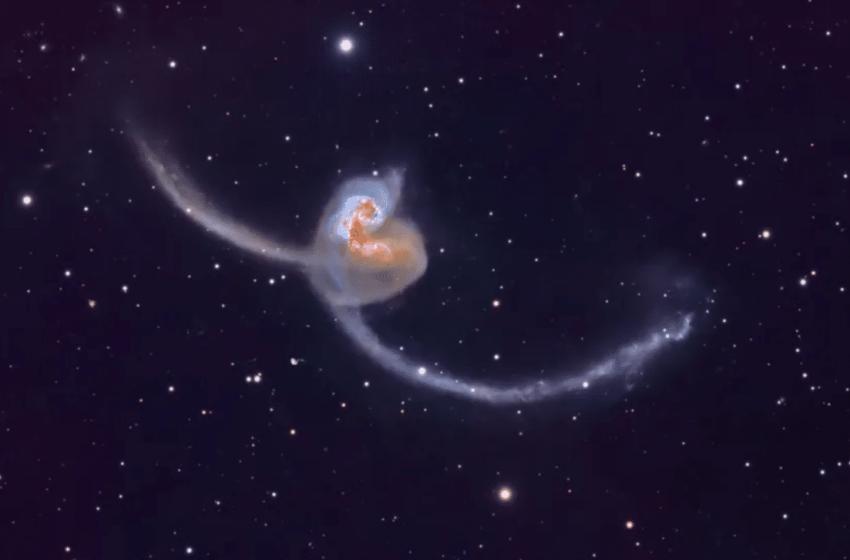
A striking new astrophotograph of the Antennae Galaxies reveals a dramatic cosmic collision unfolding in deep space, offering a rare and detailed look at how galaxies evolve through violent interactions. Located about 45 million light-years away, this iconic pair, NGC 4038 and NGC 4039, is caught in the midst of a gravitational encounter that is reshaping both structures in real time. The image captures sweeping tidal tails, dense star-forming regions, and chaotic streams of gas and dust, all signatures of a process that has fascinated astronomers for decades and continues to provide critical insights into the life cycle of galaxies.
A Rare Glimpse Into A Cosmic Clash
The newly captured image showcases the Antennae Galaxies, also known as NGC 4038 and NGC 4039, locked in a slow-motion gravitational encounter roughly 45 million light-years from Earth in the constellation Corvus. These galaxies are among the closest and youngest examples of colliding systems, making them a prime target for both professional astronomers and dedicated astrophotographers.
This image stands out not only for its visual clarity but also for the depth of structure it reveals. Long tidal tails stretch outward like cosmic antennae, formed by immense gravitational forces pulling stars, gas, and dust into intergalactic space. These features are signatures of galactic mergers, a process that reshapes galaxies over hundreds of millions of years and often triggers intense bursts of star formation.
Captured by astrophotographer Damian Meyer, the image reflects both technical precision and careful planning. The Antennae Galaxies are notoriously difficult to photograph due to their distance and relatively small apparent size in the night sky. Yet, this image manages to bring out fine details in the chaotic overlap region where the two galaxies are actively interacting.
Image credit: Greg Meyer
The Equipment And Determination Behind The Shot
Achieving this level of detail required not only patience but also strategic equipment choices. Meyer explained how he evaluated whether capturing the galaxies was feasible with his setup before committing to the project.
“I have a Sky-Watcher Esprit 120 [telescope] with a focal length of 840mm, which is a little short for most galaxies, this being galaxy season now,” Meyer told Space.com in an email. “So whenever I see a picture of a galaxy, I see if it is within reach for me by checking Astrobin for photos taken with the same scope. And since this is such a cool image of 2 galaxies, with an amazing backstory, I had to go for it.”
His approach reflects a broader trend in modern astrophotography, where enthusiasts leverage online databases and community knowledge to push the limits of mid-range equipment. By carefully stacking exposures and optimizing imaging conditions, Meyer was able to extract faint structures that are typically reserved for larger observatories.
Why The Antennae Galaxies Fascinate Scientists
The Antennae Galaxies are more than just visually striking, they offer a window into the future of galaxies like our own Milky Way, which is expected to collide with the Andromeda Galaxy in several billion years. Observing systems like this helps scientists understand how such mergers unfold and how they influence star formation and galactic structure.
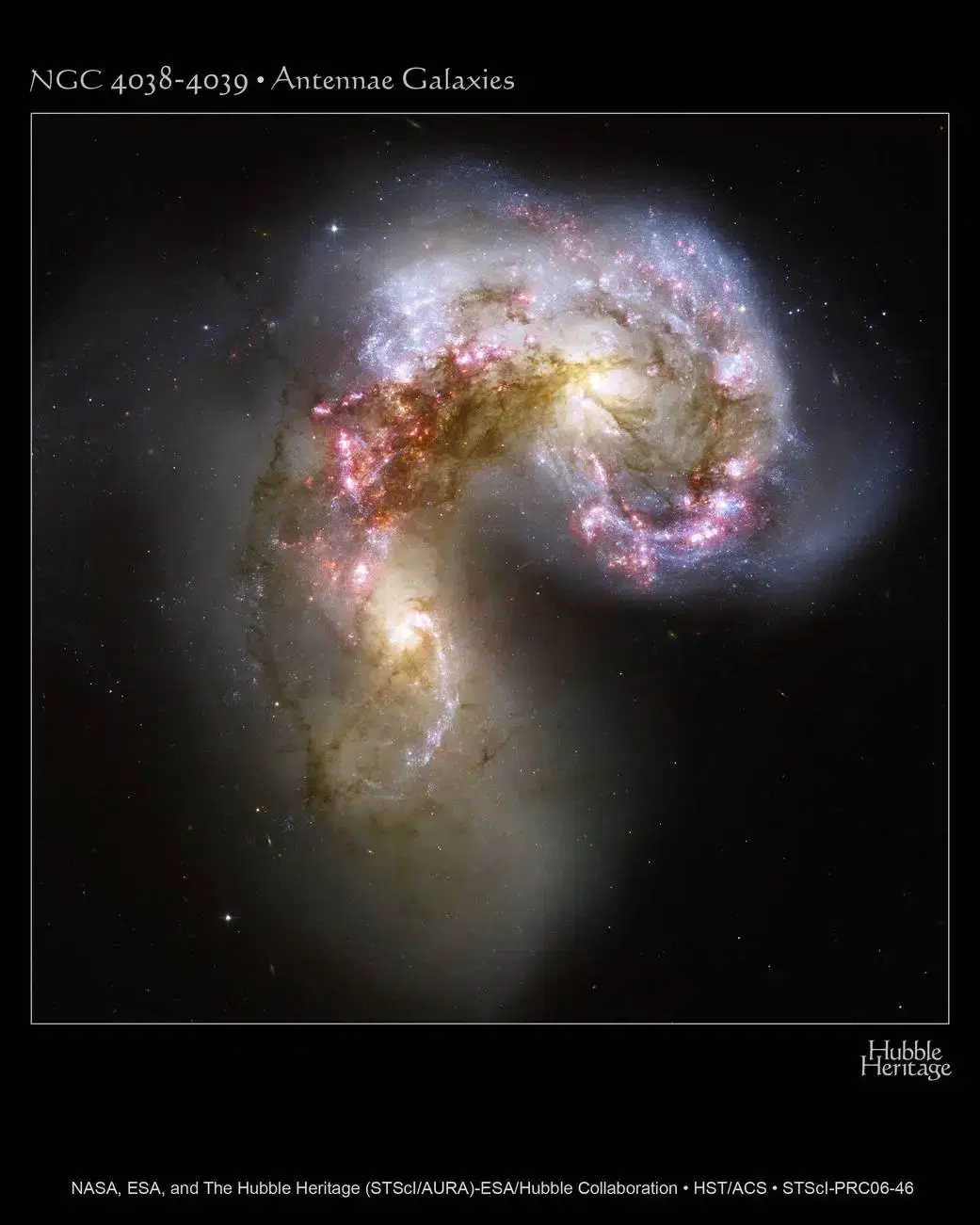
Within the overlapping region of the Antennae Galaxies lies a turbulent environment rich in gas clouds collapsing under gravity, giving birth to new stars at an accelerated rate. These starburst regions emit strongly across multiple wavelengths, making them key targets for both optical and infrared observations.
The elongated tidal tails seen in the image are also of particular interest. They trace the gravitational interactions between the galaxies and contain clusters of newly formed stars, offering clues about how matter redistributes during such collisions.
A Growing Era Of Advanced Amateur Astronomy
This image highlights how advancements in technology have empowered amateur astronomers to contribute meaningfully to the field. High-quality telescopes, sensitive cameras, and sophisticated processing software are now more accessible than ever, allowing individuals to capture phenomena once limited to major observatories.
Meyer’s work, featured by Space.com, underscores the importance of persistence and methodical planning in astrophotography. It also illustrates how collaboration and shared knowledge within the astronomy community can elevate the quality of observations worldwide.
As more astrophotographers turn their attention to deep-space targets, images like this continue to bridge the gap between scientific observation and public engagement, bringing distant cosmic events into sharper focus for audiences everywhere.
First Appeared on
Source link






