


Australia rules out repatriating citizens from Syrian camp
Australia‘s Prime Minister Anthony Albanese said his government wouldn’t repatriate Australian citizens held for years in a Syrian camp.
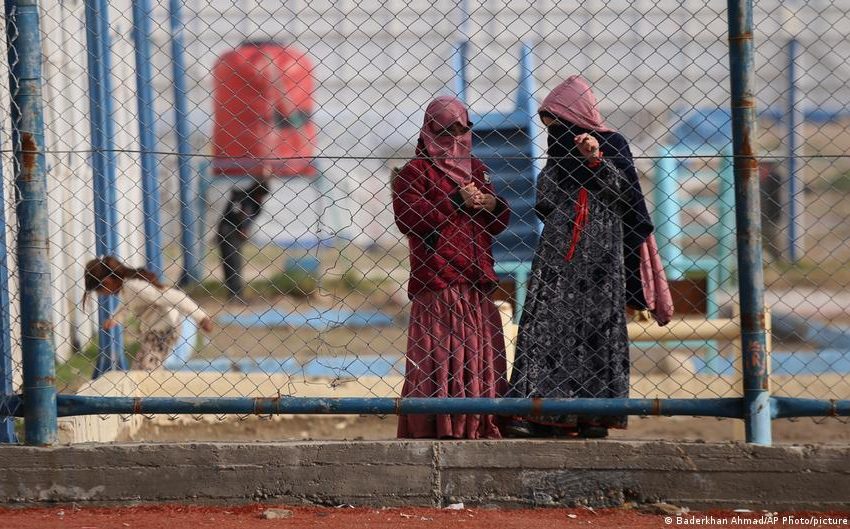
Roj detention camp in northeastern Syria holds families of militants suspected of having links to the so-called “Islamic State” group (IS).
“We have a very firm view that we won’t be providing assistance or repatriation,” Albanese told national broadcaster ABC on Tuesday.
“We have no sympathy, frankly, for people who travelled overseas in order to participate in what was an attempt to establish a caliphate to undermine and destroy our way of life,” he said.
“It is unfortunate that children are impacted by this as well, but we are not providing any support.”
Australians released from Roj camp forced to turn back
Albanese’s remarks come a day after a group of Australian women and children released from Roj camp on Monday were forced to return to the detention center.
The 34 women and children from 11 families were travelling from the camp to the Syrian capital, Damascus. They hoped from there to organize their journey back to Australia.
But the families were forced to return to the camp after Syrian government authorities wouldn’t allow them to continue their journey, Australian media reported.
The convoy was being escorted by Kurdish security forces, ABC reported. The Kurdish-led Syrian Democratic Forces (SDF) still controlled Roj camp at least up until a recent agreement to integrate into the Syrian army after losing swathes of territory to Syrian government forces in January.
Roj camp director Hakmiyeh Ibrahim stressed that the planned repatriations were being organized by the families of the women and children detained at Roj and not by Australian authorities.
He said the women and children who had been returned on Monday were the last Australians in the camp.
Who is held at Syria’s Roj camp?
Roj camp holds the foreign wives, widows and children of people who have supposed links to the Islamic State extremist group.
Many have been in the camp since late 2018 and early 2019 when the SDF seized former IS territory with support from a US-led coalition.
None of those held in the camps has been charged with crimes.
The detention center held around 2,400 women and children when journalists visited in January, although it is unclear how many may have been released since then.
They come from some 40 to 50 countries, with Russians making up the largest share, camp officials told US broadcaster CNN in January.
Last month, the Syrian government said it planned to permanently close Roj, as well as al-Hol detention camp, although a large number of al-Hol residents had already left by Sunday.
Calls for repatriation of children amid worsening security
Rights groups have repeatedly warned of the dire conditions at Roj camp and called on countries to repatriate the women and children living there. Human Rights Watch has previously called the conditions in Roj and other detention camps “so dire they may amount to torture.”
In 2024, Australia’s High Court refused to hear an application to bring home Australian women and children held in Syria.
Save the Children, who brought the case, said at the time that Australia had a moral obligation to bring the families home.
More recently, amid reports of a breakdown of the security situation inside and around Roj and al-Hol camps, Save the Children said it was deeply concerned about the safety and well-being of children living in such camps.
“Every hour without clear protection measures increases the risk of children being harmed, exploited or coerced by armed actors,” Save the Children said in a statement in late January.
“Children must never be treated as instruments of conflict or punished because of perceived family affiliation.”
The Swedish rights organization Repatriate the Children has also called for governments to end arbitrary detention by taking responsibility for their own nationals through repatriations.
“Children belong in schools, in families, and in protective environments, not in camps shaped by conflict and war,” spokesperson Beatrice Eriksson told news site Middle East Eye last week.
Australia, UK previously repatriated IS family members
Like Australia, few countries have been willing to repatriate the detainees.
The Times, a British newspaper, reported in January that Britain had repatriated six women and nine children from camps in recent years.
Most of those repatriated have been women who were taken or travelled to Syria when they were under 18, The Times said.
Australia’s Albanese government previously repatriated 13 children along with their 4 mothers in October 2022.
Eight Australian children were brought home in 2019 by the previous government.
Edited by: Alex Berry
First Appeared on
Source link






