


Baby Giants Were The Fast Food of The Jurassic, Study Reveals : ScienceAlert
Baby long-necked dinosaurs might have been the fast food of the Jurassic Period. A detailed food web of the time, reconstructed from fossil data, shows that the young not-yet-giants almost single-handedly supported predator populations of the area.
With their elephantine bodies and incredibly long necks and tails, sauropods are among the most iconic types of dinosaur. They include the largest land animals to ever walk the Earth – and that bulk was probably put to good use defending themselves against carnivores.
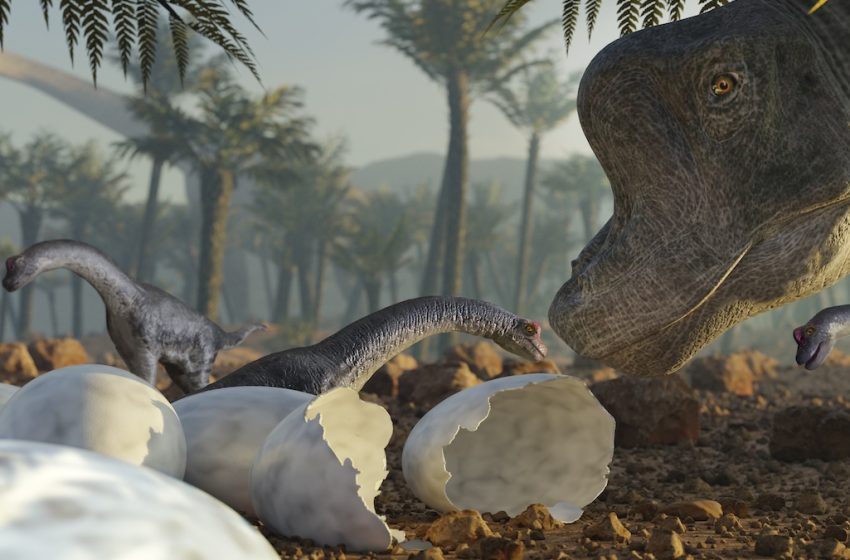
But it takes a long time to grow that big, and few would ever make it. So few, in fact, that baby sauropods might have become one of the most plentiful food sources for Jurassic predators. After all, why fight a spiky Stegosaurus for dinner when you can just pick up a baby Brachiosaurus on your way home?
“Size alone would make it difficult for sauropods to look after their eggs without destroying them, and evidence suggests that, much like baby turtles today, young sauropods were not looked after by their parents,” says Cassius Morrison, paleoecologist at University College London.
“Life was cheap in this ecosystem and the lives of predators such as the Allosaurus were likely fueled by the consumption of these baby sauropods.”
The researchers examined one of the most detailed ecological snapshots of the prehistoric world: the Dry Mesa Dinosaur Quarry in Colorado, US, which contains thousands of fossils of dozens of species from the Jurassic Period, dating back around 150 million years.
Starting with existing data on what different animals likely ate, the scientists mapped out a complex food web – essentially, all the possible links between predators, prey, and plants in the area at the time.
They found that sauropods had far more links in the chains than the other major clade of herbivorous dinosaurs, the ornithischians. That’s likely because ornithischians were harder to eat – why contend with the spiked tail of a Stegosaurus or the full-body armor of the Gargoyleosaurus when there were plenty of relatively defenseless, unsupervised sauropod morsels just strolling around everywhere?
But the most fascinating observation of the food web study was that this abundance of easy meals could explain why evolution appears to have slackened off for a bit. The top predators of the time were smaller and less powerful than those that would arrive tens of millions of years later, such as the infamous Tyrannosaurus rex.

Fewer sauropods lived during T. rex‘s time, and without that grocery store to visit, T. rex had to do things the hard way – evolving a larger size, better vision, and an incredibly powerful bite force to help it bring down bigger prey that could fight back, like the three-horned Triceratops.
Related: Baby Pterosaurs Killed in Violent Storm Solve 150-Million-Year Mystery
“The apex predators of the Late Jurassic, such as the Allosaurus or the Torvosaurus, may have had an easier time acquiring food compared to the T. rex millions of years later,” says William Hart, paleontologist at Hofstra University in the US.
The research was published in the New Mexico Museum of Natural History and Science Bulletin.
First Appeared on
Source link






