


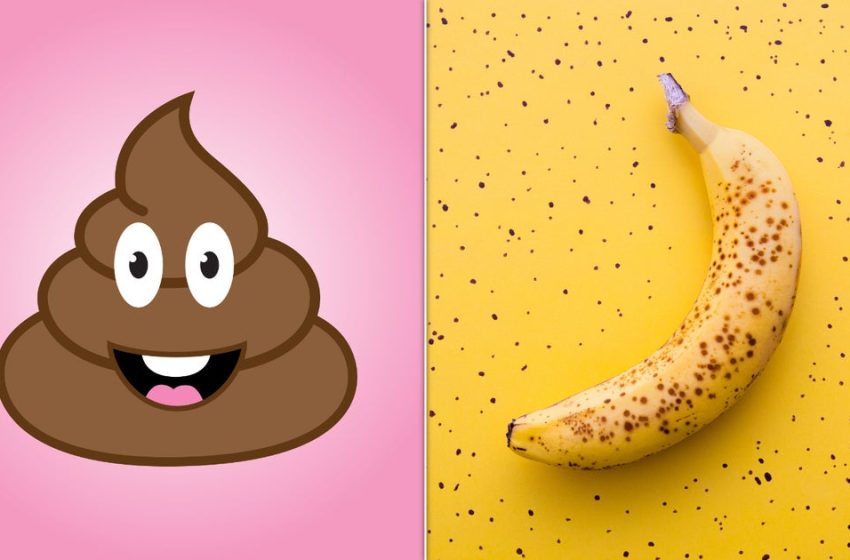
‘Banana Poop’ Says A Lot About Your Health — Here’s What
Have you ever looked in the toilet after going number two and noticed a banana- or sausage-shaped poop? If your answer is yes, you’re likely doing something right.
Doctors say folks should aim for certain stool shapes and consistencies for many reasons, including your colon health, gut health and general nutrition.
One way to determine if your stool is considered healthy or not is by taking a look at the Bristol Stool Chart, which is “a reference guide to what stools should generally look like,” Dr. Sophie Balzora, a clinical professor of medicine at New York Univeristy Grossman School of Medicine and president and co-founder of the Association of Black Gastroenterologists and Hepatologists, told HuffPost.
The chart also helps folks determine “what stool consistency, especially when occurring chronically, or on a longer term basis, should warrant a discussion with your healthcare professional,” Balzora said.
The chart classifies stool from one to seven. Types one and two are very hard poop, like constipation, while types six and seven are loose and watery, like diarrhea.
Types three and four on the chart are what experts recommend as the “healthiest version of having a bowel movement,” said Dr. Supriya Rao, gastroenterologist with Integrated Gastroenterology Consultants in Massachusetts. It’s also pretty smooth, not lumpy and solid.
“When you’re having a normal bowel movement that’s either type three or type four, it does kind of look like a sausage or a banana shape,” Rao said. “That’s what we are aiming for [with] our patients.”
Referring to stool as sausage, or banana-shaped, is a helpful way to simply understand your health, but if you get the “ick” from comparing your stool to food, Balzora said thinking of healthy stool as “snake-shaped” works, too.
While the shape of your stool is certainly important, so is its consistency.
“It should definitely be easy to pass, not hard, but not completely watery as well,” Rao said. “It should be kind of like a smooth-looking, soft stool, but that still is able to maintain its shape.”
Eating a high-fiber diet can help you achieve an ideal stool.
“Unfortunately, as we know, the typical American diet is very high in ultra- processed foods and animal products,” Rao said. While these things can be eaten in moderation, they don’t really do any favors for your bowel movements.
Fiber is one important way to help you achieve a snake, or banana-shaped stool. Most people do not get enough fiber in their diet, Rao said, which comes from veggies, fruit, whole grains, legumes, seeds and beans.
“I think the most that people get is around eight to 10 grams of fiber, and we should be getting upwards of 30 to 40 [grams],” Rao explained. Fiber aids our digestion and adds bulk to the stool. “It helps the movement of our intestines, the motility. It helps the type of bowel movement we have,” she added.
“The great thing about fiber is that not only does it promote good colon health — increasing fiber intake has been shown to be one of some behaviors that can help stave off colorectal cancer — but it’s also incredibly heart healthy,” said Balzora. “Fruits, vegetables and whole grains have anti-oxidant and anti-inflammatory properties that make it a great go-to when ascribing to a healthier diet.”
A good way to add fiber to your diet is by sprinkling a tablespoon or two of chia seeds on your oatmeal or smoothie, by swapping whole-wheat pasta for white-flour pasta, or by making lentil soup or snacking on blackberries.
After you eat, consider getting outside for a few minutes. Your gut will thank you. “I always tell people after they have a meal to take a 10- or 15-minute walk,” Rao said. “It helps jump start digestion and allows, over time, people to not feel as bloated and to have better bowel movements.”
You should always monitor your stool shape, color and consistency.
While it may sound strange to look at the shape of your poop, it’s actually a good way to keep track of your health. It’s important to “always look at your stool before you flush,” Balzora said.
“Taking a look before you flush can also help you take note of things like blood in the stool, or black stools (which may signify old or digested blood), which should absolutely bring you to your health care professional for further evaluation,” Balzora added.
Blood in your stool can be a sign of colon cancer, which is now “the No. 1 cancer killer in people under the age of 50,” said Rao.
James Van Der Beek, who is best known for his role as Dawson Leery in the ’90s teen drama series “Dawson’s Creek,” recently died at 48 after a battle with colon cancer.
“It’s coming up more and more, and we don’t know why it’s happening so much more in younger people, besides different lifestyle things … but it’s just important to make sure that you’re not ignoring symptoms,” Rao continued.
Signs of colon cancer can vary, but rectal bleeding is a common one, along with abdominal pain, unexpected weight loss, anemia and changes to your poop consistency and frequency.
“A classic ‘banana-shaped stool’ is not the holy grail, so it’s not critical to aim for this consistency every time you have a bowel movement,” Balzora said, but it’s still a good barometer for your gut health.
If you notice that you’re consistently having changes to your stool, or changes that are happening along with other digestive symptoms, this may “sound an alarm to a bigger problem,” Balzora said.
You shouldn’t worry in silence or dismiss your symptoms. Instead, talk to your doctor about any concerning changes. Balzora added, “And get comfortable talking about your stool habits with your trusted healthcare professional because everybody poops.”
First Appeared on
Source link






