


Berlinale jury refuses to slam Israel for Gaza ‘genocide’
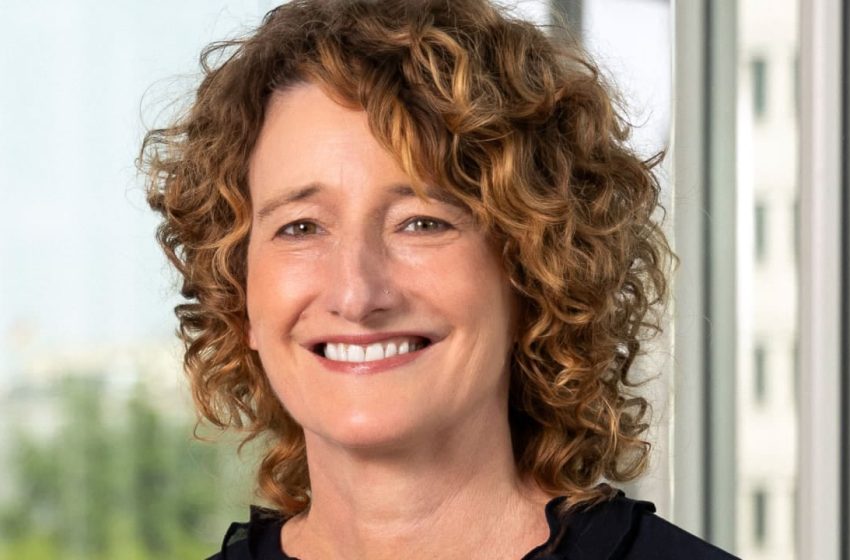
Tricia Tuttle, the director of the 76th Berlinale, the Berlin International Film Festival, which runs until February 22, defended the right of the festival’s jury to say whatever they wished about politics in a statement she posted on the festival’s website.
She made the remarks after members of the jury were criticized for refusing to condemn the Gaza war as a “genocide” by Israel.
Tuttle wrote: “There are many different kinds of art, and many different ways of being political. Individual approaches vary greatly. People have called for free speech at the Berlinale. Free speech is happening at the Berlinale. But increasingly, filmmakers are expected to answer any question put to them. They are criticized for not answering. They are criticized for answering, and we do not like what they say. They are criticized if they cannot compress complex thoughts into a brief sound bite when a microphone is placed in front of them, when they thought they were speaking about something else.”
Filmmakers should stay out of politics, says jury president
The issue surfaced during the opening press conference on Thursday, in which the International Jury president, legendary movie director Wim Wenders, said that filmmakers should stay out of politics and that “we are the counterweight of politics, the opposite of politics. We have to do the work of people, not the work of politicians.”
Wenders made the comment in response to a question posed by a journalist who mentioned the festival’s support for Ukrainian and Iranian filmmakers, and talked about the German government’s “role as main funder” of what he called “the genocide in Gaza.”
The reporter then went on to ask: “Do you, as a jury, support this selective treatment of human rights?”
One of the jury members, Polish producer Ewa Puszczynska, answered, “The films are not political in the way […] you think of the meaning of the word. Asking this question is a little bit unfair. We use the words ‘change the world,’ but of course, we are trying to talk to every single viewer, to make them think that we cannot be responsible for what that decision would be – the decision to support Israel, or the decision to support Palestine.”
“So, this is a very complicated question, and I think, as I said, it’s a bit unfair asking us how we support [or do not] support our government… Because that’s the politicians. I’m speaking for myself – I go to elections, I vote using my pride as a citizen of Poland and as a citizen of Europe – of the world,” she said.
Tuttle wrote, “There are many different kinds of art, and many different ways of being political. Individual approaches vary greatly. People have called for free speech at the Berlinale. Free speech is happening at the Berlinale.”
“But increasingly,” she continued, “filmmakers are expected to answer any question put to them.”
“They are criticized for not answering. They are criticized for answering, and we do not like what they say. They are criticized if they cannot compress complex thoughts into a brief sound bite when a microphone is placed in front of them, when they thought they were speaking about something else,” Tuttle said.
There was a backlash against Wenders and the rest of the jury, led by, among others, author Arundhati Roy, who was supposed to partake in the festival in the framework of the 1989 movie she wrote, In Which Annie Gives It Those Ones.
The film was going to be screened in the Berlinale Classics section. Yet, following Wenders’s answer, she withdrew the film, calling the jury’s response “a way of shutting down a conversation about a crime against humanity even as it unfolds before us in real time… I am shocked and disgusted.”
Roy added that she thought that “artists, writers, and filmmakers should be doing everything in their power to stop” the war in Gaza.
“Let me say this clearly: what has happened in Gaza, what continues to happen, is a genocide of the Palestinian people by the State of Israel… [The war] is supported and funded by the governments of the United States and Germany, as well as several other countries in Europe, which makes them complicit in the crime.”
In an interview with Deadline.com that was published on Monday, Tuttle seemed to have Roy in mind when she said, “The kinds of discourse that there have been over the last couple of days definitely make us weaker – not stronger.”
“If we feel like every person who comes here is going to have a ‘gotcha!’ moment every time they open their mouths, then people aren’t going to want to come here unless they’re coming here to speak about politics. So that’s a real issue,” Tuttle said.
Last year, she participated in a candlelight vigil on the red carpet on opening night to support the release of hostage David Cunio and all the other hostages.
Cunio was the subject of Tom Shoval’s documentary, A Letter to David, which had its world premiere at last year’s festival.
This Friday, Cunio and his brother Ariel, both of whom were released by Hamas in October after more than two years in captivity, will attend a screening of an updated version of the movie, which includes their release.
First Appeared on
Source link






