


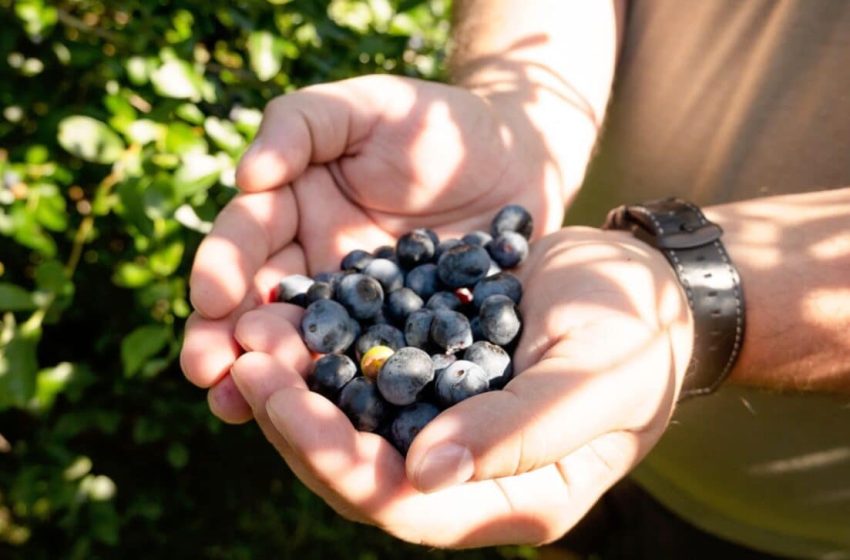
Blueberries Are Doing Something Interesting to Your Body, And It Starts Within Hours
Tiny, wild, and packed with polyphenols, Vaccinium angustifolium, commonly known as wild blueberries, are gaining renewed scientific attention. A new comprehensive review published in Critical Reviews in Food Science and Nutrition reveals that these lowbush berries may deliver measurable benefits to heart health, metabolic regulation, and even cognitive performance, with some effects kicking in within hours of consumption.
Drawing on 24 years of research, the review assessed 12 clinical trials across four countries, identifying consistent improvements in blood vessel function as the most robust and repeatable finding. Researchers also highlight promising, although less conclusive, signs that wild blueberries influence blood pressure, cholesterol, blood sugar, and the gut microbiome, pointing to a whole-body approach to health that begins in the circulatory system.
The review emerged from a symposium hosted by the Wild Blueberry Association of North America (WBANA), where twelve specialists across nutrition, physiology, microbiology, and clinical research convened to assess the state of evidence. While participants’ travel was reimbursed by WBANA, the paper itself was developed independently, with no funding provided for writing or production. The authors include academics supported by the NIH and institutions such as Florida State University and the University of Maine.
According to lead author Dr. Sarah A. Johnson, Associate Professor at Florida State University, the berries’ health benefits appear to operate through “multiple biological pathways relevant to cardiometabolic health,” including vascular reactivity, inflammation, and microbial metabolism.
Vascular Improvements as the Most Consistent Finding
Among the dozens of studies examined, improvements in vascular function, specifically endothelial responsiveness, stood out as the most reliable effect of wild blueberry consumption. Endothelial function refers to the blood vessels’ ability to relax and respond to physical and chemical signals, a key marker of cardiovascular health.
In multiple clinical trials cited in the review, participants showed improved vascular reactivity within hours of a single serving of wild blueberries. Others demonstrated sustained benefits after weeks or months of daily intake. The review indicates that these changes were especially notable in populations with existing cardiometabolic risk factors.
According to the review, the mechanism likely involves polyphenols, notably anthocyanins, which are metabolized into bioactive compounds that may support nitric oxide signaling and reduce oxidative stress. These effects help maintain vessel flexibility, a critical component in preventing long-term heart and metabolic conditions.
The Gut Microbiome May Amplify Cardiometabolic Effects
Beyond circulation, researchers also examined how wild blueberries interact with the gut microbiome, the community of bacteria in the digestive system. The berries are rich in fiber and polyphenols, most of which bypass digestion in the small intestine and arrive in the colon intact. There, they are metabolized by gut microbes into bioavailable metabolites that enter the bloodstream.
One six-week clinical trial highlighted in the review showed that consuming 25 grams of freeze-dried wild blueberry powder daily increased levels of Bifidobacterium species, bacteria often associated with digestive health. These microbial byproducts may account for up to 40% of the active compounds circulating in blood post-consumption, according to the research team.
While these findings are promising, the authors caution that larger studies are needed to better define how microbiome changes translate into health outcomes. They also stress that individual factors (such as existing gut flora, medications, and baseline health) can significantly influence results.
Cognitive Performance Shows Measurable Improvements in Older Adults
Another dimension explored in the review is cognitive health, particularly in aging populations. According to intervention studies summarized in the paper, older adults who consumed wild blueberries regularly demonstrated measurable improvements in memory and processing speed.
One of the proposed explanations is the berries’ impact on circulation. Improved blood flow may enhance oxygen and glucose delivery to brain tissue, which is essential for maintaining mental performance. These cognitive benefits were observed both after single servings and over longer interventions, hinting at both immediate and cumulative effects.
Co-author Dr. Dorothy Klimis-Zacas, Professor of Clinical Nutrition at the University of Maine, emphasized the relevance of traditional knowledge, noting that wild blueberries “have been valued by people for thousands of years.” The review draws a link between this long-standing cultural use and emerging scientific evidence, especially regarding age-related cognitive decline.
While these findings are encouraging, the review avoids overstating their significance, calling instead for expanded clinical trials that explore diverse populations and standardized testing protocols. The authors also suggest that future work should focus on identifying individual “responders” and determining the optimal form and dosage of wild blueberry intake.
The evidence gathered over the past two decades positions wild blueberries as a potentially impactful food in the broader conversation on cardiometabolic health. Though questions remain about dose, individual variability, and long-term outcomes, the strongest signal so far comes from the blood vessels. And from there, the benefits may extend further, touching the gut, the brain, and the metabolic processes in between.
First Appeared on
Source link






