


Can Bacteria from the Toilet Really Travel to Our Toothbrushes?
Our bathrooms are a strange mix of biological necessity, hydraulic engineering, and personal hygiene. Within the same small space, we eliminate our human waste and clean ourselves; isn’t that a bit dangerous?
Turns out, it can be.
When we flush our toilets, we create “toilet plumes” that spread far and wide, spreading all sorts of germs into the toilet atmosphere. Meanwhile, toothbrushes are a magnet for pathogens, and closing them off isn’t a good idea either. Here’s what you need to know.
In the Brown Corner: The Toilet Plume
Toilets typically use potable, treated water from the municipal supply for flushing. This water is basically clean enough to drink when it enters the tank, because using non-treated water could be a major health hazard.
Of course, when the water starts mixing with the “number one” and “number two,” things immediately change.
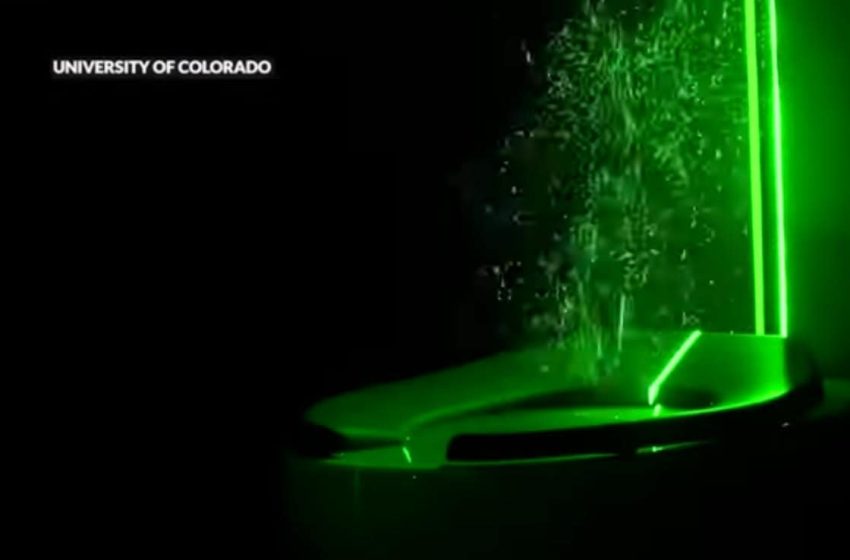
The moment you hit the flush handle to clear your toilet bowl, it triggers a violent fluid dynamic event. Researchers have studied this since the 1950s, with one study as early as 1975 concluding that this process releases pathogens into the air.
From a fluid dynamics perspective, two primary concurrent mechanisms are responsible for aerosol generation during flushing: splashing and bubble bursting.

Splashing occurs due to high-energy collisions of flush water with the porcelain surface. This macroscopic interaction typically generates larger droplets, often exceeding 50 micrometers in diameter. These droplets possess significant mass and momentum and can produce a lot of contamination in the vicinity of the toilet.
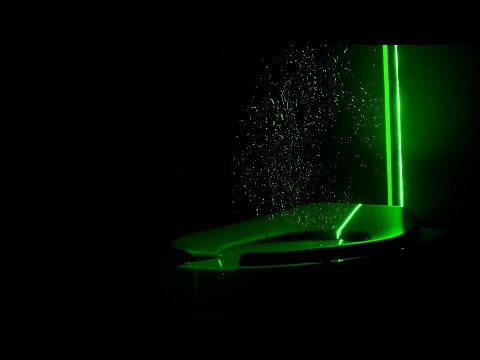
Meanwhile, bubble bursting emerges as large volumes of air are sucked into the water, forming bubbles that rupture on the air-water interface. The physics of this rupture is complex, but the end result is smaller particles that can travel a longer distance and remain suspended in the air for extended periods (possibly even hours). This is what’s likely to contaminate your toothbrush.
“We had expected these aerosol particles would just sort of float up, but they came out like a rocket,” said John Crimaldi, lead author of a recent study on toilet plumes.
These aerosolized droplets can travel at least 6 feet (1.8 meters) from the source, often much more. This dispersion is affected by the design of the toilet and the ventilation of the room: the worse the ventilation, the more the plumes can travel.
In the Red Corner: Your Toothbrush
Your toothbrush isn’t an innocent bystander. It’s basically a trap for the toilet plume.
The dense packing of nylon bristles creates a capillary effect, drawing moisture and plume droplets deep into the tufts where airflow is restricted. A study from Quinnipiac University found that 60% of toothbrushes in communal bathrooms tested positive for fecal coliforms. Even more disturbing was that 80% of that fecal matter didn’t belong to the toothbrush owner.
But your toothbrush can also fight back.
A study from Northwestern University, colloquially dubbed “Operation Pottymouth,” utilized high-throughput DNA sequencing to map the entire microbial community on used toothbrushes. They found that while toilet aerosols do land on toothbrushes, the toothbrush itself acts as a selective environment.
Your toothbrush is affected by repeated exposure to toothpaste, food particles, and saliva. It’s also subjected to daily re-inoculation from the user’s mouth. This causes the bristles to support a thriving biofilm of oral bacteria that comes from your mouth. This bacterial ecosystem doesn’t get along well with bacteria from the poop and kicks them out. This doesn’t mean there are no poopy pathogens on your toothbrush, just that the “natural” bacteria from the toothbrush reduce their numbers.
The type of toothbrush also matters.

If you use an electric toothbrush, you likely feel superior to the manual-brushing masses (studies show electric toothbrushes are superior in most ways). But not all power brushes are created equal.
Hollow-head electric toothbrushes attach to the handle via a hollow shaft. The motion is transmitted through this internal cavity. But there’s a problem. Research led by Donna Warren Morris at UT Health Science Center at Houston showed that these toothbrushes can have up to 3,000 times more microbes on them. From a bacteria standpoint, at least, you may want to avoid these.
So What Can You Do?
You’d think that closing the toilet lid solves everything.
However, fluid dynamic analysis suggests that’s not really the case. In fact, a 2024 study published in the American Journal of Infection Control demonstrated that closing the lid did not significantly reduce the contamination of restroom surfaces with viral particles.
When the lid is closed, the aerosols can’t escape upwards, but they can escape laterally. They don’t climb as high, but they are pushed sideways more.
You might also assume that a toothbrush cover solves things. But that’s unlikely to be a good idea, either.
Toothbrush covers do block depositing aerosols, but they trap moisture. A recent study found high rates of Candida and Pseudomonas on covered brushes, pathogens that are likely as dangerous as the plume itself. You solve one problem, you get another.
So, what actually works?
Coexisting With the Plume
According to the comparative analysis of mitigation strategies, chemical warfare is your best bet.
Clinical studies confirm that UV toothbrush holders can effectively destroy bacteria on bristles. However, their efficacy is limited to the surfaces the light can reach. Cleaning the toilet bowl regularly with a disinfectant also limits the source material. If the bowl water is free of pathogens, the plume is benign. Soaking the toothbrush head in an antimicrobial mouthwash or disinfecting it regularly can also work (or simply changing it).
Separation also matters; ensure the toothbrush is at least 2 meters away from the toilet, and if possible, significantly more. Locking it in a cabinet also helps, as long as there’s enough circulation in the cabinet for the toothbrush to dry. If it stays wet, other dangerous microbes can jump on it.
Ultimately, the “toilet plume” is an unavoidable consequence of gravity-fed plumbing. Until we all upgrade to the vacuum-suction toilets used on airplanes (which virtually eliminate aerosols), we are coexisting with this cloud.
The goal isn’t sterility — your immune system can handle your own microbiome — but rather reducing the “yuck factor” and cross-contamination. Oftentimes, small things can go a long way.
First Appeared on
Source link







