



CDC Issues Travel Alert About Potentially Fatal ‘Breakbone Fever’
Nhon Bai beach, Vietnam
Credit: MeogiaPhoto/Getty Images
NEED TO KNOW
-
The U.S. Centers for Disease Control and Prevention warns of increased cases of “breakbone fever” in travelers returning from countries including Vietnam, Cuba, and Colombia
-
The mosquito-borne illness, more commonly known as dengue, can cause muscle and joint pain, nausea, rash, and internal bleeding in extreme cases
-
Severe dengue is life-threatening and requires immediate medical attention, according to the CDC
A travel alert has been issued by the U.S. Centers for Disease Control and Prevention, warning about the risk of “breakbone fever” — more commonly known as dengue fever — around the globe as travelers returning to the United States are testing positive for the disease.
The agency has “identified a higher-than-expected number of dengue cases among U.S. travelers returning from those countries,” the CDC said in its March 23 alert, which warned of travel to Afghanistan, Bangladesh, Bolivia, Colombia, Cook Islands, Cuba, Guyana, Maldives, Mali, Mauritania, New Caledonia, Pakistan, Samoa, Sudan, Timor-Leste, and Vietnam.
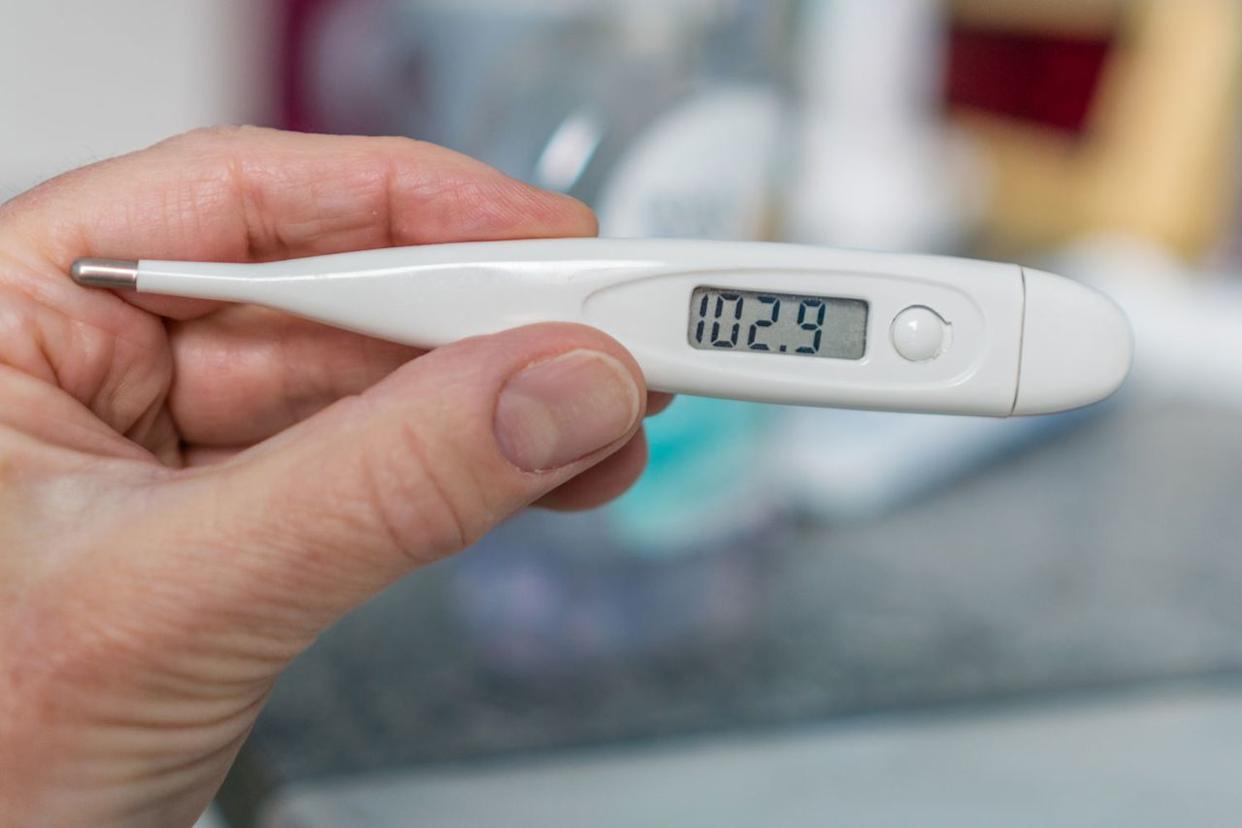
Stock image of a thermometer showing a high fever
Credit: Getty
Most cases of dengue in the U.S. occur in people who contracted the disease elsewhere, the CDC says, while also noting that local transmission is common in American Samoa, Puerto Rico, and the U.S. Virgin Islands. There have been 496 cases of dengue reported in the U.S. so far this year, according to the most recent, data.
About 25% of those who are bitten by an infected mosquito will get sick — and cases can range from mild to severe. Per the CDC, symptoms include fever, nausea, vomiting, rash, and body pains in the muscles and, joints hence the name “breakbone fever.” Treatment includes acetaminophen, rest and fluids.
Never miss a story — sign up for PEOPLE’s free daily newsletter to stay up-to-date on the best of what PEOPLE has to offer, from celebrity news to compelling human interest stories.
Those who have had dengue before are more likely to develop a severe case, which the CDC said “can be life-threatening within a few hours.” Symptoms include belly pain, frequent vomiting or internal bleeding.
Anyone who suspects they have severe dengue should “see a healthcare provider or go to the emergency room immediately.” The organization added, “Severe dengue is a medical emergency. It requires immediate medical care.”
Read the original article on People
First Appeared on
Source link






