


Celebrated life scientist Shu Xiaokun leaves US after 20 years for Chinese university
He will serve as a distinguished professor and founding director of the Institute of Chemical and Open Biotechnology Research and Application at Fudan University, according to the South China Morning Post.
The institute, scheduled to launch this month, will focus on long-term interdisciplinary research at the intersection of physics, chemistry, and biology, including developing next-generation fluorescent probes, chemical genetics tools, and targeted cancer therapies.
Shu’s return comes months after he was appointed Herfindahl Endowed Chair professor at the University of California, San Francisco, a key milestone in his U.S. academic career.”
Over the past two decades in the U.S., Shu secured more than $20 million in funding from the National Institutes of Health (NIH), according to his profile on the Fudan website.
He became an associate professor at the University of California, San Diego in 2010. In 2012, he received the NIH Director’s New Innovator Award along with a research grant of $2.36 million over five years. In 2019, he was awarded the Maximizing Investigators’ Research Award, worth $5.91 million over five years.
|
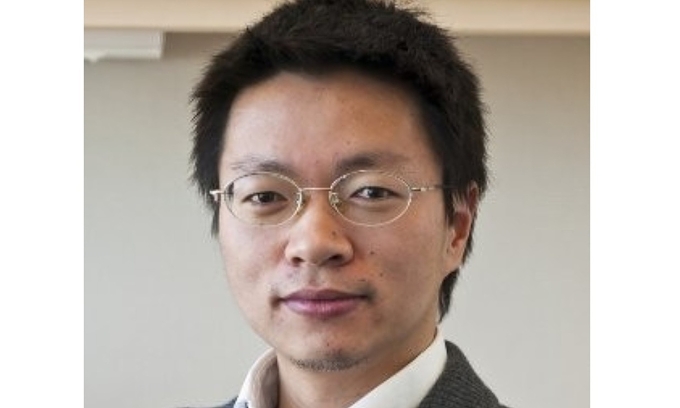
Life scientist Shu Xiaokun. Photo courtesy of Shu’s LinkedIn |
Shu’s research spans multiple disciplines, reflecting a shift from physics to life sciences. He began his academic journey in 1996 in the theoretical physics department at Sichuan University, southwestern China. After completing a master’s degree, he continued studying condensed matter physics at Fudan University.
In 2003, he moved to the U.S. to pursue a PhD at the University of Oregon, where he transitioned into biophysics and studied the luminescence mechanisms of visible fluorescent proteins.
After earning his doctorate in 2007, he joined the laboratory of Nobel laureate Roger Yonchien Tsien at the University of California, San Diego, where he advanced research on fluorescent proteins.
During his postdoctoral work, Shu developed an infrared fluorescent protein for imaging in live animals, with findings published in the journal Science. He also created genetically encoded labeling techniques for electron microscopy, expanding tools for biological and medical research.
After establishing his own laboratory, he continued integrating physics, chemistry, and biology. His work spans physical biology, chemical biology, structural biology, protein engineering, and drug discovery.
First Appeared on
Source link






