


China launches world’s first floating deep-sea research island
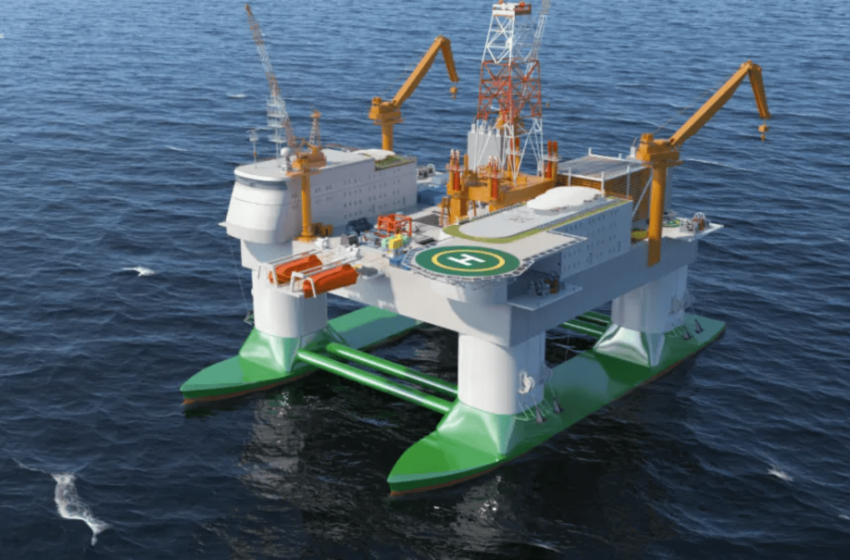
China has taken a significant step in expanding its ocean research capabilities with the launch of a new deep-sea, all-weather floating research facility in Shanghai. The project, positioned as a key piece of national science and technology infrastructure, introduces what is being called the “Open-Sea Floating Island”, or the world’s first ultra-large marine research platform of its kind.
Designed to operate continuously in harsh offshore conditions, the platform will support a wide range of scientific activities, including the development of advanced marine equipment, exploration of ocean resources, and broader marine science research.
Its deployment reflects Beijing’s growing ambition to build long-term, scalable infrastructure for sustained deep-sea exploration and innovation.
New facility combines floating platform, ships, and shore support
At the core of the project is a multi-layered research system that integrates offshore and onshore capabilities. The facility is built around three key components: the central floating platform, a fleet of ship-based laboratories, and land-based support infrastructure.
Its main platform adopts a semi-submersible twin-hull design, engineered for stability in harsh sea conditions while enabling large-scale testing of deep-sea equipment weighing hundreds of tons. According to CCTV News, the platform is capable of supporting scientific missions and experimental research at depths of up to 32,800 feet, effectively covering the full range of ocean exploration.
The facility is expected to be completed by 2030, and once operational, it will serve as an open-sea testing site for deep-sea mining systems, marine equipment, and offshore oil and gas infrastructure. By allowing technologies to be tested in real ocean conditions, the platform is expected to support more practical research and development work.
It will also make it easier for engineers and scientists to carry out larger-scale experiments offshore, rather than relying mainly on nearshore or laboratory testing environments.
Floating lab could advance ocean science and disaster preparedness
Developed by Shanghai Jiao Tong University (SJTU), the concept builds on existing marine research capabilities in China, such as deep-sea laboratories, research vessels, and submersibles, while addressing the lack of a platform that can both move efficiently and remain on-site for extended missions.
Chinese media noted that the platform is expected to support a broad range of scientific and industrial goals. These include advancing the commercial use of marine resources, improving understanding of how ocean ecosystems change across seasons, and contributing to research on the origins and evolution of life. It is also expected to help refine typhoon forecasting models, which could strengthen disaster preparedness and response efforts in coastal regions.
According to SJTU researcher Yang Jianmin, the platform is also designed to operate with mobility comparable to a research vessel, allowing it to quickly reach designated areas before transitioning into a stable research mode through ballasting. Once in position, it can support extended scientific operations thanks to its high load capacity, long-duration deployment capability, and strong resistance to severe weather conditions.
First Appeared on
Source link






