


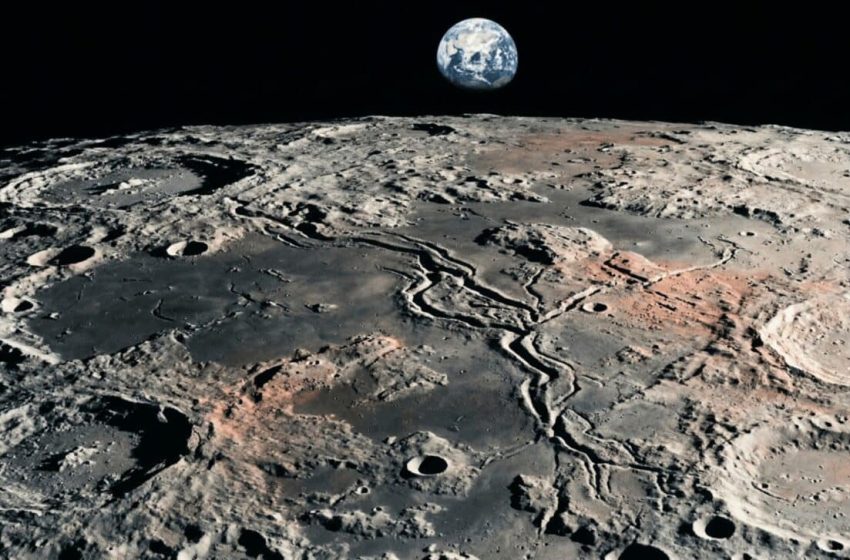
China Reveals the Volcanic Moon Site Chosen for Its First Astronaut Moonwalk
On March 9, 2026, a new report highlighted a little-known stretch of the Moon that has started to draw unusual attention inside China’s lunar planning. The study focused on a region near the lunar equator, where old basalt plains, winding surface channels and rougher highland material sit close together. At first glance, it looks like one more scarred patch of gray terrain. But the details suggest it may be far more important than that.
The timing is part of what makes the site stand out. China has been moving step by step toward a crewed lunar landing, and the latest analysis arrived just as that long campaign entered a more practical phase. As Nature Asia noted in its coverage of the paper, researchers were not simply describing lunar geology for its own sake. They were examining ground that could support the country’s first astronauts on the Moon.
That broader push had already become visible well before the new site analysis appeared. In April 2024, Reuters reported that the robotic Chang’e-6 mission was one of three demanding lunar missions designed to support China’s goal of landing astronauts on the Moon by 2030. That dispatch framed the lunar effort as more than a series of isolated launches. It showed a program gradually narrowing from exploration to execution.
The Site That Rose from a Longer Shortlist
The region now drawing the most interest is Rimae Bode. According to the new research, the area sits near Sinus Aestuum on the Moon’s near side and offers a rare mix of terrain types in one reachable zone. That combination makes it valuable for science but also useful for mission design. A landing site becomes more attractive when it can answer several questions at once.
The selection process was not small. Earlier reporting had shown that Chinese researchers reduced an original list of 106 possible landing areas to 14 candidates for the first crewed mission. Those sites were screened using engineering limits that mattered before any astronaut ever touched the surface, including near-side communication with Earth, access to solar power and terrain conditions suitable for landing and surface work.
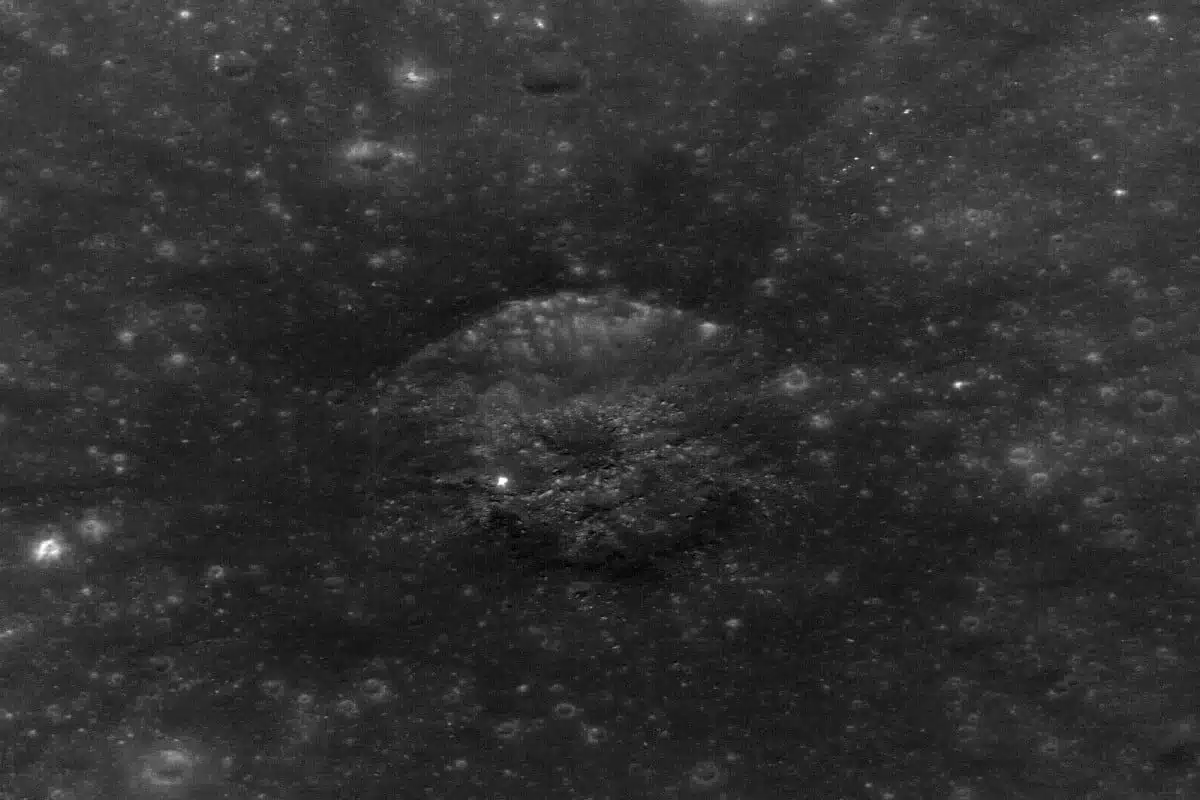
That is where Rimae Bode began to separate itself. The new paper said the region contains five distinct terrain types within a relatively compact area. These include a dark pyroclastic deposit, the surrounding mare basalts, two different rille systems and nearby highland materials. For mission planners, that means one landing could place astronauts within reach of several very different lunar records.
Why the Geology Matters So Much
Part of the appeal is that the region appears to preserve a layered history of volcanic activity. By examining surface channels and counting impact craters, the team reconstructed several eruptive phases in the area. The earliest of those events was dated to roughly 3.2 to 3.7 billion years ago. That gives the site value not just as a landing zone, but as a record of how parts of the Moon changed over immense spans of time.
The scientific case rests on how many different materials can be reached from one operating area. Rimae Bode is not being studied only as a safe landing strip. It is being treated as a place where astronauts could move across several chapters of lunar history during one mission, without the need for a wide and risky traverse plan.

The site’s volcanic materials may be especially important. One report said some of the dark mantle deposits in the region likely include ash and glass beads thrown up from the Moon’s interior during ancient eruptions. Those samples could help researchers compare deep-origin lunar material with the more familiar rocks returned by earlier robotic missions. That makes the landing area more than a convenient target. It turns it into a compact field site.
A Landing Zone Designed Around Access
The researchers did not stop at identifying the broader region. They also proposed four potential landing sites within Rimae Bode itself. Each one offers access to somewhat different scientific priorities, while still meeting practical requirements tied to surface safety. That includes the need to avoid dangerous slopes, reduce exposure to large boulders and keep traverses manageable for astronauts and vehicles.
Those operational limits are a major part of the story. A scientifically rich place is not automatically a good place to land. In an account published by Space.com, researcher Jun Huang of the China University of Geosciences in Wuhan described Rimae Bode as a “geological museum,” because astronauts could move across multiple kinds of lunar material without traveling across a vast distance. That kind of concentration lowers mission risk while raising scientific return.
The expected use of an unpressurized rover adds another layer to the plan. If astronauts can drive between nearby geological units, then a single mission could collect volcanic ash, basalt, highland debris and impact-related material during the same surface campaign. That possibility helps explain why Rimae Bode keeps drawing attention as a landing candidate rather than just a geological curiosity.
How the Site Fits China’s Larger Lunar Plan
The landing-site work also fits into a much bigger sequence. China’s roadmap includes Chang’e-7 and Chang’e-8 as the next major steps, with plans tied to south polar exploration, water-ice studies and the early groundwork for a permanent outpost. In that context, a first crewed landing would not stand alone. It would sit in the middle of a growing lunar architecture.
That is why Rimae Bode matters beyond one mission profile. The site is on the near side, which simplifies communications, but it also appears scientifically varied enough to justify sending astronauts there before later efforts shift attention elsewhere. The study presents the region as a practical blend of science and engineering, while earlier mission reporting showed how carefully China was sequencing its lunar program toward 2030.
For now, Rimae Bode remains a leading candidate rather than a final choice. Even so, the latest study has narrowed the conversation, turning an obscure volcanic region into the clearest destination yet for China’s first astronauts on the Moon.
Yang, M., Huang, J., Iqbal, W. et al. Geology of Rimae Bode region as priority site candidate for China’s first crewed lunar mission. Nat Astron (2026). https://doi.org/10.1038/s41550-026-02790-0
First Appeared on
Source link






