


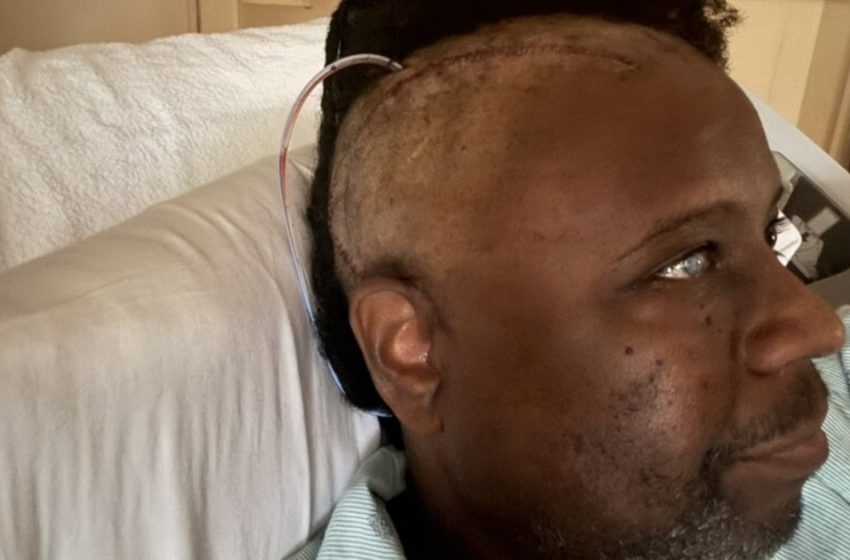
Dad, 48, Reveals 2 Sudden Symptoms That Led to ‘Huge’ Brain Tumor Diagnosis
Nate Broughty thought he was overtired or perhaps sick with the flu when he suddenly fainted one morning last fall.
Known as “Nate The Lawyer” online, the attorney usually gets up early to maintain his social media presence. Broughty was recording a clip when the next thing knew, he was getting up off the floor.
The rest of the day unfolded just as strangely.
He was supposed to take his wife and daughter somewhere, but felt confused.
“I don’t know how to explain it, but it’s like you’re watching yourself from outside your body. You don’t know what’s going on, what to do,” Broughty, 48, who lives in Houston, Texas, tells TODAY.com.
“Everything started getting blurry.”
Then, there were the headaches. Light at first, but gradually getting worse. Around the time he fainted in November 2025, the headaches became extreme.
Broughty and his family went to urgent care where his vital signs and basic tests were fine. But while he was being examined by the doctor, he started getting up and fainted again.
Physicians were startled when they saw the results of his CT scan.
“You have a serious, serious issue going on,” Broughty remembers a doctor telling him. “You have a huge mass in your head.”
“That was not on our bingo card at all,” the dad says, noting he didn’t have any health problems before all this happened.
The first estimate was a golf-ball size brain tumor. But a subsequent MRI scan revealed it to be more like half the size of his head.
Broughty wouldn’t know if the tumor was benign or cancerous until a brain surgeon opened his skull and removed the mass during surgery that took 15 hours.
Tumor Was Crushing His Brain
Before the operation began, Broughty worried he might not wake up.
“That was the biggest fear for both my wife and myself because I’m an attorney and my brain is the thing that I use to work. Our fear was loss of cognitive ability, not being able to speak,” he recalls.
“I could technically have become a different person coming out of surgery than what I went in.”

He says he emerged from the operation with his cognition and memories intact.
Doctors were able to remove 90% of the brain tumor. Tests revealed it was a meningioma, the most common type of primary brain tumor, according to the National Brain Tumor Society.
The tumors start in thin layers of tissue that cover the brain and spinal cord, known as the meninges, and grow slowly, the American Cancer Society notes.
Meningioma can affect people of any age. The exact cause is unknown.
The most common symptoms include headaches, seizures, vision changes, and loss of hearing or smell.
In Broughty’s case, tests showed it was grade 2 — at the border between cancerous and benign, he says. It had likely been growing for years until it got to a tipping point.
“The mass had just become so big and was taking up so much space, it was actually crushing the brain within the skull,” he notes.
That’s what caused the headaches and loss of consciousness. Everything happened “really rapidly” — the symptoms and then the surgery all within a week.
“So it’s like I was fine. Then it just crashed,” he says.
Adjusting to Life
After Broughty recovered, radiation was planned to treat the remaining 10% of tumor that couldn’t be removed.
But three months after surgery, his scans showed no evidence of any remaining meningioma cells. Doctors theorize his immune system killed the rest of the tumor, he says.
More testing showed it was closer to a grade one meningioma, or mostly benign.
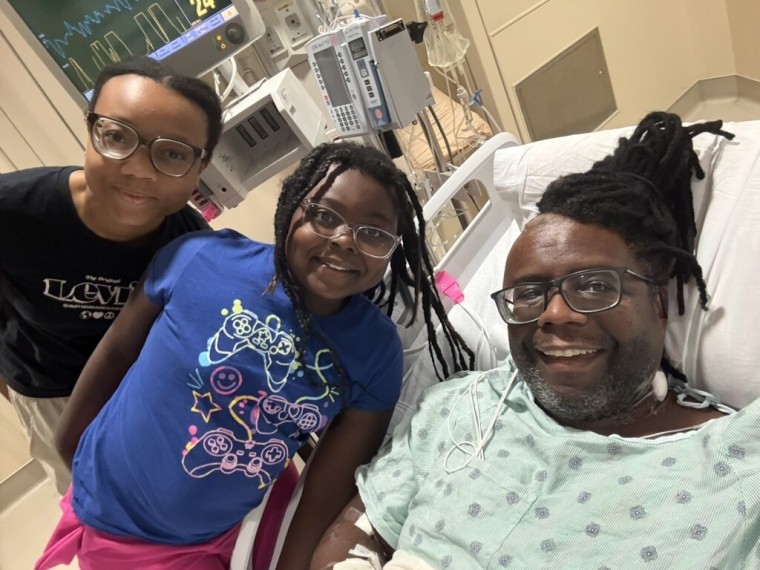
Doctors continue to monitor him with scans and he’s is adjusting to life after the ordeal.
There’s a cavity on the side of his skull where the huge mass once was, leading to dizziness and other issues.
“The brain hasn’t fully expanded to fill up my skull,” he says. “It has that free space. So it makes me extremely susceptible to concussions.”
Three months before Broughty’s ordeal began, his wife was diagnosed with breast cancer so the family has gone through a lot in the last year.
“It was a frightening experience,” he says.
First Appeared on
Source link






