


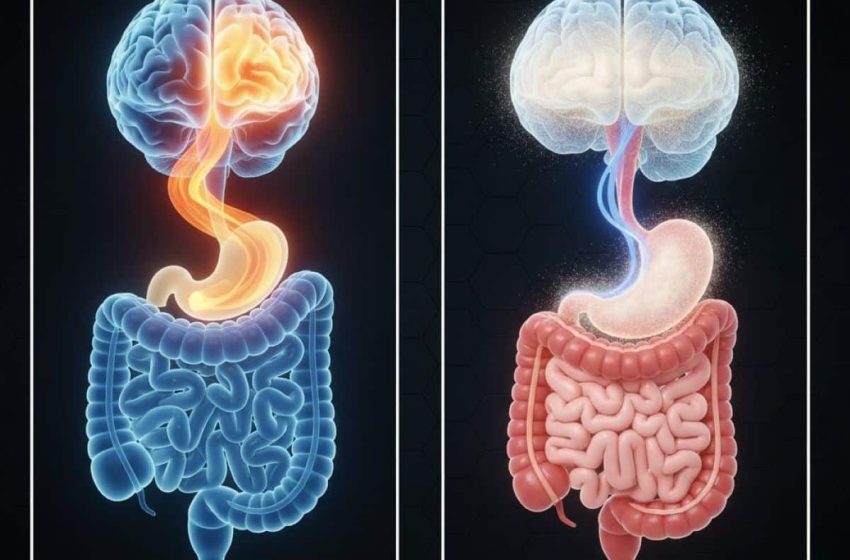
Delivery Method of Probiotic Flips the Brain Between Memory and Mood
Summary: It’s not just which probiotic you take, but how you take it that determines the impact on your brain. A pioneering study has found that the delivery method of beneficial bacteria acts as a functional switch for the gut-brain axis. In a randomized trial of healthy older adults, researchers discovered that encapsulated probiotics specifically boosted cognitive functions like memory and focus.
In contrast, non-encapsulated powder had a more profound impact on emotional health, reducing symptoms of anxiety and depression. By altering how bacteria survive the journey through the digestive tract, different preparation methods allow for a personalized approach to brain health based on an individual’s specific needs.
Key Facts
- Targeted Results: Encapsulation (coating the bacteria) improved memory, attention, and orientation, while raw powder was more effective for mood and mental health.
- The Transit Factor: Microencapsulation acts like a protective shield, allowing a higher proportion of bacteria to reach deeper into the gut before activating.
- The “Baking Powder” Analogy: Researchers compare the coating to baking ingredients that react at different times; the timing of the bacteria’s release dictates which neural pathways are influenced.
- First of its Kind: This is the first study to compare preparation methods in healthy older adults (ages 60–80) using MRI scans to verify changes in brain connectivity.
Source: Örebro University
How you take probiotics can affect their impact on the brain. A study from Örebro University points to new possibilities for personalized approaches, depending on whether the primary aim is, for example, to improve memory or reduce depression.
The research is published in the journal Brain, Behavior, and Immunity.
“Personally, I didn’t think it would make much difference how we consume probiotics. Our study shows that memory and concentration can change if the probiotic powder is encapsulated, whereas powder that is not encapsulated has a greater effect on mental health, such as anxiety, depression and similar conditions,” says Julia Rode, researcher in biomedicine at Örebro University, whose particular focus is on the connection between the gut and the brain.
Probiotics are good bacteria that contribute to brain health and are usually consumed through food or functional drinks. How the bacteria are prepared plays a major role in storage and shelf life, and they also behave differently in the intestinal tract, which affects the brain. Encapsulated powder can be compared to baking powder, which also comes in different forms.
The coating allows it to remain active longer and not react immediately, for example, with dough. In the same way, encapsulated powder means that a larger proportion of the good bacteria reach further into the gut.
“We saw that the form had different effects on the brain. It’s not that one form is better than the other—it depends entirely on what the individual needs to strengthen. Different preparation methods are useful in different situations,” explains Rode.
An increasing number of studies show that the gut microbiota affects the brain and, in turn, how we age. In the study conducted at Örebro University, participants were given probiotics in different forms, and the effects on the brain were examined using magnetic resonance imaging (MRI), brain function tests, and questionnaires.
The study is the first to be conducted in healthy older adults and to compare different methods of preparing probiotics. There are a small number of previous studies that demonstrate a link between the gut and the brain using magnetic resonance imaging (MRI or “brain scanner”).
“Probiotics are beneficial for brain function, and with data from this study, we can hopefully contribute further to our understanding of how probiotics can be consumed, for example, to cope with stressful periods,” says Rode.
About the study
A total of 87 people aged 60–80 participated in the study. They were given either microencapsulated or non-encapsulated probiotic bacteria from the same strain and at the same dose. A control group received a placebo with no effect to compare results.
The results showed clear differences in the brain’s functional connections, depending on how the probiotics were taken. The results reinforce the connection between the gut and the brain—the so-called gut-brain axis—and how it can contribute to healthier aging. The form of the powder had different effects on brain function:
- Encapsulated powder affected cognition, including memory, focus, attention and orientation.
- Non-encapsulated powder affected mental health, which may influence low mood, anxiety and depression.
Key Questions Answered:
A: The capsule protects the bacteria from stomach acid, allowing them to reach further into the intestines. This deeper delivery seems to trigger specific neural signals that boost focus and memory.
A: According to this study, yes. Non-encapsulated powder—which likely interacts with the upper digestive tract more quickly—showed a stronger connection to the brain’s emotional centers, helping with mood and anxiety.
A: While yogurt contains probiotics, this study used specific doses and strains. However, it does highlight that “unprotected” probiotics (like those in food/drinks) might be more naturally aligned with emotional well-being than cognitive enhancement.
Editorial Notes:
- This article was edited by a Neuroscience News editor.
- Journal paper reviewed in full.
- Additional context added by our staff.
About this neuroscience research news
Author: Julia Rode
Source: Örebro University
Contact: Julia Rode – Örebro University
Image: The image is credited to Neuroscience News
Original Research: Open access.
“Micro-encapsulation differentially impacts probiotic effects on brain structure and function in an elderly population – A randomised placebo-controlled trial” by Julia Rode, Ashley N. Hutchinson, Myrto S. Chatzopoulou, Sinéad B. Bleiel, Rediet Fikru Gebresenbet, Linda Andersson, Jonas Persson, Romain Daillère, Benoît Beitz, Bouthaina Ben Abdallah, Lina Tingö, Cecilia Bergh, and Robert J. Brummer. Brain, Behavior, and Immunity
DOI:10.1016/j.bbi.2025.106113
Abstract
Micro-encapsulation differentially impacts probiotic effects on brain structure and function in an elderly population – A randomised placebo-controlled trial
Increasing evidence suggests that modulations of the gut-brain axis with probiotics impact healthy ageing.
This double-blinded, randomised, placebo-controlled study compared effects of micro-encapsulated and non-encapsulated Lacticaseibacillus rhamnosus HN001 in 87 community-dwelling elderly (60–80 years).
Resting state functional connectivity differed significantly in regions involved in visual processing and perception between the two probiotic groups (p < 0.0001). Brain morphometry was not altered.
Significant time*group effects (p < 0.05) were observed for processing speed, non-significant effects were observed for short-term memory and anxiety symptoms, while other cognitive domains, depression, perceived stress, and sleep quality were unaffected.
Distribution of available and stored peripheral serotonin was significantly affected (p < 0.05), while levels of γ-aminobutyric acid and glutamate in striatum and circulating brain-derived neurotrophic factor did not show significant time*group effects.
Micro-encapsulated probiotics target the gut differently, which impacts the effects on brain health assessed by (functional) magnetic resonance imaging in older adults.
First Appeared on
Source link






