


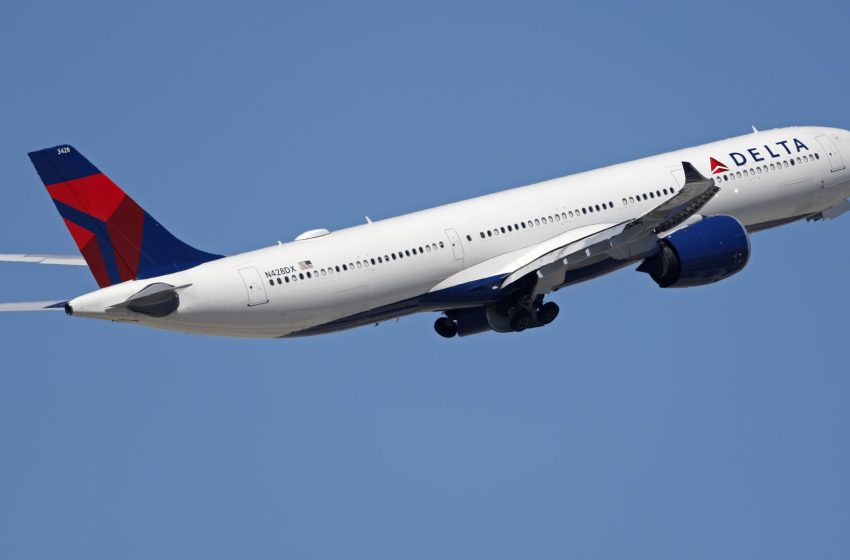
Delta Air Lines Q1 2026 earnings
Delta Air Lines CEO Ed Bastian said the carrier will “meaningfully reduce” its capacity growth plans in the near term as fuel costs soar, solidifying a pullback from airlines that have been roiled by a historic run-up in jet fuel due to the Middle East war.
Shares were up more than 11% in premarket trading, extending gains U.S. carriers saw after oil prices dropped.
Delta on Wednesday forecast adjusted per-share earnings of $1 to $1.50 in the second quarter, compared with the $1.41 a share analysts were expecting, with revenue up in the “low-teens” percentage points compared with a year earlier, above the roughly 10% Wall Street forecast. Capacity will likely be flat on the year, Delta said.
Delta said its fuel bill will be $2 billion higher this quarter because of the spike in fuel costs.
Here’s what Delta reported for the first quarter compared with what Wall Street was expecting, based on consensus estimates from LSEG:
- Earnings per share: 64 cents adjusted vs. 57 cents expected
- Revenue: $14.2 billion adjusted vs. $14 billion expected
Delta is the first of the major U.S. airlines to report first-quarter results, though United Airlines, Delta and others had already been trimming capacity for the quarter.
Less capacity can mean higher airfare, which is already on the rise. Delta also joined JetBlue Airways and United in raising its checked bag fees on Tuesday. Carriers around the world are more even more affected by the rise in fuel costs because of their countries’ reliance on imports and have added fuel surcharges or announced fare increases.
Bastian said demand remains strong, despite the higher travel costs, and that Delta’s customer base continues to spend on travel, particularly for higher-end products like more spacious seats.
Speaking to reporters, Bastian said it isn’t clear if or when customers will pull back.
Delta owns a refinery where it turns crude oil into jet fuel and other products, like gasoline and diesel, giving it an advantage over other carriers.
“We we don’t know what where fuel is going to go, but to the extent fuel stays elevated, that refinery will continue to help us,” Bastian told reporters.
Delta expects to post $1 billion in pre-tax profit in the second quarter and receive a $300 million benefit from its refinery, the carrier said, a major tailwind for the facility near Philadelphia that it acquired in April 2012 from Phillips 66.
The rise in jet fuel prices since the U.S. and Israel attacked Iran on Feb. 28, has been sharper than the run-up in crude oil. Jet fuel prices in major U.S. cities were up nearly 88% since Feb. 27, through April 6, according to Airlines for America industry group, citing Argus data.
Delta expects all-in fuel costs of $4.30 per gallon in the second quarter.
Bastian said the airline isn’t walking back its full-year forecast but isn’t updating it either because of uncertainty of fuel prices. Delta projected potentially record earnings this year when it released its last earnings in January.
“As we gain more knowledge of the impact of the duration of the fuel spike over the course of the next couple months, we’ll be in a better position,” Bastian said.
Oil futures were sharply lower on Wednesday after President Donald Trump said Tuesday that he agreed to suspend planned attacks on Iranian infrastructure for two weeks, backing off of threats to imminently order the destruction of Iran’s “whole civilization,” and Iran agreed to open the key Strait of Hormuz shipping channel.
Meanwhile, premium travel demand continues to drive results. Delta said premium-ticket revenue, from first class and other more expensive options compared with coach, was up 14% in the first quarter over last year. Main cabin revenue increased for the first time since late 2024.
Capacity, however, fell 3% in the first three months of 2026 compared with last year “as continued investment in fleet renewal drove premium seat mix higher.” the company said.
Rival United, the second-most profitable U.S. carrier, has been trying to increase its premium-seat footprint, investing in new onboard technology, new suites and other perks.
“I think they’re smart trying to copy us,” Bastian said.
Bastian said that Delta did see a pullback in some business travel during the hourslong Transportation Security Administration lines at airports last month due to the partial government shutdown but that travel segment appears to have recovered.
For the first quarter, Delta reported net income of $423 million, or 64 cents a share, up from $291 million, or 45 cents a share, during the same period last year. Adjusting for one-time items, Delta reported 64 cents a share for the first quarter, ahead of the 57 cents analysts expected.
Revenue, adjusted for third-party sales from its refinery and other items, rose more than 9% to $14.2 million in the first quarter.
First Appeared on
Source link






