


Denmark Just Switched to Red Streetlights to Solve an Urban Crisis Most Modern Cities Still Ignore
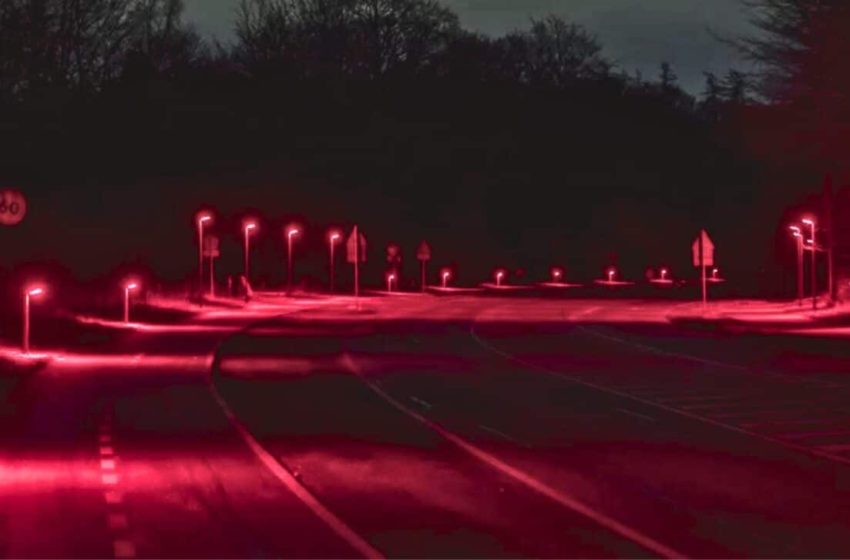
On February 8, 2026, motorists traveling through Gladsaxe, a municipality located just outside Copenhagen, began noticing a stark visual shift along a specific stretch of road. The familiar blue-white glare of standard city lighting had been replaced by a deep, saturated crimson glow. This transition turned Frederiksborgvej, a primary local thoroughfare, into a visual anomaly that stood out against the traditional amber and white lights of the surrounding urban grid.
The change was not a temporary decorative installation or a response to a local festival. Instead, the red light bathed the pavement and the adjacent foliage in a steady, unblinking hue that felt functional rather than aesthetic. This specific environmental modification drew immediate attention because it altered the visibility and atmosphere of a high-traffic area without any prior announcement to the general public.
Local residents observed that the new lighting was concentrated in a section of the city where suburban development meets dense clusters of vegetation. This geographic placement suggested the project was designed to address a localized condition rather than a citywide design overhaul. Records show the technical reasoning behind the selection of the red spectrum remained hidden behind the glow of the new lamps.
What Changed Along Frederiksborgvej
Reports note that Gladsaxe replaced its standard white LED fixtures with specialized red LED streetlights along Frederiksborgvej. The installation was strategically placed near a known bat colony to mitigate the impact of artificial light on the nocturnal ecosystem. By shifting the wavelength of the light, the city sought to maintain essential road safety for drivers while protecting the natural behaviors of local wildlife.
The project identified the common pipistrelle and the brown long-eared bat as the primary species targeted by this conservation effort. These animals rely on specific dark corridors for navigating between their roosting sites and their feeding grounds. When traditional white light spills into these areas, it can create “light barriers” that the bats are often unwilling to cross, effectively shrinking their available habitat.

The Danish Road Directorate provided the technical guidance for the project, emphasizing that the placement of these lights was not arbitrary. The agency focused on the intersection of human infrastructure and biological hotspots, ensuring that Frederiksborgvej could serve both its transport function and its role as a wildlife corridor. This move marked a departure from standard lighting protocols that prioritize human vision over ecological sensitivity.
Philip Jelvard, a lighting designer at Light Bureau who worked on the project, stated:
“Overall, we hope that everyone welcomes the new lighting and that the red light not only has functional value, but also symbolic value. The red light should make passers-by aware that this is a special natural area that we want to protect.”
Why Red Light Was Chosen
The core issue addressed by the project is light pollution, a byproduct of urbanization that disrupts the internal clocks of many living organisms. Data indicates that traditional white LEDs contain high levels of blue light, which scatters easily in the atmosphere and creates significant glare. For species like bats, this bright spectrum can be disorienting or can even attract insects away from the areas where bats naturally hunt.
Scientists have found that many bat species do not perceive red light as a threat or a barrier in the same way they perceive white or blue light. By using red LED streetlights, the municipality is able to provide enough illumination for human drivers to see the road surface and obstacles clearly. At the same time, the red spectrum remains largely invisible or non-disruptive to the common pipistrelle, allowing the animals to continue their nocturnal activities without interference.
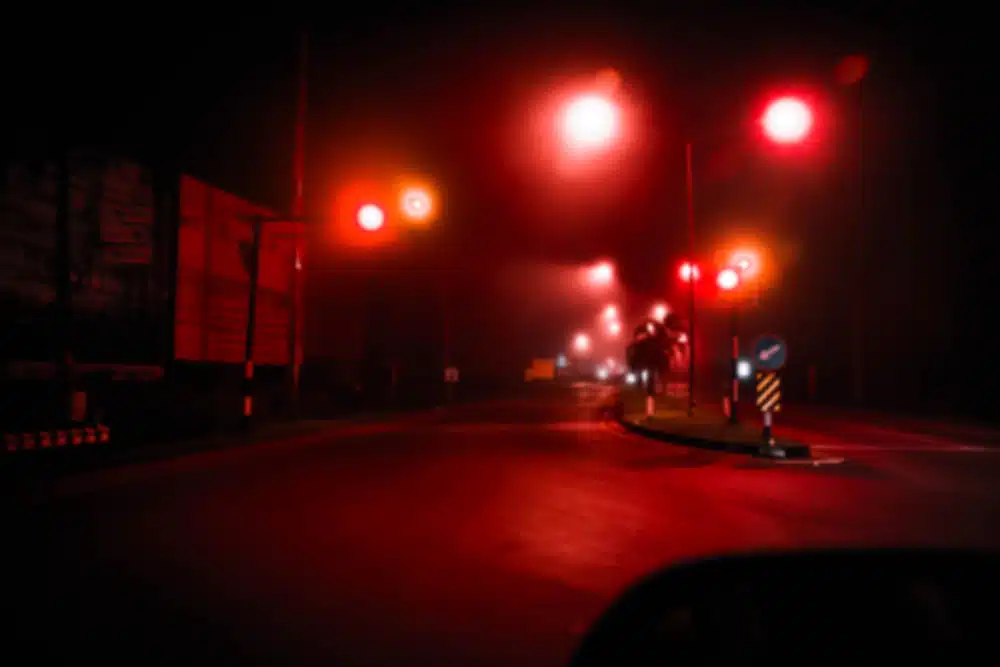
This specific wavelength choice reflects a growing understanding of how different frequencies of light interact with biological retinas. While humans can see quite well under red light once their eyes adjust, many nocturnal mammals have eyes tuned to shorter wavelengths. The use of red LED streetlights in Gladsaxe serves as a deliberate technical compromise that allows two very different groups of inhabitants to use the same space simultaneously.
The Project Fits a Wider Urban Strategy
The transformation in Gladsaxe is part of a larger international framework known as Lighting Metropolis – Green Mobility. This program is an EU-funded initiative that brings together cities across Denmark and Sweden to test sustainable lighting solutions. The red light installation on Frederiksborgvej serves as a real world laboratory for these broader efforts, providing data on how such changes affect both energy consumption and local biodiversity.
This local initiative also aligns with the broader objectives set by the United Nations Development Programme. Based on the United Nations Development Programme page for Goal 11, which focuses on sustainable cities and communities, more than half of the world’s population currently lives in urban areas. The organization projects that by 2050, 70 percent of the world’s population will live in cities, making the management of urban environments a primary concern for global stability.
The United Nations Development Programme notes that while cities occupy only 3 percent of the Earth’s land, they account for up to 80 percent of global energy consumption. Projects like the one in Gladsaxe demonstrate how small-scale infrastructure changes can contribute to the larger goal of making cities more resilient and less impactful on the surrounding environment. By optimizing streetlights, municipalities can reduce their ecological footprint while still meeting the needs of a growing population.
Beyond the immediate biological benefits, the red LED streetlights serve as a permanent visual marker of the city’s environmental priorities. The distinct color alerts drivers that they are entering a sensitive ecological zone, potentially encouraging more cautious driving behavior in areas where wildlife is active. In this way, the lighting functions as both a safety tool and a piece of public communication regarding local biodiversity conservation efforts.
First Appeared on
Source link






