


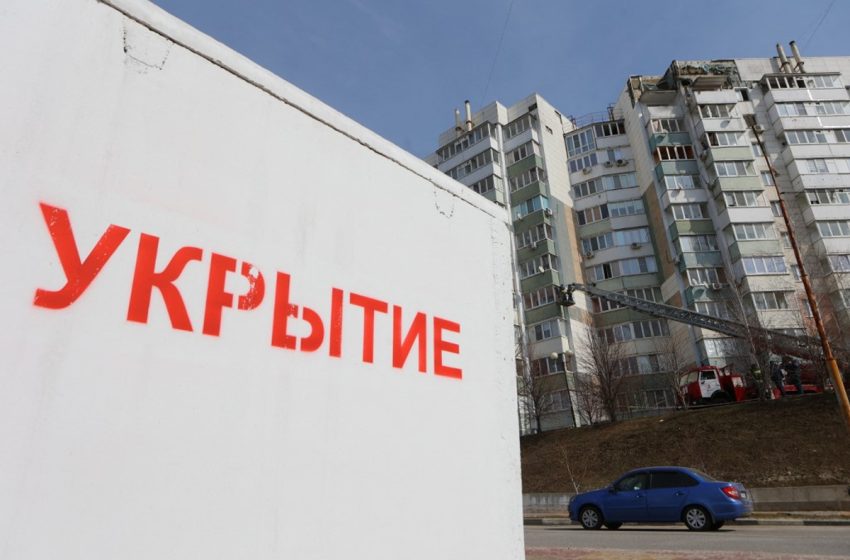
Devastating Ukrainian Drone Strikes Against Belgorod Isn’t News in Russia
Despite a systematic Ukrainian drone strike campaign leaving hundreds of thousands of unlucky Russian citizens living in the city of Belgorod in cold and dark apartments for weeks, Kremlin-controlled media have barely noticed, mostly reporting that the robot aircraft swarms were all shot down.
Russian mainstream information platforms like TASS, RIA Novosti, and RT have not just downplayed blackouts and heating plant damage and mass evacuations from thousands of homes following repeated Ukrainian attacks on the city of 300,000 some 40 kilometers (25 miles) from Ukraine’s northeastern border, but effectively ignored them.
JOIN US ON TELEGRAM
Follow our coverage of the war on the @Kyivpost_official.
The most recent major Ukrainian attack on Belgorod’s power grid and public heating infrastructure hit overnight on Feb. 22-23.
Breaking through air defenses, a mixed strike package of drones and missiles scored hits on the city’s Frunzenskaya power substation near Dragunskoye village, and the Belgorod Combined Heat and Power Plant, based on eyewitness videos and independent local channels showing explosions and fires at those locations.
The independent Belgorod news platform Pepel_Belgorod reported on the Ukrainian robot aircraft squadrons’ progress in near real-time. Air raid warnings went into effect at 9 p.m., and air defenses opened fire about 11 p.m. Shortly before midnight, at least one missile – most reports said two or more – hit the Belgorod power substation, instantaneously blacking out about half of the city.
Other Topics of Interest
Business Sentiment in Ukraine Turns Cautious Amid Energy Strikes, Labor Shortages
The European Business Association says 76% of members are fully operational in early 2026, but sentiment is growing cautious as executives cite energy strikes and labor shortages as top concerns.
By the time the all-clear was called, at about 2 a.m., fires were burning at both the city heating plant and at locations where shot-down drones had struck homes or businesses, and the blackout had spread to encompass almost all of Belgorod, save a few government buildings with generators. Six people were reported injured.
By mid-morning, geolocated images emerged of smaller substations across the city still burning from the overnight strikes. Social media users – in violation of Russian law banning posting of such things on the internet – uploaded images of the entire front facade of the six-story Ministry of Agriculture local branch office, unfortunately located adjacent to one of the city’s sub-stations, blackened by explosions and with all its windows blown out. Chunks of drones or pieces of falling missiles – whether Ukrainian or Russian wasn’t clear – struck and damaged the main cupola of Belgorod’s Church of the Holy Martyrs Vera, Nadezhda, Lyubov, and Their Mother Sophia, an official statement said.
Other independent news and social media reports chronicled falling Ukrainian weapons or Russian anti-aircraft missiles, or their debris, hitting apartment high-rises, automobiles, and office buildings. Some debris scattered 10 kilometers (6.2 miles) or more, official reports said, to break windows and even automobile windshields in the villages Dubovoe, Nikolskoe and Tavrovo.
A Monday statement from Ukraine’s Unmanned Systems Forces (USF) took credit for the attacks and damage caused and declared the strikes “effective.” A Russian Defense Ministry statement, without admitting any Ukrainian hits on anything, announced air defense forces had shot down 65 violators of the Russian Federation’s airspace above Belgorod, which were close to half of the 152 Ukrainian incoming drones or missiles claimed destroyed that day by Russian armed forces.
Belgorod Governor Vyacheslav Gladkov, in an official statement, described the night’s battles as a “massive” attack causing “serious damage to energy infrastructure,” and said blackouts and heating outages would affect homes of “some residents” in the city and district.
The wooden Church of the Holy Martyrs thankfully was not set on fire, but within Belgorod city, 8 multi-story buildings, 2 private homes, 38 cars, a social facility, and 3 commercial properties were damaged, Gladkov said in a midday update to Belgorod citizens that did not, however, mention the blasts and their effect on the Ministry of Agriculture building. Gladkov and other officials did not state publicly what percentage of Belgorod city was blacked out, or without heating, or when that would be fixed. Gladkov ended the day with a statement calling on taxpayers to “be strong… and patient.”
Pepel_Belgorod said the Ukrainian attack and the damage it caused “was one of the biggest hitting Belgorod in the entire war” and predicted some damage would take weeks to repair.
But for Russian mainstream media and the average Russian news consumer, on Monday, Governor Gladkov’s worries and thousands of Belgorod residents without heating or power weren’t particularly newsworthy.
The top news of the day was, on Russian national state-controlled media, the fact that Monday, Feb. 23, was Defender of the Fatherland Day, a holiday dating back to the Soviet-era Red Army Day. National Russian television channels like Rossiya 1 and national newspapers like Izvestiya delivered content on Russian successes in the Russo-Ukrainian War (called, in Russian media the “Special Military Operation), interviews with soldiers, World War Two veterans and soldier widows, and President Vladimir Putin laying a wreath at the Tomb of the Unknown Soldier.
On all those Russian news platforms, the mayhem caused by the Ukrainian strikes against Belgorod only hours before was either omitted entirely or relegated to a quick mention of all the Ukrainian drones shot down. Izvestiya told readers that Russian air defense “repelled” the Ukrainian attacks.
Also not mentioned at all, in those Russian mainstream news reports, were the, by many measures, relentless, Ukrainian attacks on Belgorod for two months or more, particularly a Dec. 15 missile attack against the city’s main thermal plant, a Dec. 31 massed drone raid targeting substations across the Belgorod region, two more strikes against the city heating plants in January, massive blackouts following nightly power grid attacks from Feb. 4-9, and a missile attack aiming at energy infrastructure on Feb. 18-19.
Following those attacks, Gladkov told reporters that about one-quarter of Belgorod’s buildings would have to be evacuated until at least April, because there was no longer any way to heat them. Damage was worst in the central and southern districts of the city, local news reports said. Kyiv Post was unable to find a single mention in national-level mainstream Russian news of the evacuations.
On Tuesday top-level Russian news platforms led with stories about Kremlin forces (allegedly) capturing a single village in Ukraine’s Zaporizhzhia region, alleged Western plans to arm Ukraine with nuclear weapons, new British sanctions on Russia, Moscow’s concerns the Telegram messaging app may threaten Russian national security, and a sound bit by Kremlin spokesman Dmitry Peskov accusing Western nations of unfairly ganging up on Russia with sanctions and by helping Ukraine defend itself.
Belgorod was mostly a non-story, but a few outlets reported repairs from the last Ukrainian strike were progressing well, and a few more informed readers and viewers that Russia’s sharpshooting air defense forces had knocked down more than 350 Ukrainian attack drones in the past 48 hours. Gladkov, in a Tuesday statement marking the start of the fifty year of the war, acknowledged Ukrainian attacks had made life “difficult” for Belgorod residents. Russia will emerge victorious because of the bravery of Belgorod’s citizens, he said in a video posted on his personal Telegram channel. Gladkov did not state when his city would again have normal power and heating, but called on voters “to be resilient and patriotic.”
First Appeared on
Source link






