


Drone Mini-Submarine That Attaches Itself To Other Vessels Unveiled By Lockheed
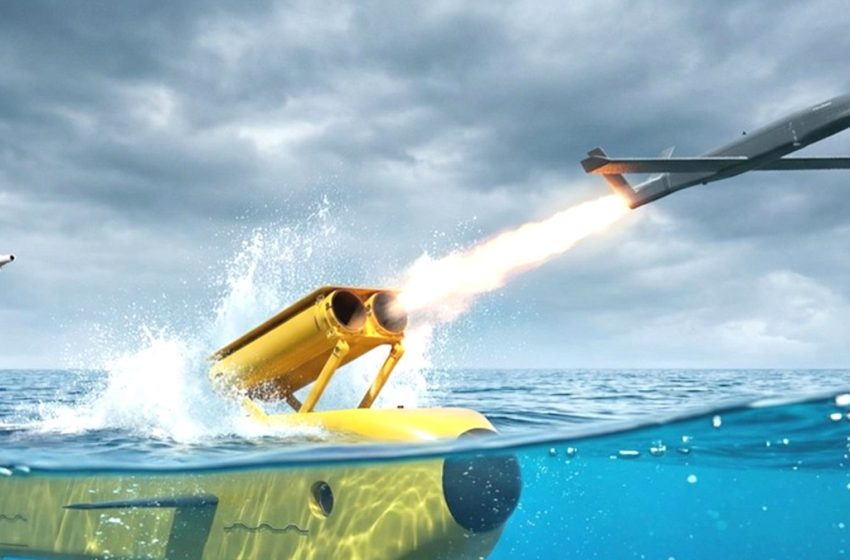
Lockheed Martin has rolled out a new uncrewed undersea vehicle called Lamprey, designed to ride to and from operating areas attached to the hulls of ships and submarines. The highly modular design can also be configured to launch aerial drones, torpedoes, and decoys, as well as gather intelligence once it arrives at its destination. Also able to lie in wait on the seabed, Lamprey opens the door to new ways to watch for enemy naval activity and deny their ability to move freely if called upon.
Lamprey, which Lockheed Martin describes as a multi-mission autonomous undersea vehicle (MMAUV), has a largely square hullform and 24 cubic feet of internal payload space. It is electrically powered and features a built-in hydrogenerator that allows it to recharge its batteries during missions. It has two propulsors at the rear, as well as two mounted sideways in the body.
“Built with the U.S. Navy’s need for covert, assured access and sea denial operations, LampreyMMAUV can arrive in theater with a fully charged battery. Mimicking nature, it can hitch a ride on a host surface vessel or submarine, utilize hydrogenators to charge batteries and arrive in theater ready for operational missions,” according to a press release put out today. “Lockheed Martin’s LampreyMMAUV can perform a wide range of missions including delivering undersea and air kinetic and non-kinetic effects; performing intelligence, surveillance, reconnaissance, targeting, and multi-intelligence collection; and deploying equipment to the seafloor. “
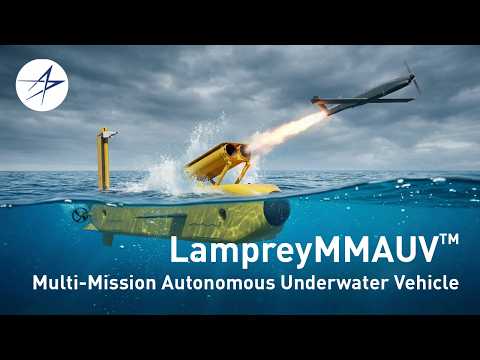
Introducing LampreyMMAUV™: The Next-Generation of Undersea Autonomy
At the time of writing, Lockheed Martin has yet to release more details about the Lamprey’s range, speed, or other specifications beyond its internal payload capacity.
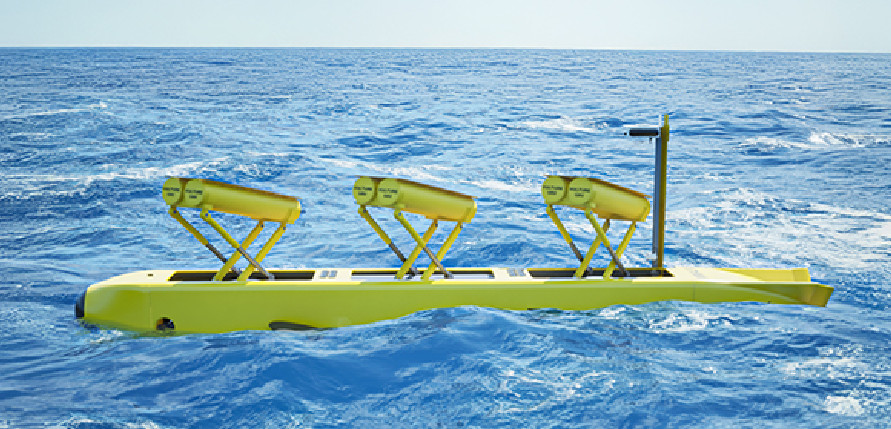
The aforementioned ability to launch uncrewed aerial systems, for surveillance and kinetic strike, is featured heavily in the material that Lockheed Martin has released so far, including the computer-generated video seen earlier in this story. Renderings show Lampreys equipped with up to three retractable twin-tube launchers, for a total load of up to six drones. The company has told TWZ that the specific aerial drone design seen in the materials it has released so far is meant to be a generic stand-in rather than reflect a specific existing type.
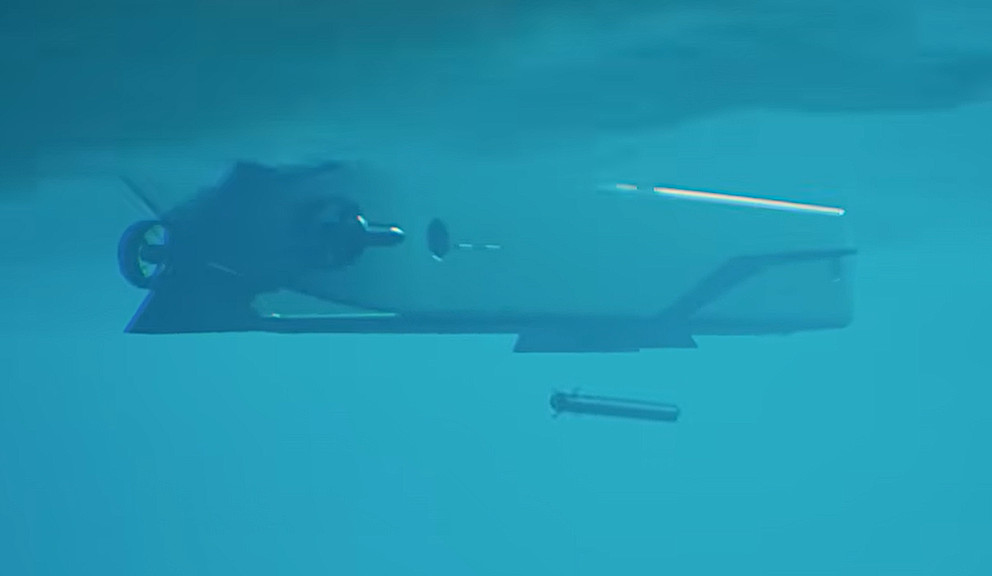
In terms of kinetic capabilities, Lockheed Martin says Lamprey can be configured to launch small torpedoes from an internal bay, as well.
The Lamprey is also depicted deploying decoys that are extremely similar, at least externally, to the U.S. Navy’s Mk 39 Expendable Mobile Anti-Submarine Warfare Training Target (EMATT). The EMATT is designed to simulate the acoustic and other signatures of a full-sized submarine.
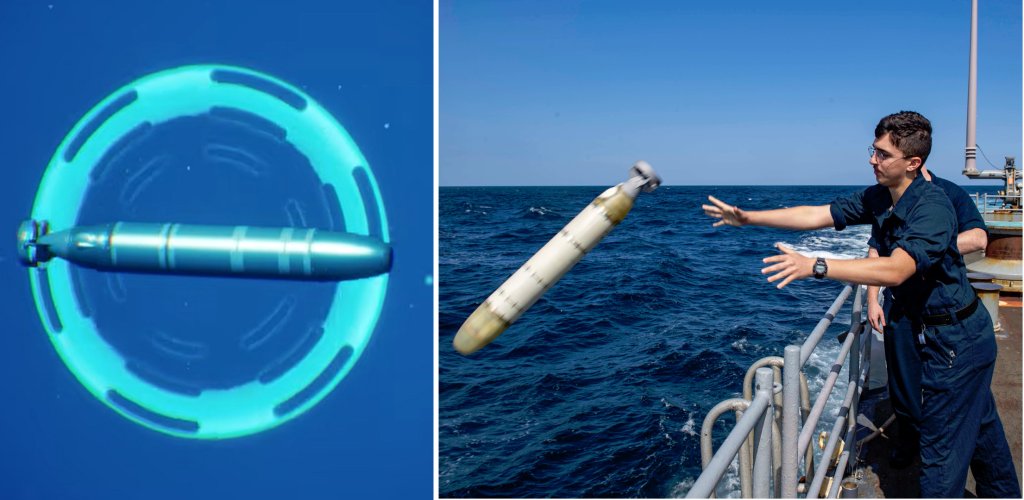
In the same way, the MMUAV might be able to deploy sonobouys or other expendable sensors. Lockheed Martin says the undersea drone can carry its own suite of unspecified sensors, as well. This could include sonars, passive radio frequency (RF) signal detection systems, and/or optics that could be employed while submerged or sailing close to the surface.
The computer-generated video shows Lampreys communicating via a retractable mast while running close to the surface, as well as through nodes on the seabed while submerged. In addition to being able to launch kinetic attacks itself, the MMAUV is depicted passing information to an F-35 Joint Strike Fighter flying overhead, which then fires a missile at a target ship.
However, Lamprey’s most significant capability is its ability to latch onto the underside of ships and submarines. This is reflected right in the name, as lamprey eels have circular, suction cup-like mouths with rows of sharp teeth that allow them to lock onto a host fish. Real-life lampreys are parasitic, feeding on their hosts once attached.
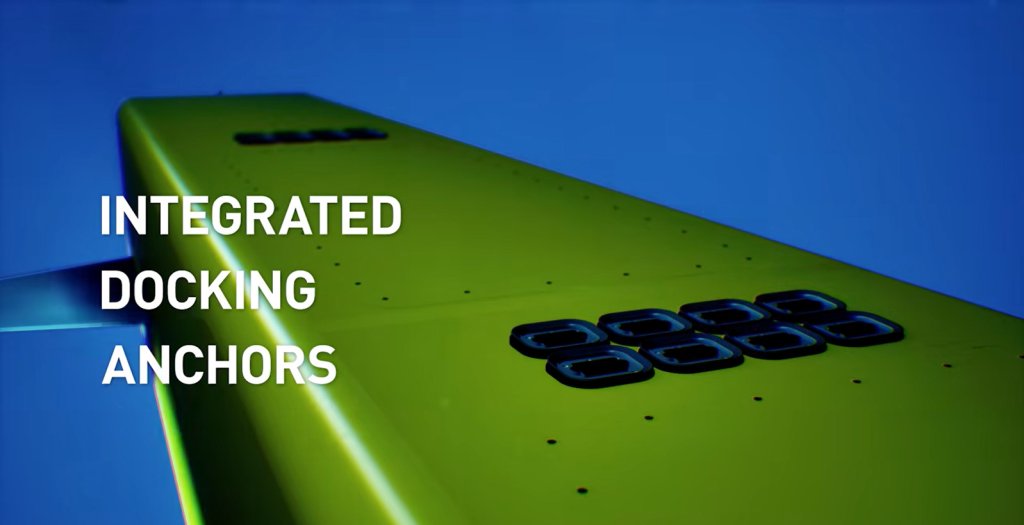
This covert deployment capability opens a number of interesting operational possibilities, especially if the MMAUVs have a high degree of autonomy. Friendly ships and submarines could take groups of Lampreys discreetly to their destination or launch them from the stand-off positions, as well as recover them. They could also be employed from larger uncrewed maritime platforms acting as motherships. With the built-in recharge capability, the undersea drones could be employed repeatedly in the course of a single cruise, depending on their payload and mission set.
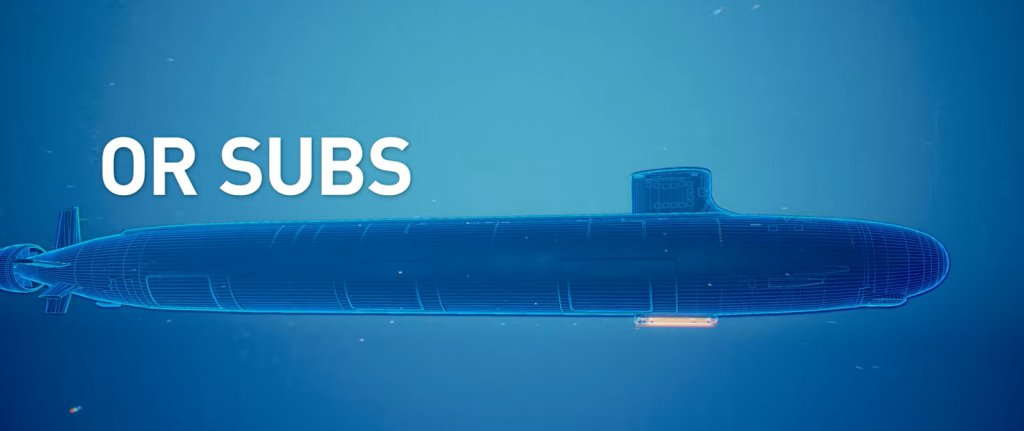
All of this would create immense complications for opponents trying to find and fix the position of the Lampreys, which could conceivably be deployed in virtually any open-ocean or littoral environment. This would all be further compounded by the fact that Lampreys can move around themselves or lie on the seabed for at least some amount of time.
Groups of the uncrewed undersea vehicles could, in turn, offer a new cost-effective way to establish distributed and highly disruptive networks to monitor naval movements across vast areas, and offer an immediate way to attack enemy forces, if required. Lampreys could be seeded into maritime chokepoints or other highly strategic areas to provide additional sea control and anti-access/area denial effects. With their ability to launch uncrewed aerial systems, they could surveil areas or attack targets ashore, as well. The MMAUV would be particularly well-suited to conducting such operations in more remote or otherwise denied areas that might be too risky for or just outright inaccessible to larger crewed ships and submarines.
The Lamprey’s docking capability raises the possibility that it could latch itself onto enemy ships and simply detonate as an explosive-filled limpet mine. Such an attack might be used to create havoc in a port or block a narrow waterway.
It should be noted that Lamprey has not yet been shown carrying munitions that would be sufficient to directly sink larger ships. At the same time, as TWZ has highlighted in the past, small loitering munitions, in particular, still cause damage that could lead to a mission kill by targeting sensors and other key systems. Large volume attacks could also eat up a vessel’s ready stocks of anti-air munitions and other countermeasures, something we touched on in a previous feature outline a detailed case for army U.S. Navy ships with drone swarm capabilities. All of this, in turn, could render a target more vulnerable to follow-on attacks or otherwise sideline it for a protracted period of time.
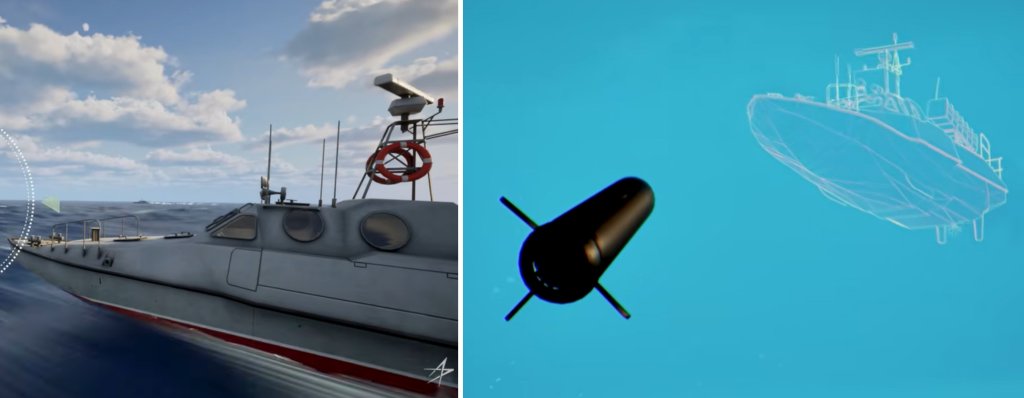
Smaller munitions also present a threat to equally smaller watercraft, crewed and uncrewed, as well as various types of targets on land. Lockheed Martin’s video notably shows loitering munitions launched by Lampreys engaging North Korean-designed missile boats currently in service in Iran, as well as larger surface combatants.
There is still much to be learned about the Lamprey and its capabilities, especially when it comes to its endurance and ability to operate autonomously. What unit cost Lockheed Martin might be targeting and how easily the MMAUVs can be produced at scale are open questions. What stage of development the Lamprey is currently in is unknown.
Lockheed Martin is also not the first to present a concept for a modular and autonomous uncrewed undersea vehicle that could provide an array of valuable distributed capabilities, especially when deployed covertly. As just one example, Anduril rolled out its torpedo-like Copperhead family, which can be configured as underwater kamikaze drones, as well as for other missions. Concepts of operations have been put forward for Copperhead that include deployment from Anduril’s larger Ghost Shark uncrewed mini-submarine and via emplaced nodes on the sea floor.
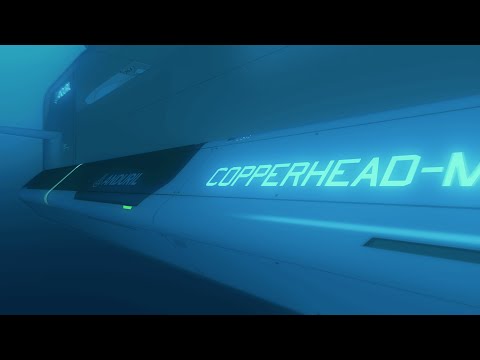
Command the Sea. Command the World.
The U.S. Navy has at least been experimenting with these kinds of capabilities, including concepts for launching aerial drones from uncrewed underwater vehicles, for years now. The service already has some degree of operational capacity to launch uncrewed aerial systems (and undersea ones) from its crewed submarines.
There is a growing trend in the development of various tiers of uncrewed undersea vehicles, including types that could be employed in a distributed manner, globally, as well. Chinese authorities showcased a number of previously unseen underwater drone designs during a huge military parade in Beijing last September.
Lockheed Martin’s unveiling of Lamprey underscores how the underwater ecosystem facing navies worldwide is continuing to evolve in terms of both capabilities and threats, which could also extend into the aerial domain.
Contact the author: [email protected]
First Appeared on
Source link






