


ECB holds rates but it’s not a ‘non-event,’ economists say. Here’s why
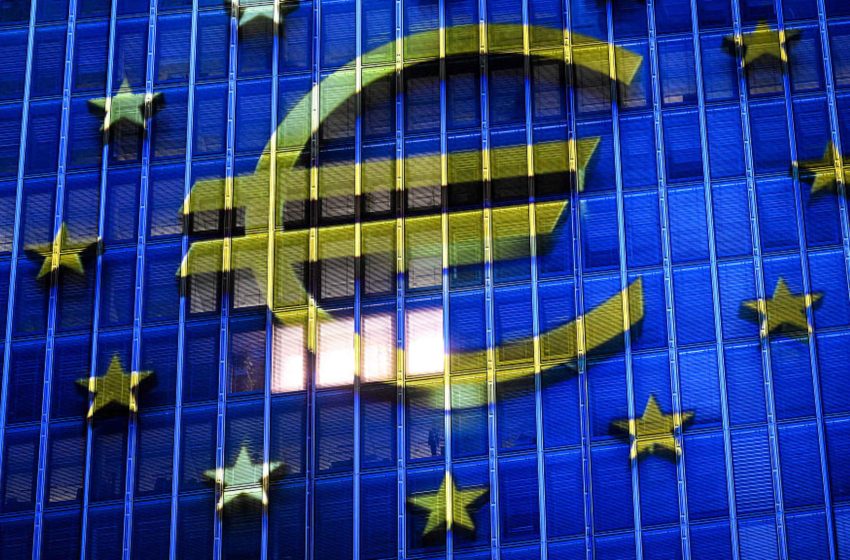
A projection of a Euro currency sign is pictured on the facade of the European Central Bank (ECB) headquarters in Frankfurt am Main, western Germany, on Dec. 30, 2025.
Kirill Kudryavtsev | Afp | Getty Images
The European Central Bank on Thursday kept policy rates unchanged for the fifth consecutive meeting, with its key interest rate at 2%, in line with the bank’s target.
The ECB commented Thursday that the inflation trajectory and wider economic conditions did not warrant a move at this month’s meeting, but warned that the outlook was unpredictable.
“Inflation should stabilise at its 2% target in the medium term. The economy remains resilient in a challenging global environment. Low unemployment, solid private sector balance sheets, the gradual rollout of public spending on defence and infrastructure and the supportive effects of the past interest rate cuts are underpinning growth,” the central bank said.
“At the same time, the outlook is still uncertain, owing particularly to ongoing global trade policy uncertainty and geopolitical tensions,” it added. The euro was flat against the dollar, at $1.179, following the decision, which had been widely anticipated.
ECB President Christine Lagarde said at a news conference Thursday that the central bank would maintain its data-dependent and “meeting-by-meeting approach,” and would not be “precommitting to a particular rate path.”
“In particular, our interest rate decisions will be based on our assessment of the inflation outlook and the risks surrounding it,” she said.
Not a ‘non-event’
At first glance, Thursday’s decision looks like a non-event. Economists say it’s not.
“It would be wrong to characterize the February meeting as a non-event. The environment is marked by high uncertainty and two-sided risks,” Deutsche Bank economists said in emailed research ahead of the rate hold.
“Understanding how the ECB is thinking about risks is important to gauging the path of policy going forward,” they added, assessing what the rising euro exchange rate means for monetary policy when the euro zone’s inflation rate is already below the ECB’s 2% target, with flash data on Wednesday showing the rate had cooled to 1.7% in January.
“All else unchanged, the recent appreciation [of the euro] is disinflationary and reinforces the expected inflation undershoot. However, the scale of the impact depends on the circumstances.”
Currency appreciation tends to cause disinflation by making imported goods, raw materials and energy cheaper, in turn lowering production costs and consumer prices.
While that may be good for businesses and consumers in the short term, central banks are wary about disinflation, and potentially deflation, over the longer term because it can trigger economic stagnation with consumers holding off purchases (in the expectation that prices will fall further) while businesses can see lower revenues and increased real debt burdens.
Over the past month, the euro has strengthened 0.75% against the dollar, and is up almost 14% over the last 12 months, amid rising concerns over the unpredictability of U.S. economic policy. Some ECB policymakers have expressed concern over the single currency’s appreciation against the greenback and its possible depressant effect on the bank’s inflation target of 2%.
“We are closely monitoring this appreciation of the euro and its possible implications for lower inflation,” France’s central bank governor, Francois Villeroy de Galhau, commented last week.
Lagarde said Thursday that the ECB’s Governing Council had discussed downside inflation risks and the euro’s exchange rate as part of its latest economic risk assessment.
“Inflation could turn out to be lower if tariffs reduce demand for euro area exports by more than expected, and if countries with overcapacity increase further the exports to the euro area,” she noted, adding:
“Moreover, a stronger euro could bring inflation down beyond current expectations. More volatile and risk-averse financial markets could weigh on demand, and thereby also lower inflation.”
EUR/USD exchange rate over the last 12 months
Despite the red flags, Greg Fuzesi, euro area economist at JPMorgan, said it’s not clear that currency moves to date will be seen as very concerning.
“The ECB looks at both the level of the currency, the speed of its movement and whether any changes are likely to persist, and none of this looks overly troubling or clear in the context of an economy that has recently been resilient to a variety of pressures,” he said in emailed comments.
“Of course, all of this can change if growth indicators weaken and/or if the currency strengthens much more from here. But neither is the case right now,” he noted.
Hike next?
The ECB’s latest decision was in line with consensus forecasts. Around 85% of economists surveyed by Reuters in their January poll said the ECB would leave rates unchanged over the rest of 2026.
Sylvain Broyer, chief EMEA economist at S&P Global Ratings, commented Thursday that the central bank could “keep the autopilot on this time.”
“FX [foreign exchange] markets remain volatile and distorted by uncertainty, yet they’re doing their job as shock absorbers. Financing conditions stay supportive, and growth continues to outperform expectations,” he said in emailed comments.
The ECB can afford to wait until next month’s updated economic projections to reassess whether its monetary policy is still in a good place, Broyer added.
Deutsche Bank’s base-case scenario is for the ECB to hold rates at 2% through 2026, with the next move a hike in mid-2027. This, they noted in emailed analysis, would be “driven by fiscal easing, a tight labor market and future inflation risks moving above target.”
This year, meanwhile, sees the risks skewed toward further easing.
“Ultimately, we think domestic inflation will outweigh external disinflation – we see evidence of the fiscal easing starting to spur activity, but at the same time the external risks have increased. Domestic conditions versus external conditions is the key data battle to watch,” they said.
First Appeared on
Source link






