


Eight Meters up in the Rainforest, Scientists Just Found a Creature with the Face of Moby Dick
Deep in the forest canopy of French Guiana, a dead branch hung eight meters above the forest floor. Inside that branch, a small colony of termites lived without attracting attention for years. When researchers finally opened the wood, they found soldiers with a shape no one had seen before.
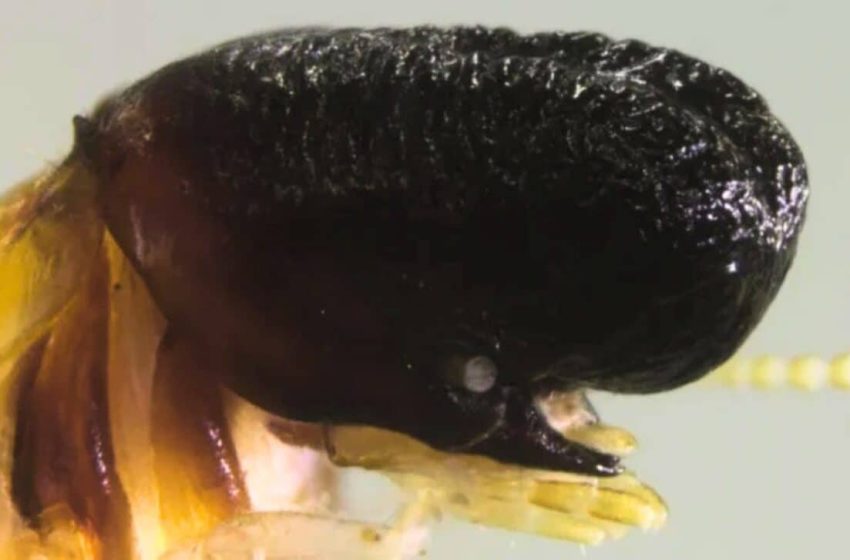
The insects were termites, but their heads did not look like any termite head on record. Each soldier possessed a skull stretched forward into a long, blunt point. The shape was so unusual that the scientists immediately thought of something much larger than an insect.
At the Nouragues research station, a field site known for its isolation and pristine rainforest, researchers regularly collect dead wood from the canopy. They target branches that still hang in the trees, where termites often establish colonies away from ground predators. It was during one of these climbs that the specimens turned up.
The termites belong to the genus Cryptotermes, a group of wood-dwelling insects that specialize in dead branches. Fifteen other species of Cryptotermes had already been documented across South America. None of them prepared the researchers for what they found in that single branch.
A Head That Hides the Mandibles
The soldiers of this new species measure only a few millimeters long. Their heads, however, are dramatically out of proportion to their bodies. The forward projection of the skull, called a rostrum, extends so far that it completely conceals the mandibles underneath.
In most termite species, soldiers use their mandibles to defend the colony. In this insect, the mandibles remain hidden beneath the extended head capsule. That leaves researchers uncertain how the soldiers fight or block nest entrances.
The anatomy defies expectations for the entire Cryptotermes genus. Rudolf Scheffrahn and his colleagues published the formal description in the journal ZooKeys, naming the species Cryptotermes mobydicki. The name references the sperm whale from Herman Melville’s novel Moby-Dick, a deliberate comparison to the animal’s distinctive block-headed silhouette.
The choice was not merely literary. The termite’s elongated head evokes the same visual profile as the massive marine mammal, scaled down to an insect that could rest on a fingertip.
A Genetic Link Across the Caribbean
After identifying the physical traits, the research team turned to genetic analysis to understand where this new species fit among other termites. The results produced an unexpected geographical pattern.
Cryptotermes mobydicki shares close genetic ties with termite populations found in Colombia, Trinidad, and the Dominican Republic. These locations are separated by considerable distances and open water. The findings suggest that an ancestral population once spread across the tropical Americas, possibly with help from ocean currents, migrating birds, or ancient climate shifts.
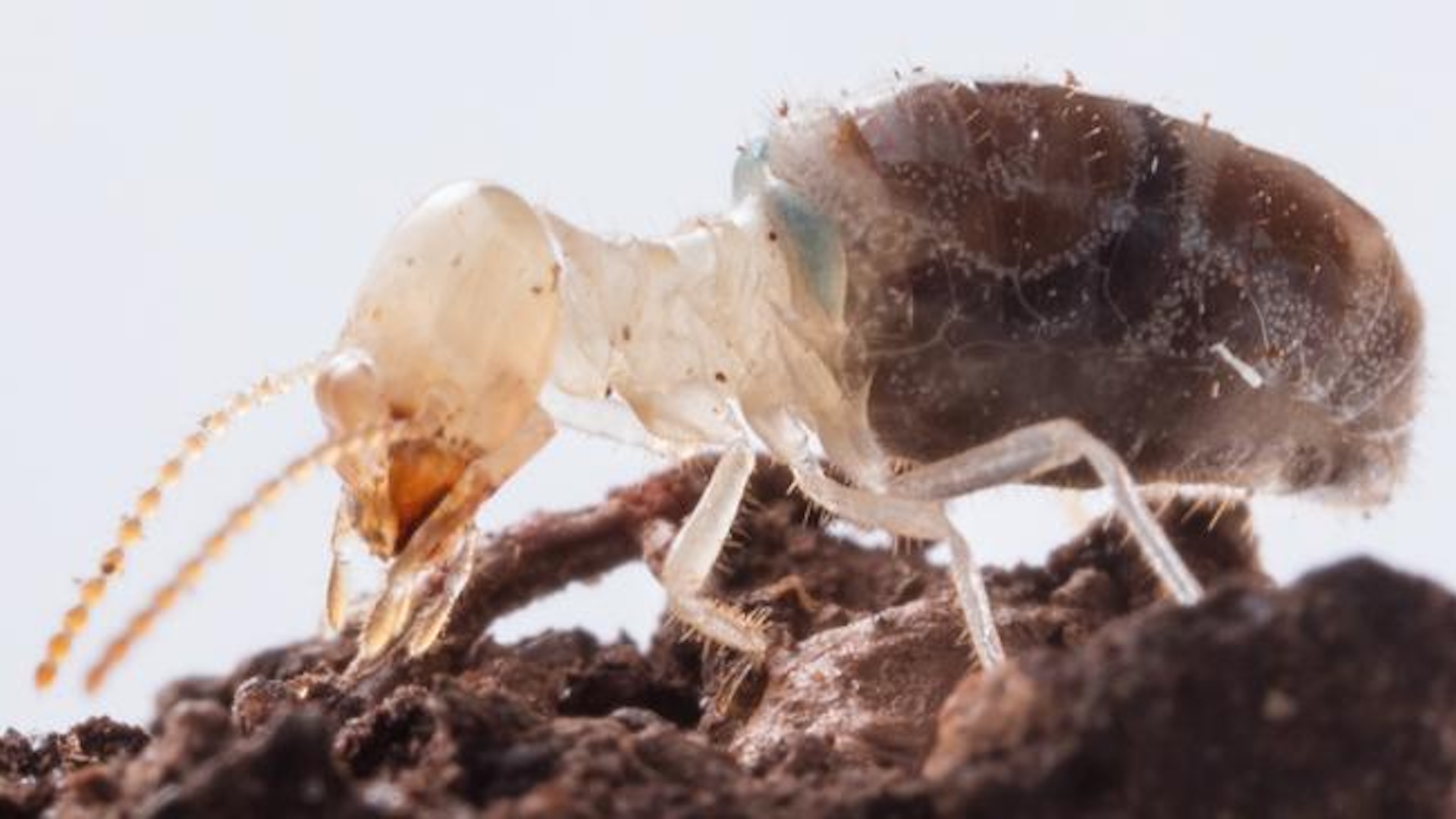
Each isolated population then evolved along its own path. The French Guiana branch developed the extreme head shape that now sets it apart from all other known termites. Researchers estimate that these populations descend from a common ancestor that colonized several regions of tropical America.
The discovery brings the total number of Cryptotermes species identified in South America to sixteen. Each species occupies a specific microhabitat, usually in suspended dead wood. None of the others display the anatomical eccentricity found in Cryptotermes mobydicki.
No Threat to Human Structures
Termites often carry a reputation as pests that damage homes and furniture. Cryptotermes mobydicki does not belong to that category. The species colonizes only dead wood in natural forest settings, never attacking living trees or human-built structures.
Its role in the rainforest is one of decomposition. By breaking down dead branches in the canopy, the termites help recycle nutrients back into the ecosystem. The wood they occupy eventually falls to the forest floor, where decomposition continues.
The research station at Nouragues sits in a protected area of French Guiana, where scientists have long studied the region’s biodiversity. Canopy sampling techniques have improved in recent years. Researchers can now reach microhabitats that were once inaccessible.
What the Canopy Still Holds
The discovery of Cryptotermes mobydicki adds to a growing list of species found in the upper layers of tropical forests. These zones remain underexplored compared to the forest floor. Each expedition into the canopy brings the possibility of encountering forms of life that have never been described.
For the scientists who collected the specimens, the termite’s bizarre head shape raised immediate questions about function and evolution. Why did this lineage develop such an extreme structure when its closest relatives did not? What advantage does the elongated rostrum provide in the cramped tunnels of a dead branch?
Those questions remain unanswered. The researchers noted in their published paper that the functional reason for the head shape is still unknown. No definitive explanation has yet emerged for this unusual adaptation.
First Appeared on
Source link






