


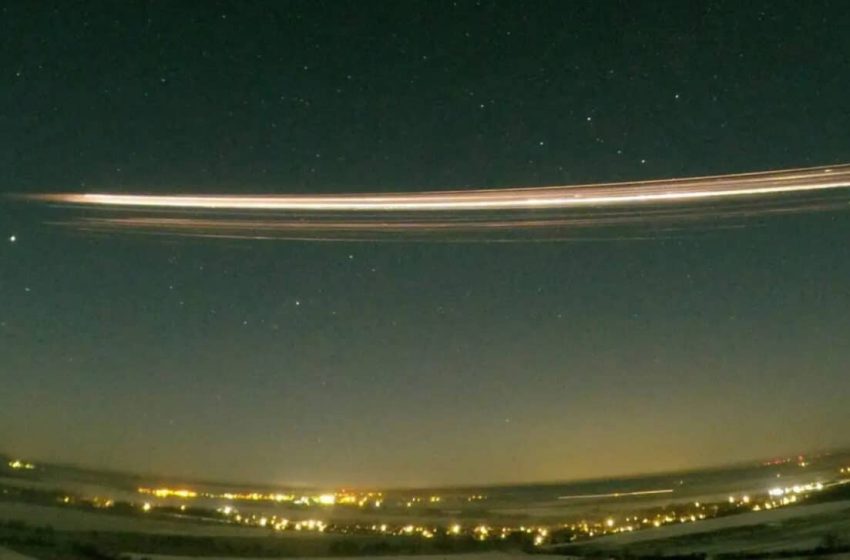
Europe Looked Up at a SpaceX Falcon 9 Fireball, But Scientists Saw 30 Kilograms of Lithium in Its Wake
It has been barely seventy years since the first satellite left the launchpad, yet researchers are already wrestling with consequences that were never anticipated during the early days of spaceflight. While much of the public conversation has focused on the risk of cascading debris known as Kessler syndrome, a different kind of contamination is quietly accumulating in a region of the sky that remains stubbornly out of reach for most scientific instruments.
The area roughly eighty to one hundred and twenty kilometers above the Earth’s surface exists in a kind of observational dead zone: too high for balloons or aircraft, yet too low for satellites to maintain a stable orbit and take clear measurements. This is precisely where the chemistry of our atmosphere is now being rewritten.
A Laser Pinpoints the Problem
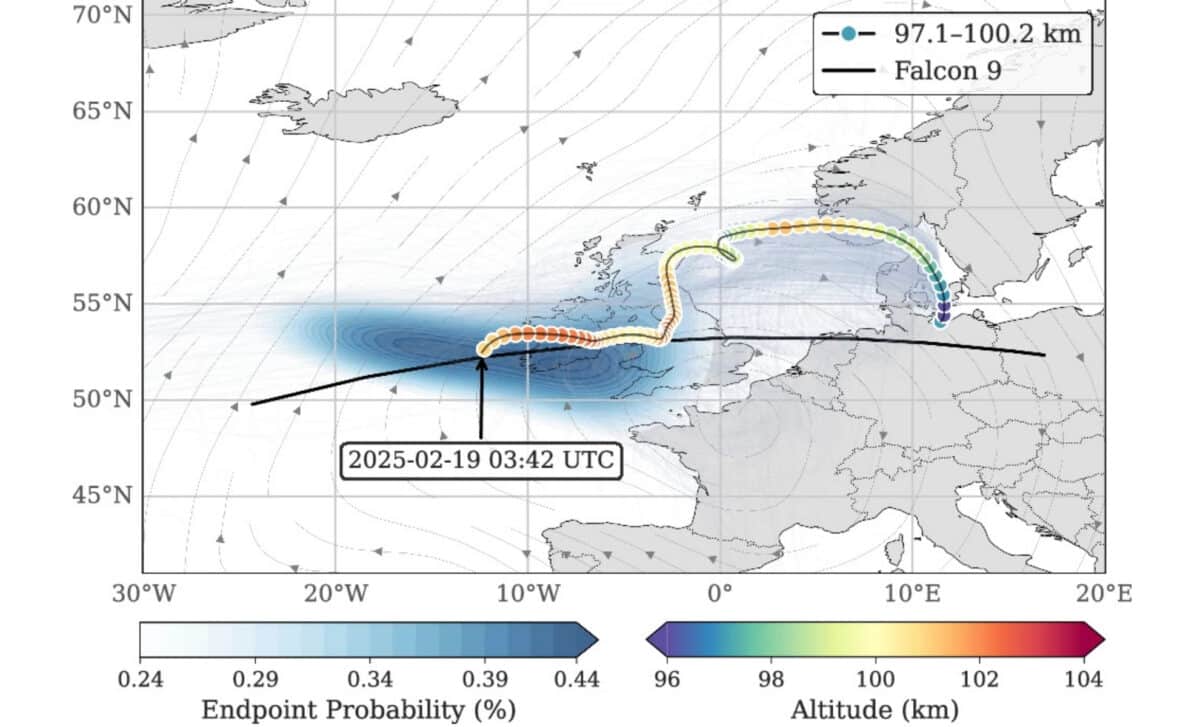
When the first stage of a SpaceX Falcon 9 rocket re-entered the atmosphere on February 20, 2025, most observers across Europe simply looked up and admired the fireball. Robin Wing and his team at the Leibniz Institute of Atmospheric Physics in Germany did something different. As the team later detailed in the journal Communications Earth & Environment, they turned their attention to a specialized LiDAR system, an instrument designed explicitly for dissecting atmospheric pollution at altitudes that usually escape scrutiny.
According to Wing, who spoke with the BBC about the findings, the Earth’s atmosphere naturally receives somewhere between fifty and eighty grams of lithium daily, almost entirely from the steady influx of tiny meteoroids. The Falcon 9 event, by stark contrast, produced thirty kilograms all at once.
The spike was so dramatic that it essentially represented a tenfold increase over the normal daily input, compressed into a single fiery minute. Wing admitted that this emerging field of study is difficult to pin down because the situation is shifting so rapidly, though he pointed to aluminum and aluminum oxides interacting with the ozone layer as the most pressing source of concern.
The Hidden Chemistry of Re-entry
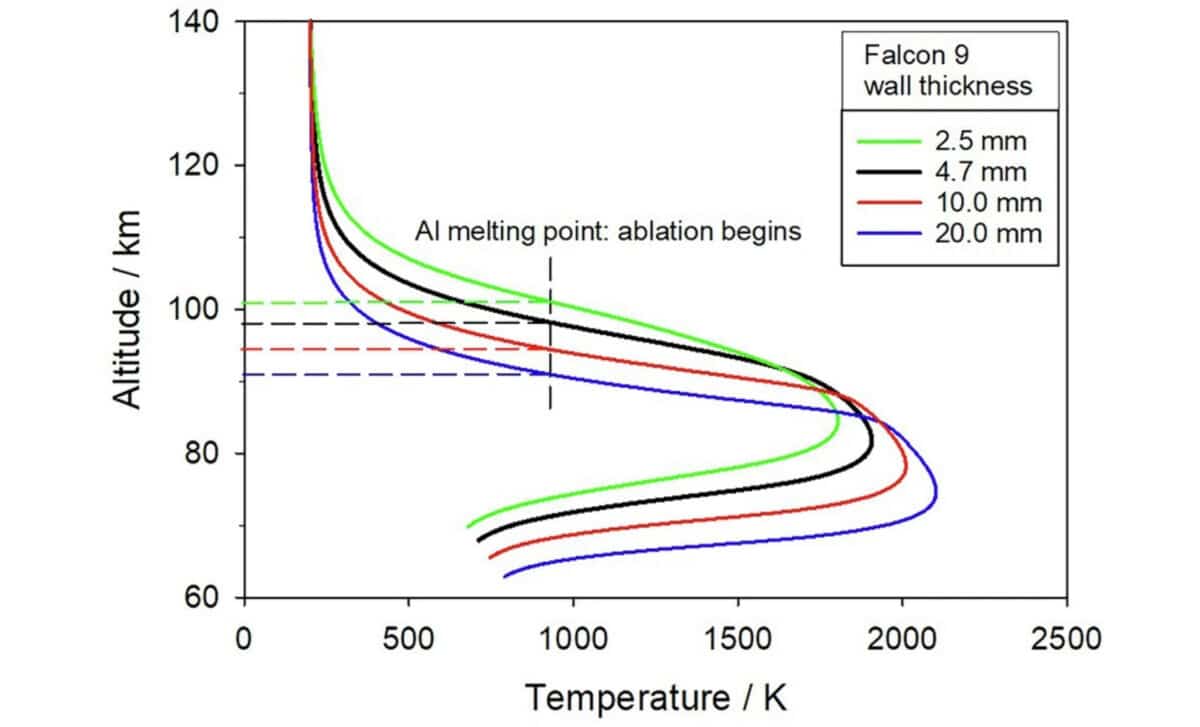
The lithium discovery is alarming in its own right, but it functions more as a warning signal for a broader pattern of atmospheric change that scientists are only beginning to quantify. Researchers have already established that the space industry, particularly when things go wrong, can leave measurable scars on the planet’s protective envelope.
New Scientist has reported that spacecraft burning up during re-entry currently dump roughly one thousand tonnes of aluminum oxide into the atmosphere annually, a figure expected to climb as traffic increases. A particularly dramatic example occurred in November 2023, when an explosive SpaceX launch effectively carved a temporary hole in the ionosphere, disrupting the usual behavior of that electrified layer.
These chemical intrusions are unfolding alongside a separate but related worry: the growing constellations of satellites that these rockets carry into orbit pose their own threats to ground-based astronomy, potentially altering the night sky in ways that scientists are only beginning to model.
The Coming Wave of Metal
The numbers underlying this new form of pollution are difficult to comprehend without stepping back to consider the sheer scale of what is being proposed. Last month alone, SpaceX submitted a request for permission to launch an additional one million satellites, which would join the approximately fourteen thousand five hundred spacecraft the company already operates.
Every one of those objects has a finite operational life, and virtually all of them will eventually follow the path of that Falcon 9 stage, burning up in the upper atmosphere and adding their material composition to the chemical mix accumulating in the scientific blind spot.
As reported by Popular Mechanics, the authors of the study framed the Falcon 9 case as both a warning and an opportunity, describing it in their paper as a harbinger of the expected increase in re-entry events over the coming decade, while also acknowledging that it provided an excellent test of the scientific community’s ability to monitor and detect the pollution resulting from artificial satellite re-entries. The challenge, as they see it, is that the monitoring capability is still catching up to the pace of change overhead.
First Appeared on
Source link






