


Exclusive: Xbox leaders outline the platform’s future
As of February 23, 2026, Xbox has a new CEO.
Xbox is facing some of its biggest challenges yet, as disruption from non-gaming entities threaten playtime hours, and evolving user behavior and sentiment bottlenecks interest in traditional video game “play.”
Sharma’s task will be figuring out how to guide Xbox through its next era, as conversations around artificial intelligence dominate the discourse, and Xbox’s place in this strange new world is continually questioned.
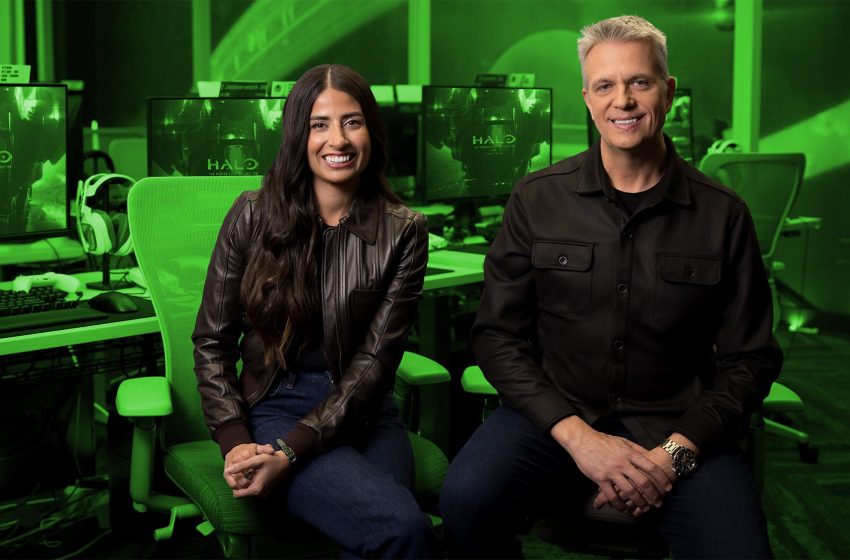
I briefly caught up with both new CEO Asha Sharma and the newly promoted Chief Content Officer Matt Booty to discuss what Xbox’s next decade looks like, as we head through the division’s 25th year in operation.
On the “return to Xbox,” and a commitment to Xbox hardware
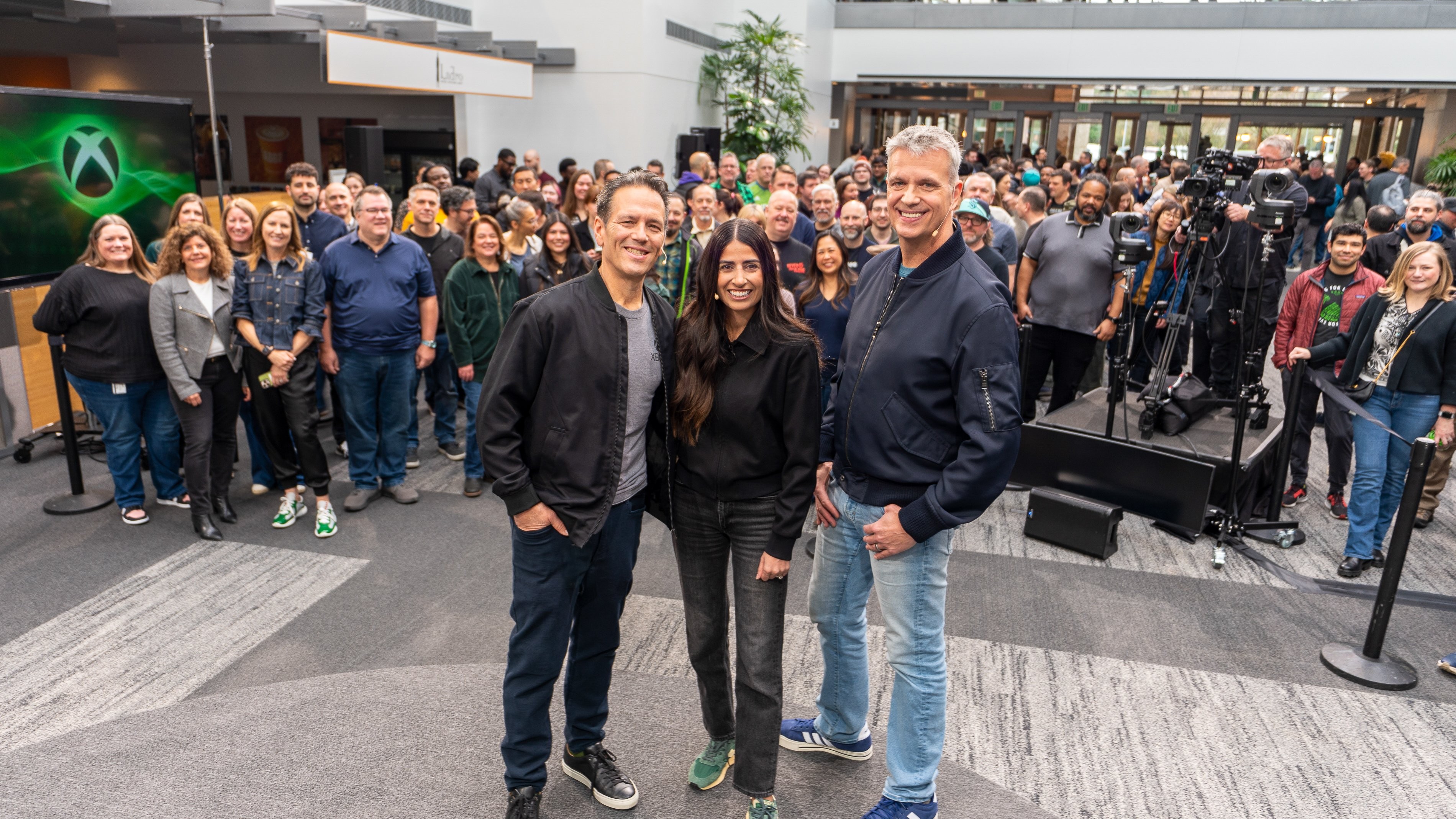
In her opening letter, Asha Sharma said she wanted to bring about a “return” to Xbox. I asked exactly what that means, since it effectively implies that Xbox has begun to stray from what Xbox “is.” Sharma volunteered an emphasis on Xbox’s core, and specifically, its beleaguered console platform, which has seen a few fiscals of near-constant decline.
“For me, the spirit of ‘Return to Xbox’ is about returning to the spirit that the team was founded on,” Sharma explains. “It’s that spirit of surprise, it’s the spirit of building something nobody else was willing to try — I’ve heard ‘renegade,’ ‘rebellion,’ and ‘fun.’ used. That’s what I was thinking about when I wrote that.”
Sharma acknowledged the investment Xbox fans and customers have poured into the ecosystem over the years, and seemed genuinely keen to emphasize her commitment to console hardware.
“I think that our core Xbox fans and players have invested up to 25 years of themselves in these universes and our console. I want to make sure everybody knows I’m committed to Xbox, starting with the console. We’re going to keep meeting players where they are — the world continues to evolve and change. We’re going to make sure Xbox is a great place for developers and players. We want to invest in reducing the artificial divide between different types of devices that they want to use with us. I think that’s going to mean a lot more investment in breaking down the barriers, in helping developers build once and show up across different hardware experiences. For me, I believe Xbox starts with its fans, and we’ll grow from there. That’s what I wanted to signal with the “return” to Xbox.”
There’s been a ton of speculation about what kind of moves Asha might make. Xbox notoriously ditched any form of exclusivity on its games, shifting units to PlayStation paying little mind to the criticisms that it reduces the need to actually buy an Xbox. Sharma told me that nothing is off the table when it comes to revising Xbox’s strategy — but finalizing the strategy will take time, and data parsing. On Xbox’s recent strategic decisions, Sharma said “the plan’s the plan until it’s not the plan.”
“Xbox players have thousands of dollars invested, in money and time too — it’s incredibly important for me to understand that and protect that. I am committed to ‘returning to Xbox,’ and that starts with console, that starts with hardware. You will hear more about that soon.”
Xbox CEO, Asha Sharma
“Right now, I need to learn, candidly. About the ‘why’ of these decisions, what we were optimizing for, and what the data says about the Xbox strategy today. That’s the honest answer. I’m looking at lifetime value, not just what happened in a previous moment, or in short term efficiencies and things like that. The plan’s the plan until it’s not the plan.”
Sharma described how her and Matt Booty are currently going on a whirlwind learning tour of all of Xbox’s gaming teams, with studio and org visits penned in for Minecraft, Bethesda, Activision, and more. Matt Booty cautioned that players shouldn’t expect drastic changes in the near term, though — while emphasizing that the team plans to re-examine and question everything.
“Xbox players have thousands of dollars invested, in money and time too — it’s incredibly important for me to understand that and protect that,” Sharma said. “I am committed to ‘returning to Xbox,’ and that starts with console, that starts with hardware. You will hear more about that soon, we’ll have some announcements coming up. You will see us collectively investing here. We also know that there are a lot of players who aren’t on console or our hardware, and I want to deliver great games to them too. I need to learn more about what that can look like, what decisions were made, what we need to do going forward, and I want a little bit of time and space to do that.”
Matt Booty chimed in too, on protecting the Xbox ecosystem, and rejected speculations of Microsoft gunning for its gaming division to devolve into a publisher.
“Our studio system is fully built around being first-party. We’re not built to just be a publisher,” Matt Booty explained. “It is core to our partnership with the Microsoft platform, being involved in early hardware decisions — all the work we’ve done to get games like Gears of War running great on new devices like the Xbox Ally, and so on. It is embedded within our structure, we’re not backing away from that. We’re committed to being a first-party games publisher in partnership with our first-party platform team.”
On preserving Xbox Game Studios’ culture, and rejecting AI-created games
One of the big issues facing the gaming industry all up right now is finding new users. Xbox and other big platform holders are effectively just trading the same few hundred million core users back and forth, with attention being divested to apps like TikTok, YouTube, Instagram, and other algorithmic non-gaming products. I asked Asha Sharma if she planned to explore new paradigms for Xbox to that end, but she once again signalled intent to double down on Xbox’s core.
“The thing about other products that are taking off — they’ve built really great communities with their audiences. We’re the stewards of a lot of communities and we have been for decades. The thing that makes a community a community, is that you build for that core. What I don’t want to do is have any creator at Xbox dilute their focus to chase an emerging community,” Sharma explained. “If we want to invest in a new community, we’ll look at how to do that. But it’s really important that people stay true to their core when they’re building.”
“The thing I’ve learned when building platforms over my career, there’s kind of two things that really make a great platform — it’s the quality of the product that you deliver for the core user, and its the integrity of the decisions that stand behind it. There’s a big community at Xbox, and we’ll look at the right way to serve that community.”
A lot of discourse around Asha’s appointment revolves around her tenure in Microsoft’s CoreAI org, whose mission is to integrate AI features into Azure tools. I asked Asha Sharma how she felt about artificial intelligence, and the discourse regarding that, surrounding her appointment at Xbox.
“I think that with any new technology, it brings possibilities as a tool, but even more important, especially now — we need to draw lines on what we won’t do. That’s what I attempted to do when I shared my opening letter,” she explained. “I will not flood our ecosystem with slop. We won’t have careless output, we won’t have derivative work. I deeply believe in the words that I shared previously there.”
Matt Booty put to bed rumors that Microsoft is planning to enforce some kind of AI directive on Xbox from the top, noting that developers are free to use the tools they want.
“We’ve got no pressure from Microsoft, there are no directives on AI coming down. Our teams are free to use any technologies that might be beneficial, whether it’s helping write code or check for bugs — things more in the production pipeline. At the end of the day as Asha said, we’re committed to art made by people.”
Matt Booty, Xbox CCO
“Just as a group, game developers are always eager to adopt new technology. When Photoshop showed up, it took about one month for it to appear in every game studio on the planet because it was so useful,” Matt noted that Xbox’s goal is for AI to be additive and supportive, rather than disruptive on its teams. “What I hear throughout our studios: it is the people, our artists, our coders, the writers — they’re doing the creative work. In my experience, any time there’s a new technology, what happens is there’s a need for more specialists, new specialists. It raises the bar on what the expectations are for the quality of the games.”
“We’ve got no pressure from Microsoft, there are no directives on AI coming down. Our teams are free to use any technologies that might be beneficial, whether it’s helping write code or check for bugs — things more in the production pipeline. At the end of the day as Asha said, we’re committed to art made by people. Technology is only in support of that.”
On the topic of art, I was curious if there were plans to diverge Xbox away from its more eclectic publishing stylings and double down on chasing blockbusters. Some of Xbox’s biggest games like Overwatch and Fallout 76 have seen a huge resurgence over the last year, and other titles like World of Warcraft, Diablo, and Call of Duty continue to see impressive engagement. But, will there still be room for the smaller, more intrepid and potentially “niche” creative Xbox studios n this new era? Matt Booty says that type of creativity remains core to Xbox’s gaming philosophy.
“The first conversations Asha and I had when we first met to do all of this, to her credit, she immediately emphasized supporting our studios and our games. Our ecosystem is built to be a portfolio of everything from small games, to ongoing franchises, to the big blockbusters. We’re built at our core to build everything from Kiln to Call of Duty, everything from Minecraft to South of Midnight. That’s core to how we’re set up.” Matt said that Xbox thinks of itself as a “federation” of studios, supporting each other both creatively and technologically.
“I think we’ve got one of the best portfolios out there, even in the entertainment industry more broadly in terms of that range. We’re dedicated to it, and here’s why: I believe that almost everything ‘big’ started as something small. We cannot lose the ability to have those places where little sparks can grow into something big. The creative environment that lets us take bets and creative risks has to be part of Xbox’s culture. We’re committed, our studio system is built for that.”
“The best thing about my job is sitting in on meetings when they’re just early ideas. You can imagine what it’s like sitting in a room and someone says ‘we’re gonna make a game about a walking lighthouse,” Matt said, referencing Double Fine’s Keeper, “and then I go from that to review the next three years of Call of Duty. It’s been great to hear Asha state her commitment to that as well.”
Building the next 25 years of Xbox
I didn’t get chance to ask everything I wanted to ask. There are so many questions about Xbox’s future and its strategy, so many levers that could potentially shift and so many angles that could potentially warp. I wanted to ask more about Xbox Game Pass and its future in the ecosystem, what role Xbox Cloud Gaming stands to play, and obviously, whether or not we’ll eventually get a new Banjo Kazooie. But those questions will have to wait for another time.
In closing, I asked Asha Sharma what she would say to Xbox fans who have worries and concerns about the change as we bid farewell to Phil Spencer, who inherited a very different Xbox back in 2014.
“Phil Spencer is a remarkable human and a remarkable leader, and I think that when he took over in 2014 he changed the culture of Xbox to focus on player-driven and creator-driven decisions. I intend to honor and uphold that.”
Sharma didn’t shy away from the challenge facing Xbox, both externally and internally, but volunteered the idea of strengthening Xbox not just for the near-term, but for another quarter century. In her words, Sharma said her current goal is “proof over promise.”
“We know that the business has gone through some challenges. I’m going to use my expertise and the leaders that have the deep gaming depth around the table to help us grow the business, and make sure that we have an incredible next 25 years. I will listen, I will learn, I will communicate what we’re seeing, and what we’re doing. I think from here, the work is proof over promise. Matt and I are in it, every hour of every day of every night, I am fully in this thing. This team has brought it back before, and I’m here to help us do it again.”
Lip service or is the new Xbox leadership’s vision the real deal?
After hearing directly from Asha Sharma and Matt Booty about where Xbox goes next — from rebuilding trust to strengthening first‑party output — we want to know how it all lands with you.
Do you think this new direction hits the right notes, or are there areas you’re still unsure about? Share your thoughts below and join the discussion!

Join us on Reddit at r/WindowsCentral to share your insights and discuss our latest news, reviews, and more.
First Appeared on
Source link






