


Experts Stunned as Earth’s Crust Begins to Collapse Beneath the Pacific, The Ocean Is Splitting Open
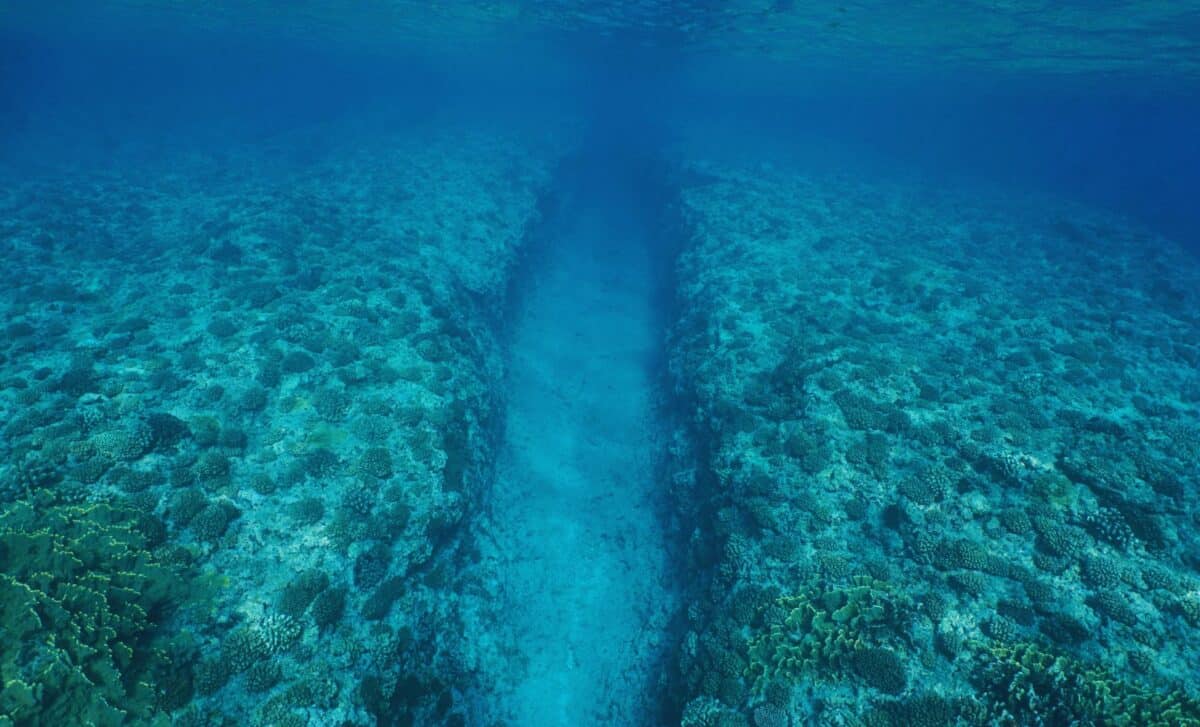
The discovery, made just off the coast of Vancouver Island in the Pacific Ocean, shows that a section of the oceanic crust is slowly breaking apart beneath the North American Plate. Using seismic data, researchers found huge faults and deep cracks under the ocean floor, clear signs that a once-solid tectonic structure is falling to pieces from the inside.
Subduction zones are some of the most powerful forces shaping our planet, they trigger earthquakes, fuel volcanoes, and reshape Earth’s surface over time. Now, scientists have direct proof that these zones don’t last forever. Instead, they can slowly fall apart, bit by bit, leaving behind scattered fragments that gradually redraw the map of tectonic activity.
Oceanic Crust Splits Beneath Vancouver Island
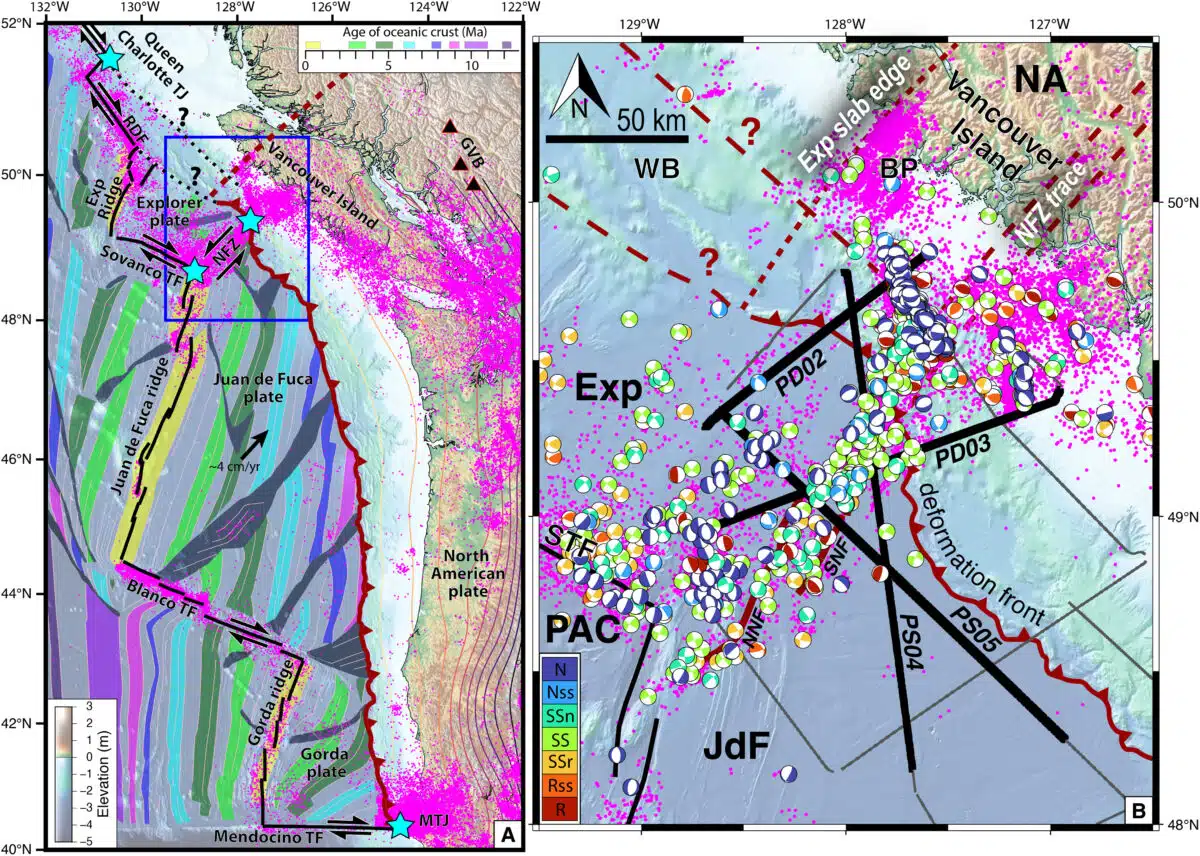
Using seismic reflection data collected during the CASIE21 expedition in 2021, a research team led by Brandon Shuck of Louisiana State University analyzed the structure of the Cascadia subduction zone, a region where the Juan de Fuca and Explorer plates are subducting beneath North America. According to ScienceDaily, what they uncovered was a “very large fault” running through the Explorer plate, roughly 75 kilometers long and currently in the process of tearing through the plate’s structure.
The team sent sound waves into the ocean floor from a research vessel and captured the echoes using a 15-kilometer line of underwater sensors. These seismic images revealed deep fractures and a vertical offset where one section of the plate has already dropped by nearly five kilometers, Shuck explained in a report from Louisiana State University.
In some areas, seismic activity has gone silent, a sign that pieces of the plate have completely detached and are no longer locked into the subduction system.
Subduction Zones Don’t Just Stop — They Die In Pieces
For decades, scientists speculated about how subduction zones come to an end. The new study, published in Science Advances, confirms that instead of collapsing in a single rupture, a plate may break down progressively, what Shuck described as “watching a train slowly derail, one car at a time.” As these pieces break off, they become microplates, each creating its own small tectonic boundary.
This staged disintegration appears to match the geological record, which shows sequences of volcanic rocks with varying ages, evidence of episodic tectonic change. The breakup also helps explain abandoned fragments of plates, such as those found off the coast of Baja California. As ScienceAlert stated, these so-called “fossil plates” could now be understood as remnants of ancient subduction zones that fell apart piece by piece.
A New Lens On Seismic Risk And Earth’s History
Even though this discovery doesn’t really change the short-term earthquake risk for the Pacific Northwest, it could still shake up how scientists think about future seismic activity in tricky zones. Some parts of the area are still fully capable of producing major quakes and tsunamis. But figuring out how these new cracks and forming microplates affect the way seismic energy moves could help fine-tune how we assess those risks going forward.
On a bigger scale, this whole process is literally reshaping Earth’s crust. When a tectonic plate rips apart, it leaves behind what’s called “slab windows”, openings where hot mantle material can push up toward the surface, sometimes sparking bursts of volcanic activity. It’s the same kind of thing geologists have noticed in areas shaped by old tectonic breakdowns, and now Cascadia is giving us a rare, live look at that process in action.
First Appeared on
Source link






