


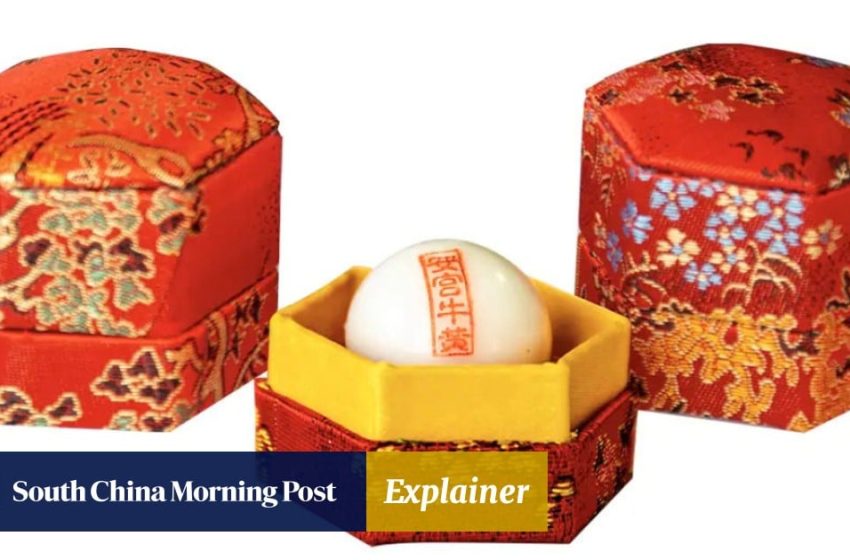
Explainer | How TCM’s ‘miracle pill’ is used to treat strokes, but experts urge caution
This series is based on our reporting on TCM: its history, treatments and growing acceptance around the world. This is the seventh instalment.
In the world of traditional Chinese medicine (TCM), few remedies carry the legendary status – or the hefty price tag – of Angong Niuhuang Wan, often referred to as the “miracle pill”.
The old formula, consisting of 11 herbs and minerals, has long been revered as a top-grade emergency medicine, historically used to treat those who have had a stroke or may be about to have one.
According to the World Stroke Organization’s 2025 Global Stroke Fact Sheet, stroke remains a critical global health challenge, with 11.9 million new cases occurring annually and 93.8 million people currently living with the long-term aftermath of the condition.
The Hong Kong Stroke Fund says that about 25,000 new stroke cases occur in the city each year, with 3,500 stroke-related deaths.
That is why Angong Niuhuang Wan has been a fixture in many Chinese households for generations, particularly those with elderly family members. Similar gold-foil-wrapped traditional medicine pills are used in other parts of Asia, such as South Korea.
First Appeared on
Source link






