


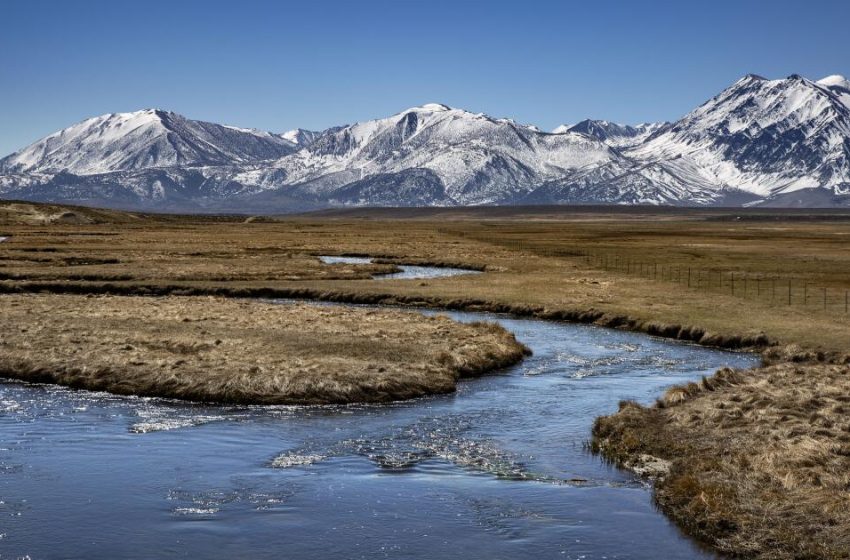
Extreme heats leaves California mountains in a snow drought
California’s snowpack is supposed to reach its peak April 1, so state surveyors held their final Sierra snow survey of the year in a meadow near Lake Tahoe.
But instead of peak snow, they found nothing they could measure, just some sparse patches of snow on the bare meadow grass.
“We’re calling today’s measurement zero,” said Andy Reising, manager of snow surveys for the California Department of Water Resources. “It came off really fast.”
Snow across California’s Sierra Nevada now measures just 18% of average — the second smallest on record since 1950. A month of record-shattering heat thawed the snow and sent runoff coursing into streams and rivers, leaving only minimal water in the mountains as the state heads into dry season.
The early melt is a symptom of global warming that scientists say is becoming more pronounced.
“This particular year is as clear an indication of the influence of climate change as anything we’ve seen,” said Peter Gleick, a leading water scientist and co-founder of the Pacific Institute. “Climate change is influencing California’s water system quickly and severely.”
This year the Sierra snowpack peaked on Feb. 25 at 73% of average.
The summerlike heat in March broke monthly records in many areas of the Western U.S., accelerating the melting of snow in the Rocky Mountains as well.
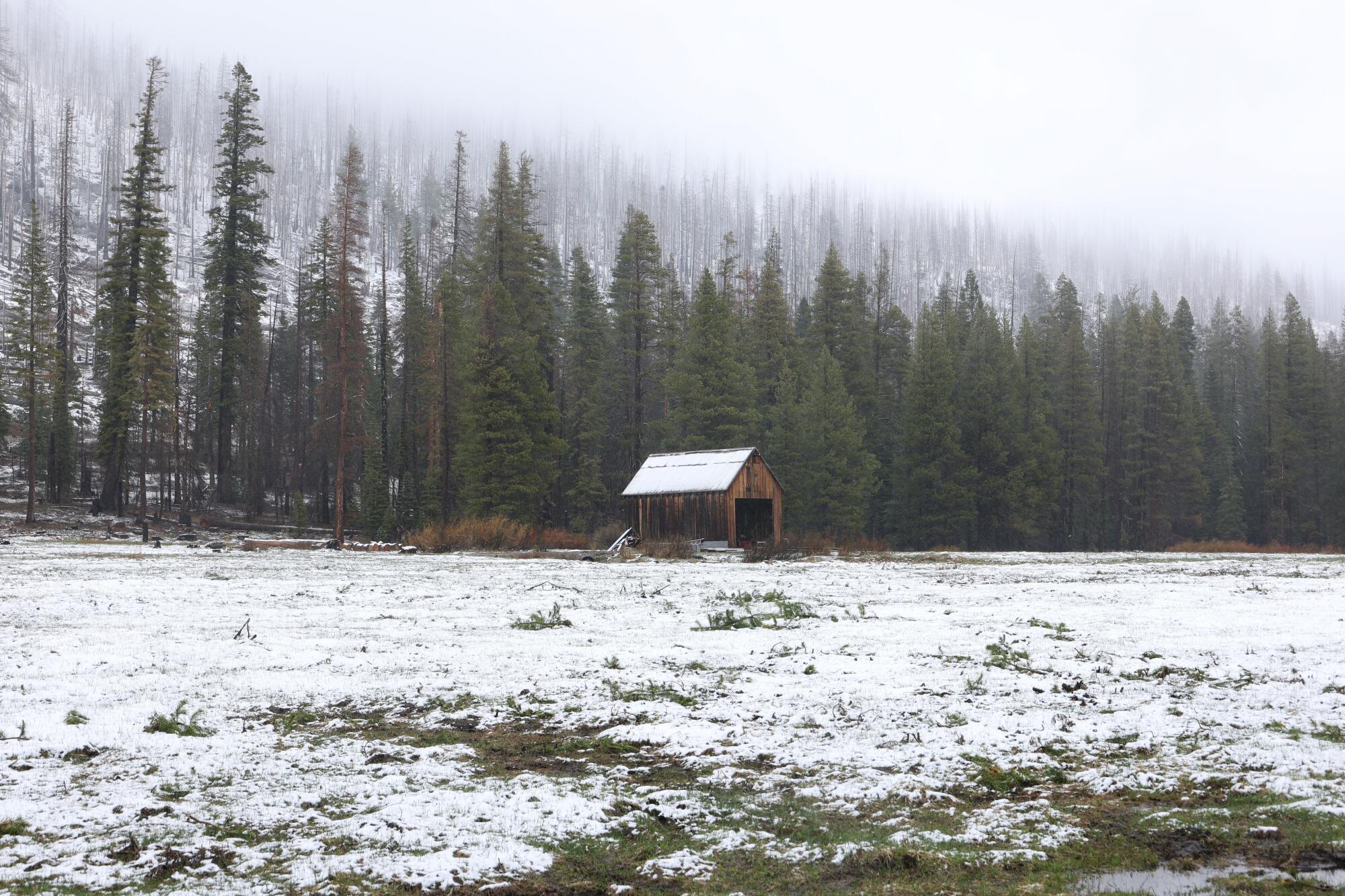
Light snow is seen on the meadow where the California Department of Water Resources conducts the fourth media snow survey of the 2026 season at Phillips Station in the Sierra Nevada.
(Nick Shockey/Calif. Dept. of Water Resources)
Precipitation in California has been nearly average since October, but more of that precipitation is falling as rain, less as snow.
The warmth and premature melt mean the state’s forests will dry out a month or more earlier than usual, Gleick said, which increases the risk of wildfires.
“It could be a very bad fire year,” he said. “It also means rivers and streams are going to dry out sooner, and that has bad implications for natural ecosystems and our fisheries.”
Cities and farms should still have have ample water because major reservoirs in Northern California are nearly full. That’s because this winter brought decent rain and the three years prior years were wet, too.
“We were lucky this year in the sense that even though we have so little snow left, we had an average amount of rainfall,” Gleick said. “There are going to be years, inevitably, where we not only have almost no snow, but we don’t get the rain either.”


California’s smallest snowpack on record was in 2015, just 5% of average.
Karla Nemeth, director of the California Department of Water Resources, said the minimal snow and high temperatures “are setting us up for what will be a challenging year for water management in the state.”
“What we have in our reservoirs in California is all we’re going to get,” Nemeth said after the snow survey. “This low snowpack means we have limited storage heading into our warm summer months. So it means every Californian needs to use water as carefully as they can.”
California traditionally had relied on the Sierra snowpack to hold about 30% of its water.
“We’re losing that storage,” Gleick said. “If we can’t depend on reliable long-term snowpack and snowmelt later in the year, we’re going to have to do other things to make our water system more resilient.”
When Gleick wrote his dissertation at UC Berkeley in the 1980s, he examined a range of climate scenarios and analyzed how rising temperatures would likely change the timing of runoff in Northern California.
“Current trends precisely match scientific projections from decades ago,” he said. “More and more of our annual runoff is occurring in the winter months, and that’s because it’s more rain, less snow and faster snow melt.”
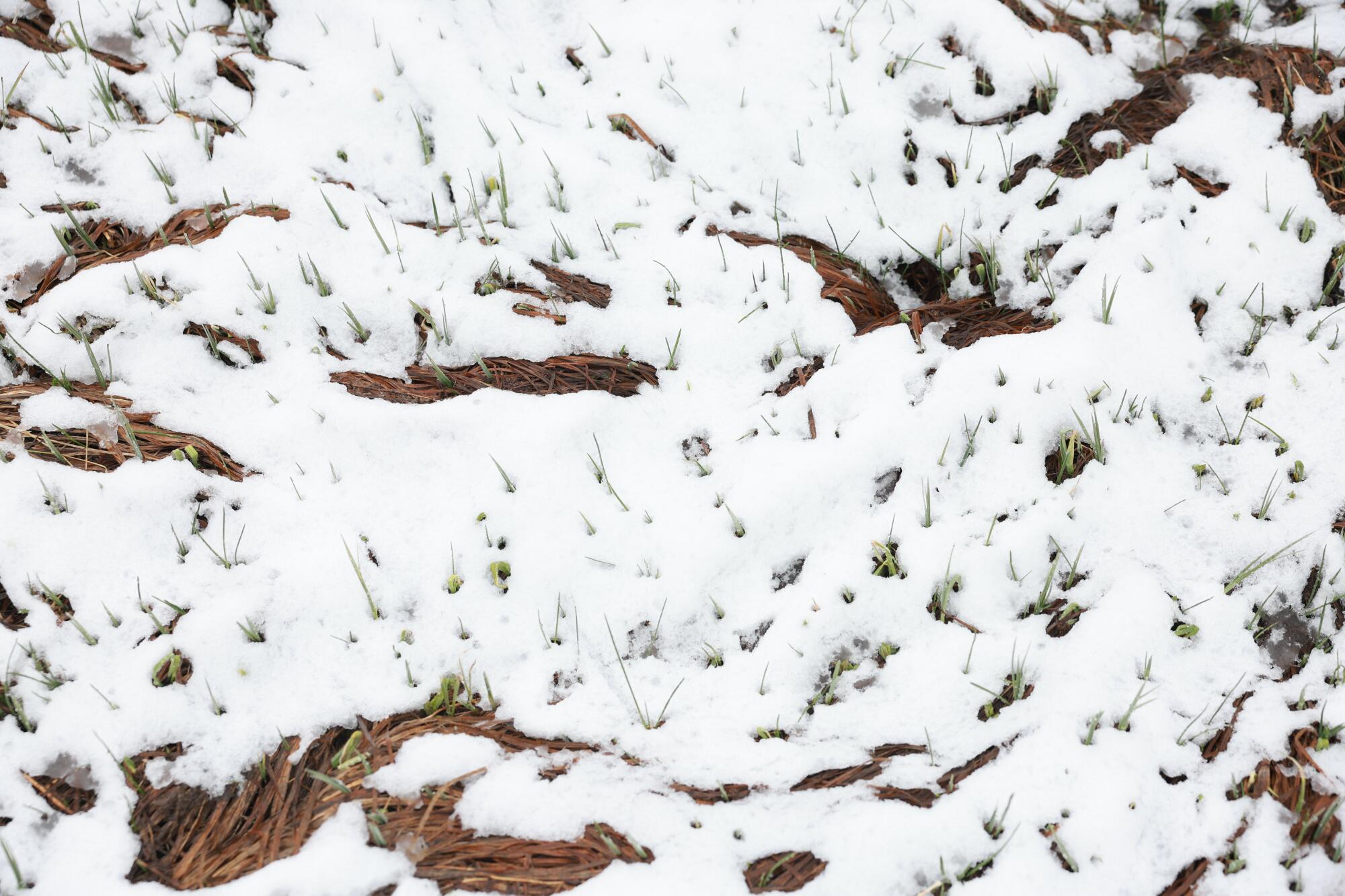
Small blades of natural grasses poke through light snow on the meadow at Phillips Station in the Sierra Nevada.
(Andrew Nixon/California Department of Water Resources)
Adapting to these changes requires new thinking and new approaches, he said, including efforts to use water more efficiently, recycle more wastewater, capture more runoff to replenish groundwater, and change how reservoirs are operated.
Gov. Gavin Newsom and his administration are supporting plans for new water infrastructure projects including Sites Reservoir northwest of Sacramento and a 45-mile water tunnel beneath the Sacramento-San Joaquin River Delta.
As climate change brings shortened and wetter winters, Nemeth said, the state needs to “retrofit our infrastructure to deal with this new pattern.” She said the state also will need to continue to conserve more and recycle more water.
Though California isn’t in a drought, dry conditions have spread in parts of the state. It’s now abnormally dry in about one-fourth of California, largely in the northeast, according to the U.S. Drought Monitor website.
The rapid loss of snow is also affecting the Colorado River, another major water source for Southern California, which has shrunk over the last quarter-century during a megadrought worsened by rising temperatures.
The snowpack in the upper part of the Colorado River watershed has rapidly dwindled over the last month and now measures just 23% of average.
What stood out about this winter across the West was the off-the-charts warmth. Daniel Swain, a climate scientist with UC Agriculture and Natural Resources, described it as one of the most “extreme heat events ever observed in the American Southwest.”
First Appeared on
Source link






