


Fresh protests erupt in Tehran as Witkoff says Trump curious why Iran has not yet ‘capitulated’
President Donald Trump’s special envoy Steve Witkoff has said that Trump is “curious” as to why Iran has not yet “capitulated” and agreed to curb its nuclear program, as rallies have taken place at universities in the Iranian capital, Tehran, for the second day.
“I don’t want to use the word ‘frustrated,’ because he understands he has plenty of alternatives, but he’s curious as to why they haven’t … I don’t want to use the word ‘capitulated,’ but why they haven’t capitulated,” Witkoff said in an interview on Fox News.
“Why, under this pressure, with the amount of sea power and naval power over there, why haven’t they come to us and said, ‘We profess we don’t want a weapon, so here’s what we’re prepared to do’? And yet it’s sort of hard to get them to that place,” Witkoff said in an interview recorded on Thursday.
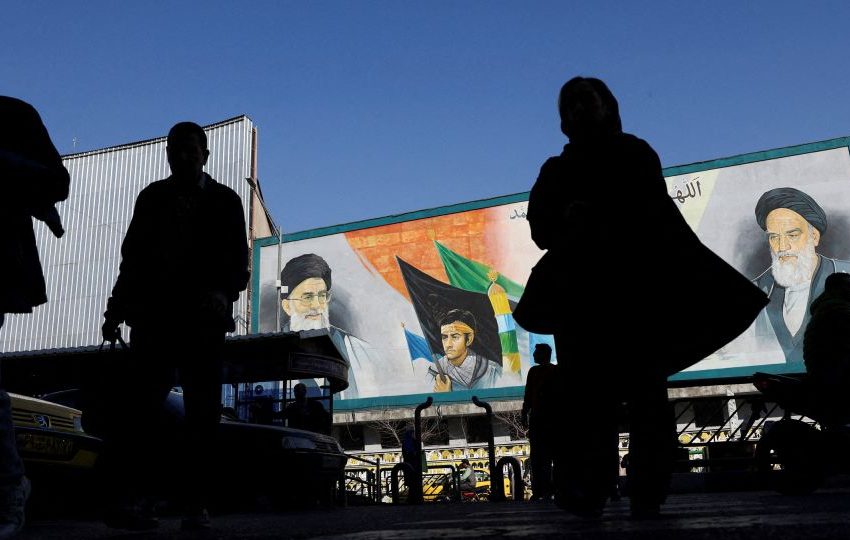
Meanwhile, Iranian state media reported demonstrations in support of the government and against the United States, following anti-regime protests on Saturday.
Verified social media video showed scuffles Sunday between pro- and anti-regime groups at Amirkabir University, where some students chanted for the return of the monarchy.
The official Fars news agency reported “counter-revolutionary slogans being chanted by some students at Amirkabir University, Sharif University of Technology, and Science and Industry University,” all in Tehran.
Hossein Goldansaz, a professor at Tehran university, told the official Mehr news agency that the university was affected by the mourning period for those killed in January’s unrest.
“One of the students’ main points is that we are mourning for the people who lost their lives in these events, those who were our friends,” he said.
“We will allow them to hold their demonstrations on the university and if someone asks us for permission, we will give them permission, provided they respect the red lines,” Goladansaz said.
“Students should be very careful not to lead to violence and I told the students that if this happens, I will not support them in any way,” he added.
Students held protests at several Iranian universities at the start of a new semester on Saturday, some clashing with pro-government groups, Reuters reported citing local news agencies and posts on social media.
The protests coincided with ceremonies traditionally held after 40 days to mourn those killed by security forces during last month’s anti-government demonstrations.
A video purportedly showed rows of marchers at Tehran’s Sharif University of Technology condemning Supreme Leader Ayatollah Ali Khamenei as a “murderous leader,” and calling for Reza Pahlavi, the exiled son of Iran’s toppled shah, to be a new monarch.
On Friday, Trump claimed that 32,000 people were killed during last month’s protests, a far higher death toll than has previously been reported.
The US has been building up its presence in the Middle East in recent weeks, putting increasing pressure on Iran as Trump weighs a potential strike on the country. The USS Gerald R. Ford carrier strike group is currently headed toward the region to join another carrier strike group, with dozens of combat planes also moved to the region.
Iran and the United States have differing views over sanctions relief in return for an agreement on Iran’s nuclear program, a senior Iranian official told Reuters on Sunday.
The official said new talks were planned in early March, after two sessions of indirect talks this month involving Witkoff and Iranian Foreign Minister Abbas Araghchi.
Araghchi said on Friday that he expected to have a draft counterproposal ready within days. On Sunday, he said that he may hold further discussions Witkoff as soon as Thursday, with another possible meeting in Geneva.
Araghchi told CBS’ “Face the Nation” that there was a good chance for a diplomatic solution on Iran’s nuclear program. He said that he was still working on a proposal, with elements that can accommodate the concerns of both sides.
It was quite possible to “prepare a good text,” he said.
“We continue negotiations, we are working on the elements of a deal and the draft of a text,” Araghchi said.
Iran has repeatedly insisted it has a right to enrich uranium, which the US rejects.
Washington has also demanded that Iran relinquish its stockpile of highly enriched uranium (HEU), which the International Atomic Energy Agency estimated at more than 440 kilograms last year.
The Iranian official told Reuters that Tehran could seriously consider a combination of exporting part of its HEU stockpile, diluting the purity of its most highly enriched uranium and the establishment of a regional enrichment consortium in exchange for the recognition of Iran’s right to “peaceful nuclear enrichment.”
“The negotiations continue and the possibility of reaching an interim agreement exists,” he said.
This story has been updated with additional developments.
For more CNN news and newsletters create an account at CNN.com
First Appeared on
Source link






