


Gas Prices Have Risen $1 in March—See What Drivers in Your State Are Paying Now
-
Higher oil prices due to the Iran war have caused gas prices to surge $1 since Feb. 28.
-
Prices at the pump rose slightly but rounded off at $3.98 for a gallon of regular.
-
The prospect of peace talks pushed down oil prices Wednesday, and gas prices could follow suit if negotiations make progress.
Despite hope for relief on news of a potential deal Wednesday, the Iran war continues to elevate crude prices, extending a rally that began at the start of March. Those higher crude costs are translating into higher gasoline prices for drivers across the country, up a dollar a gallon since the war began.
The national average for regular gas rose slightly overnight but rounded off to $3.98 per gallon, the same as yesterday, according to AAA. Before the March run-up, the national average had held below $3 for 13 straight weeks—the first time in $2 territory since 2021. Based on last week’s oil prices, forecasters at Pantheon Macroeconomics expected the national average to hit $4.20 in the coming days.
However, prices could ease if peace talks touted by Trump this week yield progress. Oil prices fell further Wednesday after the U.S. reportedly sent Iran a peace proposal, even as Iran said it had rejected the terms.
Gasoline is one of the most frequent purchases households make, so rising pump prices can quickly strain budgets. “Nothing erodes household liquidity faster than higher gas prices,” economist Joe Lavorgna said recently on CNBC.
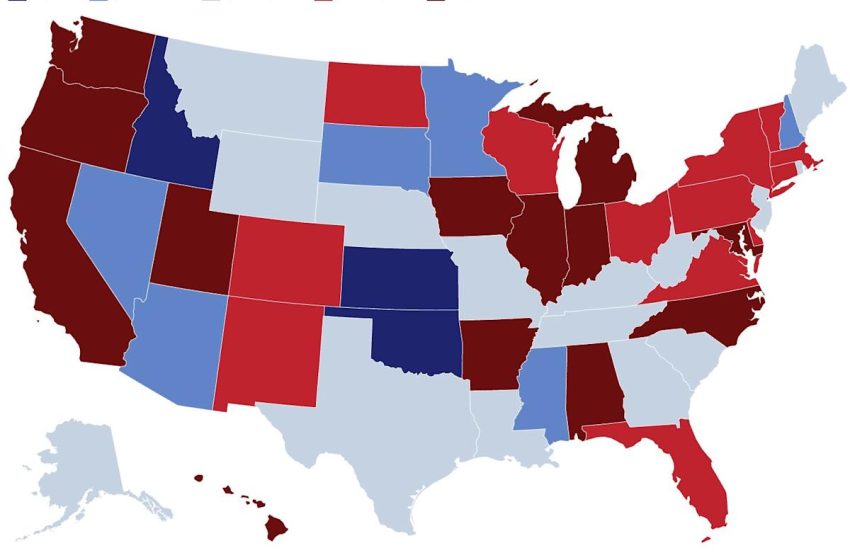
While the average price has surged everywhere, state-level prices vary widely.
Drivers in Oklahoma are now seeing the cheapest price at the pump—at $3.27, according to AAA—with the next cheapest states being Kansas, Iowa, and Nebraska. All 50 states have averaged above $3 per gallon since March 11.

At the high end, three states now average more than $5 per gallon: California leads at $5.83, followed by Washington and Hawaii. 10 more states—Oregon, Nevada, Arizona, Alaska, Illinois, Idaho, Indiana, Michigan, and, joining the list today, Utah and Maryland—average $4 or more.
The result is a $2.56-per-gallon difference between the cheapest and most expensive states.
The national average briefly topped $5 per gallon in June 2022. Amid the current surge, three states have crossed that mark, though most states still have averages in the $3 range.
The wide differences in state gas prices aren’t random, and the Iran-driven surge has made those differences more visible than ever. They reflect structural factors that shape how fuel is taxed, produced, and delivered across the country.
First Appeared on
Source link






