


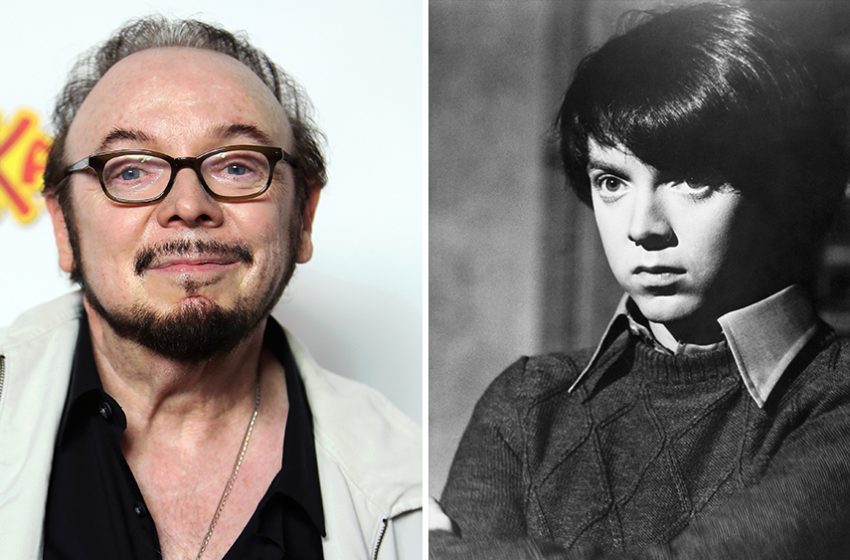
‘Harold And Maude’ Actor Was 77
Bud Cort, whose indelible portrayal of the gawky, death-obsessed young man barely out of his teens who falls in love with a spirited 79-year-old Holocaust survivor played by Ruth Gordon in 1971’s Harold and Maude, died Wednesday in Connecticut following a lengthy illness. He was 77.
Deadline has confirmed his passing.
Born Walter Edward Cox on March 29, 1948, in Rye, NY, the young actor — instantly recognizable with his owlish looks and rail-thin frame — was discovered and cast by director Robert Altman in two 1970 hit films MASH and Brewster McCloud. He would go on to play character roles in such films as Heat (1995), Dogma (1999) and The Life Aquatic With Steve Zissou (2004) among others, but it was his co-starring role in Hal Ashby’s midnight movie classic Harold and Maude that would establish his place in the cinema of the 1970s.
Set to a soundtrack of Cat Stevens songs and delighting in Cort’s deadpan delivery and Gordon’s eccentric gusto, Harold and Maude, released in 1971 by Paramount Pictures, would not make a profit until more than a decade later — the offbeat humor about suicide and the romantic sexual partnering of a young man and elderly woman kept mainstream success out of reach, at least initially. Cort’s depressed Harold Chasen is so obsessed with death he drives a hearse to all the funerals he attends in his spare time, at least when he’s not staging elaborate fake-suicides that are met by his wealthy, seen-it-all mother (Vivian Pickles) with bored irritation.
At more than one of those stranger funerals, Harold meets Maude, equally taken with the subject of death but embracing it with a much more generous, compassionate worldview. It’s only later in the film, when Ashby lets us glimpse, briefly, a concentration camp tattoo on Maude’s forearm, that we understand the depth of her experience and her tenacious love of life.
Ruth Gordon and Bud Cort in 1971’s “Harold & Maude”
Everett
Tenacious would describe the film’s longevity, as well. Years — and many midnight movie screenings –would pass before the dark, sweet-natured film written by Colin Higgins went from cult favorite to genuine classic, eventually ranking No. 69 on the American Film Institute’s 100 Best Romantic Comedies. The movie’s ending, in which Cort’s devastated Harold seems to drive his hearse off a cliff while grieving for the departed Maude, would instead become an iconic portrayal of living life to the fullest: Harold hadn’t been in the vehicle at all, but instead dances away playing Maude’s beloved banjo while Cat Stevens’ optimistic “If You Want To Sing Out, Sing Out” completes one of the most memorable soundtracks of the era.
Cort actually began his film career prior to the Altman films, though he’d go uncredited: He was an extra in both 1967’s Up the Down Staircase and 1969’s Sweet Charity, playing a student in the former and a hippie in the latter. He had moved to New York City and was performing stand-up comedy at such downtown clubs as The Village Gate and the Bitter End when he was noticed by Altman.
Within just a few years of those early film performances, Cort, due to both is rather odd physical appearance and his note-perfect performance as Harold, would find himself typecast as awkward, social outcast types. In a 1996 Los Angeles Times profile, which described Cort as “a generational icon” and “a kind of midnight movie poster boy,” the actor said his cult status was “a blessing and a curse.”
“I was typecast to the point where I didn’t make a film for five years after Harold and Maude,” Cort said, noting he was offered and rejected a role in One Flew Over the Cuckoo’s Nest because he “didn’t want to play crazy. I fought certain opportunities off because I wasn’t ready to be a brand name. In retrospect, I should have done everything.”
As for the film for which he’ll be remembered, Cort said, “I’ve had my moments where I just cursed that movie and wished I’d never done it.”
Twenty years after the release of Harold and Maude, Cort was honored at the Karlovy Vary Film Festival. The movie had rarely been shown in Eastern Europe and Cort received a standing ovation; it was so popular the festival ran it again three times, and Cort told the festival Jury: ‘I never dreamed that my performance would be so fondly remembered around the world.”
DEADLINE RELATED VIDEO:
Although he’d go on to build an impressively lengthy roster of film and TV credits — Endgame, Sledge Hammer!, The Chocolate War, The Big Empty, Theodore Rex, But I’m a Cheerleader, Pollock, The Twilight Zone, The Secret Diary of Sigmund Freud, Criminal Minds and Ugly Betty, to name a sampling — Cort first had to overcome not only the typecasting but a serious 1979 car accident on the Hollywood Freeway when he struck an abandoned car. He suffered broken bones, a concussion, a fractured skull and facial lacerations that would require years of surgeries and towering medical costs.
Still, Cort would continue acting throughout the 2010s, increasingly in voice roles in such animated series as Superman, Batman and Justice League Unlimited.
Cort is survived by brother Joseph Cox; his wife Vickie and their daughters Meave, Brytnn and Jesse; sister Kerry Cox; sister Tracy Cox Berkman and her husband Edward Berkman and their sons Daniel and Peter; and sister Shelly Cox Dufour, her husband Robert Dufour and their daughters Madeline and Lucie.
A memorial will be held at a future date in Los Angeles.
Peter Bart contributed to this report.
First Appeared on
Source link






