


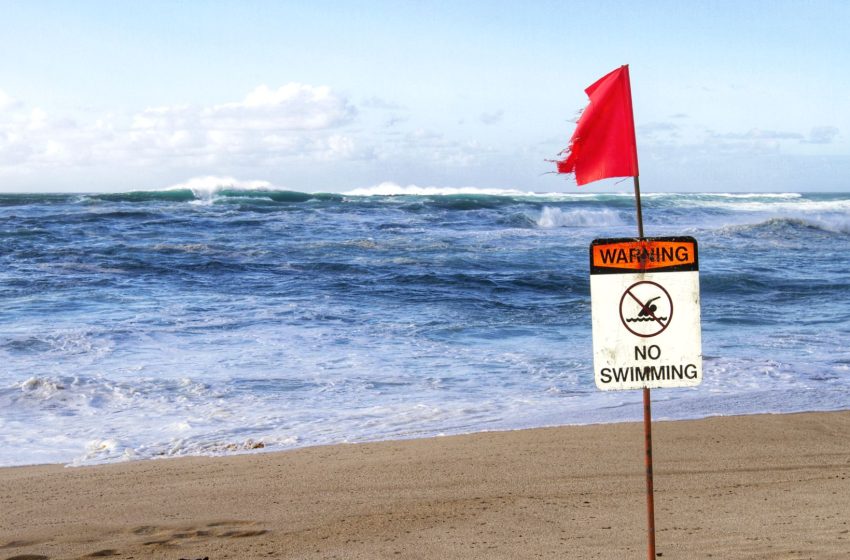
Hawaii Visitors Are Swimming In Contaminated Water Right Now
The Kona Storm has ended, and the beaches are packed for spring break. While the ocean looks close enough to normal, it may not be. What many Hawaii visitors do not realize is that Hawaii still has active sewage spill advisories, brown water advisories, and high bacteria warnings open across Oahu, Maui, and Kauai. The beach being open is not the same thing as the water being safe.
The storm ended. The advisories did not.
A lot of visitors are going to read this situation the wrong way because Hawaii beaches do not close when the Department of Health issues an advisory. The state posts the advisory and leaves the decision to swim up to the individual. That sounds reasonable until you picture a family on vacation looking at an open beach, no barricades, no lifeguard stopping them, and water that may not even look dangerous by mainland standards. Open does not mean cleared. It only means the state is not making the final decision for you.
As of April 1, the Clean Water Branch system still showed multiple open advisories tied to the recent storm and its aftermath. The state’s general guidance is to stay out of brown or murky water and wait 48 to 72 hours after rain stops and after the beach gets full sunshine. That guidance means little when advisories stay open far longer than that, and visitors assume the danger must have passed because the weather clearly already did.
Oahu remains the center of the problem. The islandwide brown water advisory has remained in effect since March 20. On top of that are multiple sewage spill advisories and four high-bacteria-count advisories from March 31 on the North Shore. Haleiwa Beach Park hit 288 enterococci CFU per 100 mL. Kawaihapai 1 hit 192. Puaena Point hit 164. Mokuleia at Kiapoko Point 2 hit 137. The state’s threshold for safe swimming is 130, so none of those readings are minor.
The list of sewage spills on Oahu is its own warning sign. One advisory covers a 115,000-gallon spill at 5311 Kalanianaole Highway affecting Wailupe Stream and Maunalua Bay from Wailupe Beach Park to Kawaikui Beach Park. Another involves a 30,000-gallon event at Nuupia Pond near Kailua. There is also an ongoing advisory for the Kailua Regional Wastewater Treatment Plant, dating back to March 14.
Other open advisories include Puha Stream near Waimanalo Beach, Ahuimanu Stream, Kawa Stream, and several additional locations in Honolulu and East Oahu. Some are listed as ongoing. Some list unknown spill volumes. Some are more than two weeks old.
Kauai’s earlier islandwide brown water advisory was canceled on March 31 and replaced by two localized advisories, one from Nawiliwili to Kalapaki Beach and another from Lydgate Beach to Wailua Beach. That still covers major visitor areas at a point when weather and beach conditions may already look improved to someone arriving fresh off the plane.
Maui deserves attention, too, even though it has only one open advisory on the list. That advisory is islandwide, not tied to any one stream mouth or beach park, and it has remained in effect since March 16. For visitors, that creates its own problem because Maui can look completely back to normal while the state is still warning about brown water conditions around the island. A traveler staying in Wailea, Kaanapali, or anywhere else on Maui may never see anything that feels like an active warning unless they go looking for it first.
Big Island is the only island clear right now, and that should not be turned into a statewide all-clear for everywhere else. It shows how uneven the risk can be from island to island and even beach to beach on the same day. A Hawaii trip can feel normal in one place and carry a very different water risk somewhere else, just a short flight away.
Why visitors can miss this.
This is where Hawaii can fool people, especially mainland travelers. A lot of visitors are used to swimming in water that is not postcard blue. In many places, brownish water is normal. It can mean stirred-up sand, river runoff, or just a different-looking coastline. It does not automatically signal sewage contamination. In Hawaii, after heavy rain, brown water can mean runoff carrying bacteria, debris, chemicals, animal waste, and sewage from overflowing systems into the ocean and streams.
So a visitor sees a beach that is open, maybe crowded, maybe sunny, and maybe still a little off-color, and does what people do on vacation. The crowd becomes the signal. An open shoreline feels like reassurance, and a real closure is what many people expect if the risk is serious. That is the trap.
The timing of spring break makes this worse. People have already paid for the trip. The beach days are the trip. Nobody wants to spend their Hawaii vacation refreshing advisory pages before swimming. The result is that visitors can walk straight into contaminated water without ever feeling like they ignored a warning. In many cases, they never saw one.
Hawaii beach water quality information is not what most visitors expect.
When brown water advisories are in effect, the testing people most want to see is often not happening the way they imagine. Hawaii’s Clean Water Branch has said it is impractical to monitor beaches during brown water advisory events because they can occur anywhere, testing capacity is limited, and historical data show that fecal bacteria levels generally exceed thresholds during these events.
Even outside storm conditions, Hawaii does not routinely monitor every beach. The state’s own beach monitoring program says it is impossible and impractical to monitor them all. Only about 57 of Hawaii’s more than 250 beaches are routinely sampled. That leaves large gaps for beachgoers who assume Hawaii is checking every major swimming spot all the time and who think they are choosing between safe and unsafe beaches when often they are choosing between limited recent data, broad storm-related advisories, and no clear picture of current conditions at the exact beach they want to use.
One practical tool worth bookmarking is SafeToSwimHawaii.com, a free site built by a Hawaii resident that pulls together real-time DOH advisory data and Surfrider test results into one place so you can check conditions at a specific beach before getting in the water.
The problem goes far beyond one storm.
Hawaii’s water quality problem started long before this latest runoff event. The state still has about 83,000 cesspools discharging an estimated 52 million gallons of untreated wastewater per day into the ground. Heavy rain helps move that waste toward groundwater, streams, and nearshore ocean areas. The storm exposed the problem again, but it did not create it.
Visitors do not come here expecting to think about wastewater systems before they swim. Right now, on Oahu, Maui, and Kauai, that is not always true. If there is an active advisory in effect where you plan to swim, do not talk yourself out of it just because the beach looks busy. Do not assume a hotel, a crowd, or a sunny afternoon means the water is fine. Check the advisories, stay out after rain, and give the ocean more time than your vacation brain wants to give it.
Have you ever checked Hawaii’s water quality before getting in the ocean?
Get Breaking Hawaii Travel News
First Appeared on
Source link






