


Heeding the Lessons of the Lions’ 2023 Draft Class
Jump to a topic
- Detroit Lions
- NFL draft
- Buffalo Bills
- Maxx Crosby
- A.J. Brown
- Tua Tagovailoa
- Kyler Murray
- Kirk Cousins
- Dallas Cowboys
- Quick-hitters
NFL scouting combine risers and fallers: LB/DL | DB/TE | QB/RB/WR | OL
INDIANAPOLIS — The 2026 NFL combine, my 18th, is now in the books. And we have a little bit of everything coming out of the week on the ground in the Circle City.
Detroit Lions
My overarching thought on this year’s draft class actually relates to the Lions’ 2023 draft class. Follow me on this one.
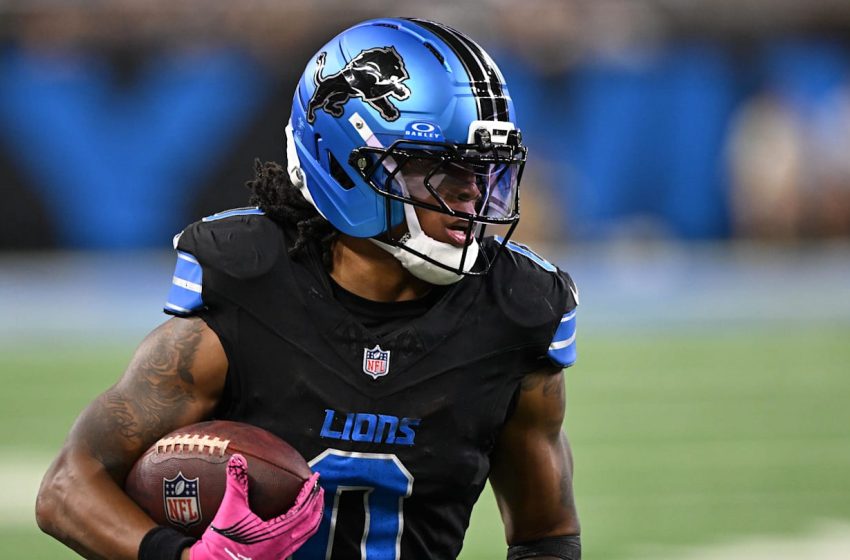
Three years ago, Detroit GM Brad Holmes and coach Dan Campbell stunned the NFL world by taking running back Jahmyr Gibbs with the 12th pick and off-ball linebacker Jack Campbell with the 18th selection. The conversation wasn’t that the Lions got bad players. Rather, it was that, amid a league becoming increasingly focused on players at premium positions, particularly in the first round of the NFL draft, Detroit’s approach was entirely different.
Gibbs is now a three-time Pro Bowler, and Campbell made first-team All-Pro in 2025.
Meanwhile, the premium-position guys available at the time to the Lions in that range show what sort of crapshoot the draft can be: Edge rushers Lukas Van Ness and Will McDonald IV, tackle Broderick Jones, corners Emmanuel Forbes Jr., Christian Gonzalez and Deonte Banks, and receivers Jaxon Smith-Njigba, Quentin Johnston, Zay Flowers and Jordan Addison. Maybe Detroit would’ve ended up with Gonzalez or JSN instead. Maybe not.
Either way, Gibbs and Campbell were the best football players on the board for the Lions, and strong cultural fits for their program. The same went for tight end Sam LaPorta and tweener DB Brian Branch, whom the Lions landed in the second round.
So how do those four Detroit picks relate to this year’s draft? Think of Notre Dame do-everything back Jeremiyah Love, Ohio State off-ball linebacker Sonny Styles and all-world safety Caleb Downs, or even Oregon’s uber-athletic tight end Kenyon Sadiq. All of them are really good football players, and probably surer things than some of the tackles, edge guys and receivers that’ll be selected around them in this year’s draft.
And when those guys are sitting there on the board in late April, it’ll be interesting to see if teams heed the lessons that the Lions’ 2023 draft class could give all of them.
NFL draft
The combine is now done. And that means that draft season is in full swing, with pro days kicking off this week (Wisconsin’s is Friday).
So we’re going to start this week with a few impressions of the college prospects from Indianapolis:
• Where Styles lands is going to be fascinating. I’d think John Harbaugh is going to love the Ohio State star, and maybe enough for the Giants to take him at No. 5. The Commanders might be in play at No. 7, with Styles carrying the length and athleticism that Dan Quinn has long coveted at the position. What seems apparent already, though, is that his wait probably won’t be too long in the first round on April 23, after the show he put on over the past few days.
• Scouts expected Sadiq to be a star in Indy, and he absolutely delivered. His 4.39 40-yard dash was the second-fastest ever by a tight end. He posted jumps of 43.5″ in the vertical and 11’ 2″ in the broad. He had 26 reps of 225 pounds on the bench press. He has a Shannon Sharpe-type build at 6’ 3″ and 239 pounds. But he’s a willing blocker and will project nicely into a Brock Bowers-type role for someone.
• The quarterback class is what it is, but I think two guys really helped themselves. One was Arkansas’s Taylen Green, who posted the best vertical (43.5″) and broad (11’ 2″) jumps by a quarterback in combine history, and the second-fastest 40 (4.36) ever by a quarterback in Indy. The other was Georgia Tech’s Haynes King, who had the sixth-fastest 40 (4.46) by a quarterback ever and third-fastest three-cone-drill time (6.89) at the combine, regardless of position (which makes King, an ultra-productive collegian, even more intriguing).
• A couple of safeties really helped themselves—Arizona’s Treydan Stukes, with the 4.33 40 that he clocked, and Oregon’s Dillon Thieneman, with the all-around show he put on. The Purdue transfer posted a 4.35 in the 40, a 41-inch vertical, and a 10’ 5″ broad jump, which put him in the first-round conversation as the class’s presumptive second safety behind Downs.
• There was a shot coming into Indy that the Notre Dame duo of Jeremiyah Love (who, as expected, crushed it) and Jadarian Price could be the only backs drafted before Day 3. The events of Saturday might’ve changed that, with Arkansas’s 6’ 1″, 223-pound late-bloomer Mike Washington Jr. blazing a 4.33. Washington bounced from Buffalo to New Mexico State, never rushing for even 750 yards in a season, over his first four years in college before busting loose for 1,070 yards on a 6.4-yard-per-carry average in his first/only SEC season.
• The story of Bryce Lance (Trey’s little brother) is a good one, too. He took some time to develop at North Dakota State, but broke out in his fourth (75 catches, 1,071 yards, 17 TDs) and fifth (51 catches, 1,079 yards, eight TDs) seasons, and ran 4.34 on Saturday at 6’ 3″ and 204 pounds. His collegiate background and physical traits could evoke some comparisons going forward to Packers WR Christian Watson, another former Bison.
• A prospect who will become a factor in the coming months is Utah left tackle Caleb Lomu, who’s still a bit raw but bursting with potential. That potential is why likely top-10 pick Spencer Fano stayed on the right side for the Utes. And it showed up in the 6’ 6″, 313-pounder clocking a 4.99 40-yard dash, and 32.5-inch vertical in Indy.
Buffalo Bills
I had a good conversation with GM Brandon Beane the other day about Buffalo’s new coach, Joe Brady, except for the familiarity factor in his hire. If you remember, a few weeks ago, we wrote about how the Buffalo brass told Brady that they wanted him to treat the interview as if he were coming in “as an assistant from the Green Bay Packers.”
The idea was to see what they didn’t know about who Brady would be as a head coach.
The result was even better than anyone would’ve expected.
“Joe was here, and Brian Daboll was here. I knew a couple of the people before,” Beane told me. “It was like, Everyone, walk into this room with the people we have in there that were part of the interview committee, as if we’ve never met you. Tell us how you grew up? What’s your family life like? How’d you get to whatever college? How did you start your career? We did every one of those like that. And I say that because I thought that was the fairest way. It’s like you want this trial to be in another place because you want the jury’s head to be clear.
“You don’t want anything preconceived; you try to do the best you can. And I think that’s Joe’s mindset. It’s like, Hey, we’re gonna have new signage. This is gonna be like I just went to a new team, like I just came from the Green Bay Packers. It’s not just passing the baton from Sean McDermott to him. It’s like, Hey, I’m the new coach. This is how we’re going to do things.”
Already, there’s some signage going up, and new elements around the facility that should catch the eye of the players who’ll be held over from last year’s Bills. The schedule will be tweaked, with input from team leaders. Training camp practices might not be the same. “It’s going to be the same physical location,” Beane said, “but I think it’s going to feel different.”
Of course, with all of that comes some unique challenges.
One is that all the returning players know Brady, and the guys on defense may have seen him as more of a buddy, since he wasn’t coaching them directly. Those guys will have to adjust to the way they see him, and it’s not like you can snap your fingers and suddenly change the way you approach a person.
The good news is that Brady’s been there before, albeit on a smaller scale. He was promoted to interim offensive coordinator, from quarterbacks coach, 10 games into the 2023 season. So Buffalo saw him go from working tangentially with the running backs, receivers, tight ends and linemen to, at the drop of a hat, being their boss and getting them on the same page. That Bills team, by the way, went 6–1 after a 5–5 start.
“For the quarterback coach, coaching three guys, to go coach the whole 20-something guys within the whole offense, in the middle of the season, that’s not easy,” Beane said. “So now you go from being buddies with Ed Oliver, to you’re in charge of Ed Oliver, Greg [Rousseau], the guys on defense. And the cool thing about Josh [Allen] is that Josh and Joe have a relationship all the way back to being just quarterback coach, offensive coordinator, but Josh respects the seat that Joe’s in. He doesn’t try to take advantage.
“And I think the offensive guys will do that as well, knowing he’s over the whole team. And so we’ve at least seen him do that. He understands what comes with that.”
All of it was part of the “CEO” equation, which, more than anything else, is the area where Beane and the guys on the committee wanted someone to come in and win the job. It just so happened that the guy who did had his Zoom interview from his own office inside their team facility, while everyone else was on their laptops in Florida.
In the end, what matters is who Brady was (which the Bills were able to see over four years) as an assistant, and more so, who he’ll be from here. And in his final game as a coordinator, the Bills actually got to see both—in how he took personal accountability for a loss in which his unit scored 30 points, despite five turnovers. It’d have been easy for the OC to say his side had done enough. But, even privately, he didn’t do that.
“And that’s what he truly believes,” Beane said. “Some people say it. But you feel that with Joe—I’ve been with Joe after games that we lost, and one could argue maybe our offense kept us in the game, or we didn’t get enough stops. And Joe’s like, We could’ve done more.”
After seven consecutive playoff appearances, a string of five AFC East titles, and two AFC title game appearances, it’s going to be hard for Brady to do more in this case. But it’s fair to say, based on all this, he won’t shy from the challenge.
Which is what the Bills were looking for.
Maxx Crosby
I’d lean toward a Maxx Crosby trade happening, and maybe this week. But there’s going to have to be some needle-threading. I don’t think the Raiders want to go through the song-and-dance of shopping him, nor do I believe Crosby wants it advertised that he’s looking for suitors, given his bond with owner Mark Davis, and his view of himself as a Raider.
So what would be the cleanest for everyone is for a market to emerge organically. And that could happen, given that most teams are going to start spending to their cap and cash budgets, and filling roster spots a week from now.
Vegas, to be sure, isn’t going to give Crosby away. I also believe, though, that it’d be difficult to find the haul that the Raiders got for Khalil Mack eight years ago, or what Dallas got for Micah Parsons last year, or what the Dolphins received for Laremy Tunsil in 2019. All of those guys were traded for packages fronted by two first-round picks. All of those guys were also much younger, nearing the ends of their rookie deals.
Crosby—who has built a good working relationship with GM John Spytek, has had good interaction with new coach Klint Kubiak and is close with recently promoted defensive coordinator Rob Leonard—will turn 29 in August. He has seven NFL seasons under his belt. He ended the past two seasons bound for surgery. Now, no one does more to keep himself physically fit than Crosby. But these factors will all have to be considered.
There’s also logic to the idea that it’s time for Crosby, who very badly wants to win, and the team, to move on. The Raiders will almost certainly have a rookie quarterback playing in the fall, and it could take a year or two to get the roster to where it needs to be. Would Crosby still be in his prime then? Would the Raiders be able to get the same price a year or two from now that they might bring home this week?
These are the questions the Raiders will have to ask themselves, weighing keeping one of the NFL’s best players against having more capital to build a team that Fernando Mendoza has a great chance to grow with.
We should know soon enough which path the Raiders are taking, with teams like Dallas, Chicago, Baltimore, Buffalo, New England, Philadelphia and the Rams keeping tabs on his availability.
A.J. Brown
The potential for an A.J. Brown trade is there. Eagles GM Howie Roseman knows this situation is delicate—and actively shopping Brown could make things messier than Philly needs them to be. But Brown’s camp has done recon, too, on potential landing spots and which have a genuine interest. So, while Roseman quietly has had talks, Brown’s side has gauged whether there’s greener grass elsewhere.
The asking price, for now, is high. It sounds like the Eagles would want a first-round pick and another top-100 selection (similar to what the Packers got for Davante Adams in 2022), and that’s going to be too much for most, if not all, teams. Some of those teams, conversely, see Brown’s value as being closer to what the Bills got for Stefon Diggs from Houston in ’24 (a second-rounder, plus a Day 3 pick-swap that favored Buffalo).
Either way, Philly doesn’t have to act impulsively, since Brown’s deal lacks any early trigger to push a decision now, and they’re holding a very tradeable contract.
Brown’s $29 million for 2026—a $28.75 million base and $250,000 workout bonus—is already guaranteed. This month, $4 million of the $21 million he’s due in ’27 will vest, becoming fully guaranteed. After that, you have team options at $32 million for ’28 and $31 million for ’29, when Brown will be in his 30s. So another team would effectively be making a two-year, $50 million commitment, which represents pretty good value.
Now, Brown could use the trade to ask for a new deal from his new team and threaten not to report. But the current contract stands as a plus, not a minus, for a trade partner.
That is, of course, if you assume Brown’s going to hold up as the player he has been. In 2025, he posted the lowest yards-per-catch average (12.9) of his career, and had fewer yards in 15 games than he had in 13 games in ’24. The total also fell way short of the twin 1,400-yard seasons he posted in his first two years in Philly (’22 and ’23).
Those evaluating him say he didn’t quite look the same last year. But some concluded that the issue looked more like Brown was disinterested at times than Father Time catching up to a 28-year-old (he’ll be 29 in June) who has managed a knee issue his whole career. And that, of course, opens another set of questions, and emphasizes the importance of Brown himself being bought in to whatever team he’s going to and whoever is coaching him in 2026.
In the end, Roseman holds the cards. He could use some more draft capital to get younger in key spots (tackle is one), and has another top-end receiver (DeVonta Smith) ready to roll as the team’s No. 1, yet could go forward as is. I’d imagine, if Roseman does move off Brown, it’ll be at a price between the aforementioned Adams and Diggs comps.
We’ll see which path the GM and his team take.
Tua Tagovailoa
Tua Tagovailoa won’t be a Dolphin much longer, so the question is how Miami goes about offloading him. What we know is that he’ll be gone by March 13, a week from Friday, which is when $3 million of his $31 million base for 2027 vests as fully guaranteed. What we don’t know is whether it happens by trade or by the Dolphins cutting him.
Sketching out the landscape for Tagovailoa has to start with his $54 million base salary for 2026, already fully guaranteed. Miami’s on the hook for that. If they cut him, they’ll have to pay all of it, minus whatever he signs for with another team (which would almost certainly be the veteran minimum of $1.215 million, since neither Tagovailoa nor the new team would have any motivation to help the Dolphins out on that).
Then, there’s this part: The Dolphins are going to need Tagovailoa’s cooperation if they are going to trade him because Miami eating a portion of his salary will require restructuring the contract, which the quarterback would, of course, have to approve.
This is where Tagovailoa might gain a little leverage. He has a $3 million guarantee for 2027 and another $17 million in injury guarantees if he goes forward with the existing contract. A new team would inherit that, so the Dolphins and another team coming to an agreement on Miami paying down a percentage of the ’26 money could facilitate the front end of a trade, and the new team and Tagovailoa’s camp doing something for ’27 could facilitate the back end.
It still seems like a bit of a long shot. But a team that might have trouble enticing someone like Tagovailoa to come in on the minimum after his release might be motivated.
Miami, obviously, had talks with potential suitors at the combine. One thing is that a draft pick coming back in the deal would be minimal. In other words, I’d say it’s more likely Miami picks up $34 million, paying the contract down to $20 million, and gets a sixth-round pick than it would be for them to pay more, say, knocking another team’s commitment down to $10 million to get a third-round pick.
After all those discussions in Indy, I’d say the consensus view among quarterback-hungry teams on Tagovailoa, who turns 28 today, is that he’s a low-end starter/high-end backup at the position, which would make the idea of something in the neighborhood of what Justin Fields got last year—a two-year, $40 million deal with $30 million guaranteed—reasonable.
We’ll see if the Dolphins can thread the needle to eat money, trade him, and get him to a place that might give a little extra for 2027 to create some runway to resurrect his career.
Kyler Murray
Kyler Murray’s best move might be to do nothing. I don’t see a realistic scenario where the 2019 No. 1 pick returns for an eighth season as a Cardinal. Presuming that, the next question (similar to Tua) would be how his divorce from the team is consummated. And as you’d expect, his contract will be a determining factor in how this all goes down.
The details:
• Right now, $36.8 million of the $42.54 million in Murray’s 2026 contract is fully guaranteed.
• Murray has a $17 million roster bonus due on March 15.
• Murray’s $19.5 base salary for 2027 will vest and become fully guaranteed on March 16, which is more than half the $36.34 million he’s due next year.
Then, there are a few realities to this situation. The first is that the Cardinals aren’t finding a trade suitor who will take on the contract, because trading for him would mean the 2027 money vests, essentially making this a two-year commitment to Murray at nearly $79 million for another team. The second is that Arizona is the only party that would benefit from a trade agreement being negotiated differently. The third is to adjust the contract, with Murray’s approval, which would give Murray the hammer.
And if Murray has the hammer, the best move for him is to force Arizona to cut him. In that case, the Cardinals would be on the hook for $36.8 million, while saving nearly $6 million for this year and avoiding the 2027 guarantees. Presuming another team isn’t giving Murray more than that (a fair presumption), then Murray can do what Russell Wilson did in 2024 and sign elsewhere for the minimum, while handing the rest of the bill back to the Cardinals.
From there, with the financial component out of the way, Murray can make his call on a 2026 destination a pure football decision, which is best for him.
It’s also ultimately what I think will happen.
Kirk Cousins
Kirk Cousins is a little different among the glut of quarterbacks with the potential to play on offsets in 2026. Murray, Tagovailoa and Geno Smith could be in the group, as guys who might be cut, and hit the market with the chance to play on the minimum. And Cousins will be, with the Falcons already having announced that they’re letting him go.
But his approach might be a little different.
The run Cousins got at the end of last year, after Michael Penix Jr. was injured, rekindled his love of football after a rough three-year stretch. He came out of it wanting the challenge of leading a team again, but also hardened a bit by everything that preceded it, from the torn Achilles in 2023 to the ’24 offseason fiasco to his benching later that year, and Atlanta’s decision to hang on to him for ’25.
So while he wants to find a new home where he can play football again, he’s also leery of how quickly things can change. Along those lines, it sounds like Cousins will be looking for a commitment from a team. Not the kind he’d get earlier in his career. He knows that’s not coming. However, what he’d like now is something that shows that the team signing him sees him as the team’s starter.
That’s why I think he’d rather not play on the minimum and leave the Falcons with the rest of his guaranteed money for this fall. His number, by the way, is lower than that of the other three quarterbacks at $10 million. So it’s not like it’d take $30 million to get a contract done. And by getting, say, even $12 million or $14 million from a new team, it’d show that team was planning to give him a go as its starter.
Maybe that’s the Vikings. Maybe it’s the Colts if something happens with Daniel Jones. Maybe it’s nobody for a while, and Cousins waits the market out, or even for a potential training camp injury over the summer.
Regardless, Cousins seems to have a pretty good idea of what he’s trying to pursue, what he’ll try to avoid, and that’ll set his course going forward.
Dallas Cowboys
Jerry Jones’s message to the Dallas press got my attention. It should get your attention, too. The Cowboys’ owner, now headed into his 38th NFL season, put it bluntly over the weekend: “I would bet that we will spend more money in free agency than we have.”
Based on Jones’s history of being conservative in free-agent spending over the years, it’s understandable if you’re skeptical. But there is evidence of some shifting strategy, in particular with the trades last year for George Pickens and Quinnen Williams, two moves that sandwiched the blockbuster deal that sent Micah Parsons out of town.
So who could help Dallas? My sense is they’ll at least kick the tires on Crosby. Trey Hendrickson is older, but is a year removed from back-to-back 17.5-sack seasons, and wouldn’t cost draft picks. Jaelan Phillips would be another option at edge and who was with new coordinator Christian Parker last year in Philly. Corner looms as another need, with Seattle’s Tariq Woolen and New Orleans’s Alontae Taylor at the top of that market.
And, sure, I understand if you’d have a believe-it-when-you-see-it feeling about Jones.
But with an 83-year-old owner and a quarterback who’ll be 33 for the opener, and a roster with stars in place, it’d make sense if the Cowboys have some urgency.
Quick-hitters
We’ve got a bunch of quick-hitting takeaways. Right. Now. …
• The Dolphins are going to listen to trade offers across their roster, as we’ve said. I do think there are a few guys, like De’Von Achane, that could end up getting extensions this offseason. But I don’t really see anyone who’s totally off limits for a team that’s going to be focused on reworking its roster through the draft, as it takes on the cap fallout of Tagovailoa’s impending departure.
• How much will free agent QB Malik Willis make? I think he gets a little more than Justin Fields did last March. So my guess would be a contract for two years, $50 million, with $35 million guaranteed. But I’d say there are several possible outcomes, and the availability of all the other quarterbacks will impact Willis, who’s a great story.
• The Styles brothers, Lorenzo Jr. and Sonny, are both excellent football players. They may be even better people. Here’s one of my favorite on-air pieces from the college season, courtesy of Fox’s star storyteller, Tom Rinaldi.
The best in Ohio stay in Ohio.
The Styles brothers put on for the city of Columbus ❤️@LorenzoStyles_ x @sonnystyles_ pic.twitter.com/MbtyllTGb4
— Ohio State Football (@OhioStateFB) November 22, 2025
• Word is Ravens C Tyler Linderbaum is shooting for $25 million per year in free agency. I don’t think he quite gets there. But the fact that Baltimore declined its fifth-year option on him, and didn’t tag him, purely because those calculations include all linemen, is why a player of his level gets to the market. Both the option and the tag are based on what tackles make.
• I’d also guess that at least one other free-agent lineman gets over $20 million per year—Packers OT Rasheed Walker. I’d guess that Chargers G Zion Johnson falls a couple of million short of that mark, but gets close. And that’s indicative of how badly everyone needs help. Walker and Johnson are good, but not great players.
• Tags going to Pickens and perhaps Alec Pierce have a chance to goose the market for Seattle’s Rashid Shaheed, San Francisco’s Jauan Jennings and the Giants’ Wan’Dale Robinson. All three have a shot to get over $15 million per year on new deals, and the top two free agent receivers being effectively taken off the market by their teams would help those guys in that pursuit.
• Similar to the case of Linderbaum, off-ball linebackers Quay Walker and Devin Lloyd, both former first-rounders, were impossible for the Packers and Jaguars to tag because the linebacker tag number is based on the contracts of edge rushers. So each of those guys has a chance to cash in (I’d be surprised if the Jags’ new management invested that deeply in the position anyway, and the Packers have a better guy, in Edgerrin Cooper, there already).
• I think what Chiefs S Bryan Cook and CB Jaylen Watson get next week in free agency will be a nice tribute to the job GM Brett Veach and his department have done stocking that roster on defense over the past half-decade. They’ve paid some of those guys already—Nick Bolton and George Karlaftis are two—and have Trent McDuffie up next. But it goes beyond the front-line guys, and Cook and Watson are good examples.
• John Franklin-Myers is another name to watch, who might get more than you think next week. He will turn 30 in September, but had a really solid year for the Broncos, and brings inside/outside versatility that is immensely valuable in today’s game. A reunion with Robert Saleh in Tennessee might make some sense.
• The Jets have made it clear that Breece Hall is going to be tagged by Tuesday’s 4 p.m. ET deadline. That makes Seattle’s Kenneth Walker III the top back on the market, and last week we discussed his potential landing spots (Kansas City, Denver, Houston, etc.) He will probably get around $14 million per year. And once he’s off the market, I think Jacksonville’s Travis Etienne Jr. gets a nice deal somewhere.
More NFL on Sports Illustrated
First Appeared on
Source link






