


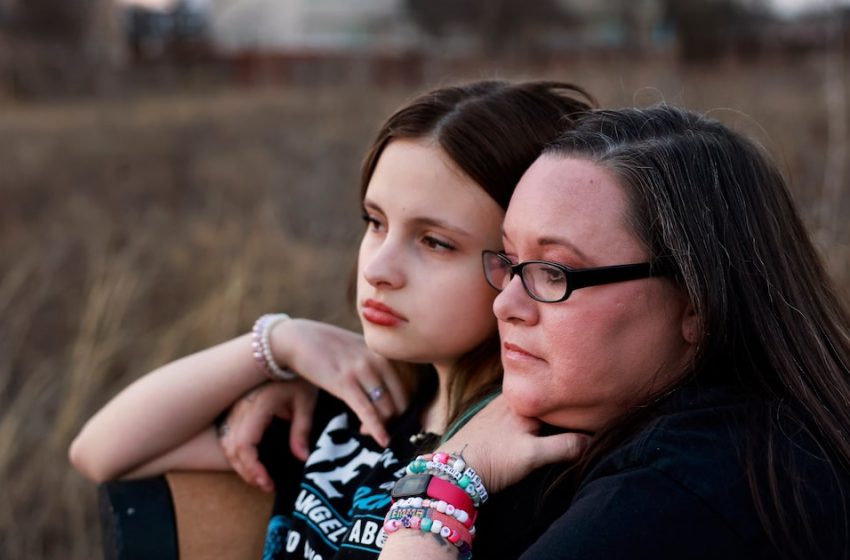
Her 4-year-old son had successful heart surgery. A few months later, he suddenly died
If you didn’t know what happened to Jordan, you might think he still lives in this house.
In Jordan’s bedroom, vines of plastic ivy hang like a curtain in front of the window. A stuffed Simba, the cub from The Lion King, sits on his bed. In the bathroom, his Paw Patrol toothbrush sits on the sink. His body wash is in the shower.
“I can’t get rid of anything he’s touched,” Lindsay Wessinger, Jordan’s mom, said.
There are photos of him everywhere in the Wylie house, crowding the walls of the living room, but if you look closely you’ll see that one of the photo frames shows Jordan with an angel above him. Others have images of Jesus alongside a boy or a woman.
Jordan Autry was 4 years and 11 months old — and 11 weeks out from an open heart surgery that his doctors had declared a success — when he died. His death was fast, a decline that took him from playing happily to undergoing chest compressions in the span of a few hours. It left his family, especially his mother, reeling.
Related
An autopsy found that Jordan died from bioprosthetic pulmonary valve endocarditis — an infection at the site of the new valve — and complications of congenital heart disease.
Endocarditis usually comes with clear signs and symptoms, allowing time for patients to seek medical care. In Jordan’s case, his family says, there were no noticeable symptoms.
A spokesperson for Children’s Health, where Jordan received medical care, pointed to patient privacy laws and declined to comment for this story.
Lion King-themed items still adorn Jordan Autry’s bedroom as his mother Lindsay Wessinger has kept most of it tact since his death in Wylie, Texas, February 12, 2026. Wessinger’s four year-old son had two open heart surgeries. He suffered from complex heart conditions and died a couple weeks after a second surgery. He contracted endocarditis, a heart infection.
Tom Fox / Staff Photographer
Dr. Douglas Overbey, a pediatric heart surgeon and assistant professor at Duke University, said it’s rare for a patient to have endocarditis without obvious symptoms. But it happens.
It’s not clear if there was anything that could’ve been done differently to catch Jordan’s infection before it killed him. Overbey said it’s hard to say because there are so many variables with the infection itself and with the timing of the medical appointments.
“This particular instance of endocarditis that did not have … overt signs or symptoms that anyone picked up is very rare,” Overbey said. “That makes it difficult to screen for this.”
But after living through a nightmare, Wessinger hopes that, at the least, Jordan’s story can push other parents to be more assertive and advocate for their children, particularly after surgery.
“What we go through, I don’t wish on my worst enemy,” she said. “Jordan’s got to save somebody.”
The day it happened
Jordan was born with a congenital heart defect. Wessinger said he underwent his first open heart surgery at 6 days old.
He had other heart procedures over his first few years of life, too, but the February 2024 open heart surgery was supposed to be the last procedure for a while.
The medical providers at Children’s Health, according to Wessinger’s recollection and Jordan’s medical records, said that surgery was a success.
Jordan Autry was a month shy of 5 years old when he suddenly died of a heart infection, a few months after a successful open heart surgery.
Courtesy of Lindsay Wessinger
“The surgery went well with no complications,” a medical provider wrote in a note from a follow-up appointment in March 2024, about one month after the surgery. “Since discharge he has been doing well.”
In April 2024, about 11 weeks out from his surgery, the family was having a normal evening.
Jordan played on the trampoline in the backyard of the family’s house in Wylie. He came in for dinner, ate all of his Kraft mac and cheese. After eating, he turned on The Lion King, his favorite movie, and rewound to listen to the song sequences over and over.
One minute, he was dancing with his favorite stuffed animal, a monkey, in front of the TV. Then, suddenly, he was crying. Then, he was throwing up. Soon after, he was moving in and out of consciousness while his older sister, Emma Autry, screamed.
This next part is what replays in Wessinger’s mind on a loop.
Wessinger, with no shoes on, getting into the ambulance with her son. The ambulance doors closing, with Wessinger inside and her daughter standing outside on the sidewalk. Jordan, on the gurney, seizing and rolling onto his side.
Emma, who was 12 at the time, was driven to the hospital by her uncle. When she ran through the emergency room doors, she saw her mom, on her knees on the floor, screaming.
Jordan was declared dead that evening.
Lindsay Wessinger, Jordan Autry’s mother, looks around her son’s room. “I can’t get rid of anything he’s touched,” she said.
Tom Fox / Staff Photographer
‘This house feels empty’
Wessinger is caught in a loop.
Closing in on two years since the day of Jordan’s death, the freeze-frame memories replay in her mind constantly, she said. When she talks about her son, she cries and cries.
In the immediate aftermath of Jordan’s death, Wessinger said, her mind went to a dark place. She drank more than usual. She stopped believing in God and felt angry at him.
“Jordan was my world,” Wessinger said, “and he took my world away that day.”
Jordan’s death has hit the whole family hard. When they think about him, his personality and his life, they think of laughter. Jordan laughed at everything, Wessinger said.
“Half of his life was in the hospital,” she said, “and despite all that he still was the happiest kid in the world.”
It’s been a big adjustment, not hearing that laughter in the house, not having Jordan’s TV playing on loud volume.
“It’s quiet,” Emma said. “This house feels empty.”
Emma Autry, 14, flips through her brother’s scrapbook of artwork in his Lion King-themed bedroom at she and her mother Lindsay Wessinger’s Wylie, Texas home, February 12, 2026. Emma said she only goes into the bedroom a few times throughout the year.
Tom Fox / Staff Photographer
Emma, now 14, said she spent the summer after Jordan’s death working on healing.
She said she took on a father role to her younger brother and that she saw him, in some ways, like her son, too. Emma is in ninth grade now but between caring for her younger brother and then grappling with his death, she seems in some ways older.
When Emma talks about her brother’s death, each individual piece of the tragedy, she talks in a level tone. Outwardly, at least, she is calm. She remembers seeing her brother’s body in the hospital, for instance, a viewing that Wessinger said she did not approve beforehand.
“It was traumatizing,” Emma said, “but I handled it.”
Over the past two years, Wessinger has pulled herself up from the deepest dark place, helped in part by talking with other parents who have lost children. Slowly, she’s trying to relearn how to look forward to things. Wessinger’s father, Gary Wessinger, said it seems that now she doesn’t think about Jordan’s death 24 hours per day; perhaps just 23.5 hours per day.
It’s progress.
“I’m just trying to grieve in a way that will make him proud,” Wessinger said.
The family has found comfort in small signs that they see in their daily lives. The numbers 13 and 23 — the day Jordan was born and the day he died — are their lucky numbers, their messages from Jordan.
“He reassures us every day that he’s OK,” Emma said.
Searching for meaning
Overbey, the surgeon at Duke, said it’s difficult to know if anything could’ve been done to catch Jordan’s heart infection before it became deadly.
Although it’s not clear exactly what happened in Jordan’s case, Overbey said there are generally a few different ways that endocarditis can take hold.
For infections manifesting very shortly — typically within two months — after open heart surgery, it’s possible the infection started from a contaminated surgery site or from bacteria on a bioprosthetic valve itself. Or, a patient may have picked up an infection in the hospital after the surgery, such as through a contaminated IV.
Other times, Overbey said, open heart surgery patients may develop endocarditis later, sometimes years after surgery, through an outside infection that travels to the heart.
He said there are two primary screening methods for endocarditis: echocardiogram or checking the bloodstream for infection.
For a case where endocarditis is not caught, there are scenarios where providers should’ve caught early signs at a follow-up appointment. There are also scenarios, such as if the infection hadn’t caught hold deeply enough at the time of the appointment, where any provider might’ve missed it.
Jordan’s case was anything but textbook. Not even an expert can say if anything could’ve been done differently.
Wessinger searches, still, for possible fixes.
Should blood draws be done more frequently, perhaps, after such a major surgery? What if another scan could’ve caught it?
Wessinger hopes Jordan’s story can encourage other parents to push for the medical care they believe their children need, particularly after major procedures. That’s extra important for children who can’t communicate well, either because they’re young or because, like Jordan, they’re speech-delayed.
“Sometimes,” Wessinger said, “we have to be the voices for our children.”
Overbey said the best thing parents can do is to attend all of their follow-up appointments, to listen to their doctor’s advice and to notify the medical team immediately if they notice anything unusual in their child.
Common endocarditis symptoms include fever, lethargy, fast heart rate or pulmonary symptoms such as a cough or shortness of breath. Post-surgery, it can be difficult to tell if those symptoms are indicative of a complication or if a child’s body is just coping with the aftermath of a massive procedure.
“Subtle things like, ‘Oh, maybe they’re not eating as much as they were before,’ ‘Maybe they’re a little bit more tired,’ ‘Maybe they’re not quite as active.’ Those all can be signs of a problem, but they can also be normal after heart surgery,” Overbey said.
Overbey was cautious, though, about not scaring parents. There is only so much that can be protected against. A tragedy is not always someone’s fault.
But if Jordan’s story can encourage just one family to be more assertive about their child’s medical care, it would be a relief for Wessinger.
“This is my Jordan,” Wessinger said. “This is him, and he’s worth enough to at least make some kind of impact in the short four years of his life.”
First Appeared on
Source link






