


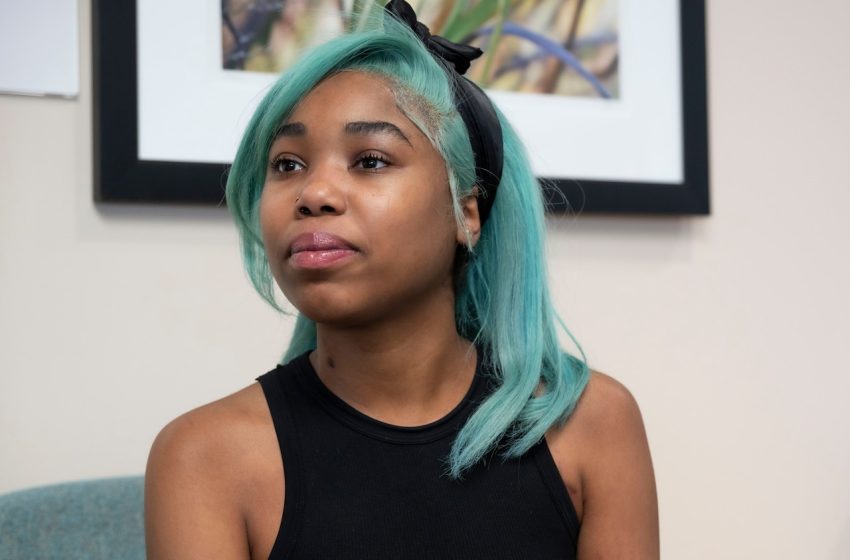
Her heart was so enlarged it filled her whole chest. Here’s how surgeons saved her
GRAND RAPIDS, MI — Pain and exhaustion were building inside Taliyah Symonette’s body.
Born with a hole in her heart, the 21-year-old grew up accustomed to shying away from sports and other activities that left her easily winded. But after years of managing her condition, her health began to rapidly deteriorate last summer.
Overcome with nausea, Symonette vomited during her first day of class at Lansing Community College. Eating soon became a struggle. Unable to walk short distances without gasping for breath, she withdrew from school.
Her life felt like it was unraveling.
“I was very scared,” said Symonette, who in August 2025 moved to Michigan from Florida and was diagnosed with heart failure a month later at McLaren Greater Lansing Hospital. “I cried a lot.”
Today, after undergoing surgery last September at Corewell Health in Grand Rapids, Symonette is on the path to recovery.
With the hole in her heart fixed, and with the help of a pacemaker, Symonette has returned to school. No longer does she vomit or struggle to breathe when she cooks, styles her hair or walks to the park.
“She couldn’t go to school, she couldn’t go to work, she couldn’t get out of bed, she could barely do anything,” said Symonette’s mom, Valentee Robinson. “For her to go from that to where she is now is just a blessing.”
Corewell is highlighting Symonette’s story as part of American Heart Month, which seeks to raise awareness about cardiovascular disease.
She’s one of an estimated 2.4 million people in the U.S. with a congenital heart defect, according to the American Heart Association. The defects occur before birth when the heart, or the blood vessels near the heart, don’t develop properly.
Because it changes the way blood flows through the heart, the defect can lead to high blood pressure, an irregular heartbeat, congestive heart failure, heart inflammation and more, the AHA states. The symptoms can range from mild to life-threatening.
Over the past several decades, advances in care have improved survival rates for children born with congenital heart defects, according to the AHA.
To serve those patients as they age, Corewell said it launched its adult congenital heart program 14 years ago, recruiting surgeons and cardiologists who can provide advanced care in West Michigan.
Still, doctors at Corewell say more education about the condition is needed within the healthcare community and the public. Patients who don’t receive the correct screenings or aren’t connected with the right specialists are at risk of complications.
“The important message we want to communicate to adult cardiologists is if they’ve got a young patient, if there’s any congenital heart problems that they diagnose, we want to see the patient,” said Dr. Gruschen Veldtman, an adult congenital cardiac disease specialist. “If they find a cardiac problem but they don’t know what it is — for example, any chambers or anything are abnormal — we want to see those patients.”
Veldtman pointed to Symonette’s case as an example of the need for more education.
“She had been through multiple physicians who didn’t really pick up that she had congenital heart disease,” Veldtman said.
For Symonette, the consequence of delayed treatment was that she was dangerously ill when she was transported by ambulance from McLaren Greater Lansing Hospital to Corewell Health Butterworth Hospital on Sept. 18, 2025, Veldtman said.
Her weight had fallen from 100 pounds to 85 pounds. Because of the hole in her heart, an “enormous” amount of blood was flowing through her lungs. And her heart itself had swelled to a dangerously large size.
“You normally see the heart as a small thing like this,” Veldtman said, holding up his clenched fist to illustrate the size of a regular heart. “Taliyah’s heart, her whole chest was filled with heart.”
The particular Atrial Septal Defect, a hole in the heart, that Symonette suffered from is “exquisitely rare,” he added.
“It will be 1 in 10,000 cases that will present like this,” Veldtman said.
Dr. Marcus Haw, a congenital cardiac surgeon at Corewell, operated on Symonette after she spent 12 days in the hospital’s intensive care unit.
With the help of colleagues, Haw dug a tunnel in Symonette’s heart to redirect blood flow and used electrical equipment to correct her heart’s rhythm. He also repaired her heart’s valves. A few days later, a pacemaker was installed.
It was a risky procedure, Haw said, with a roughly 10% chance of death. But Haw, who estimates he’s performed about 10,000 open heart surgeries during his career, was confident Symonette would pull through.
“She knew that if she came out in bad shape, it would be a very long stay in the ICU and she might not make it,” Haw said. “But she came out in really good shape, and that was great. And it wasn’t luck, it was judgment.”
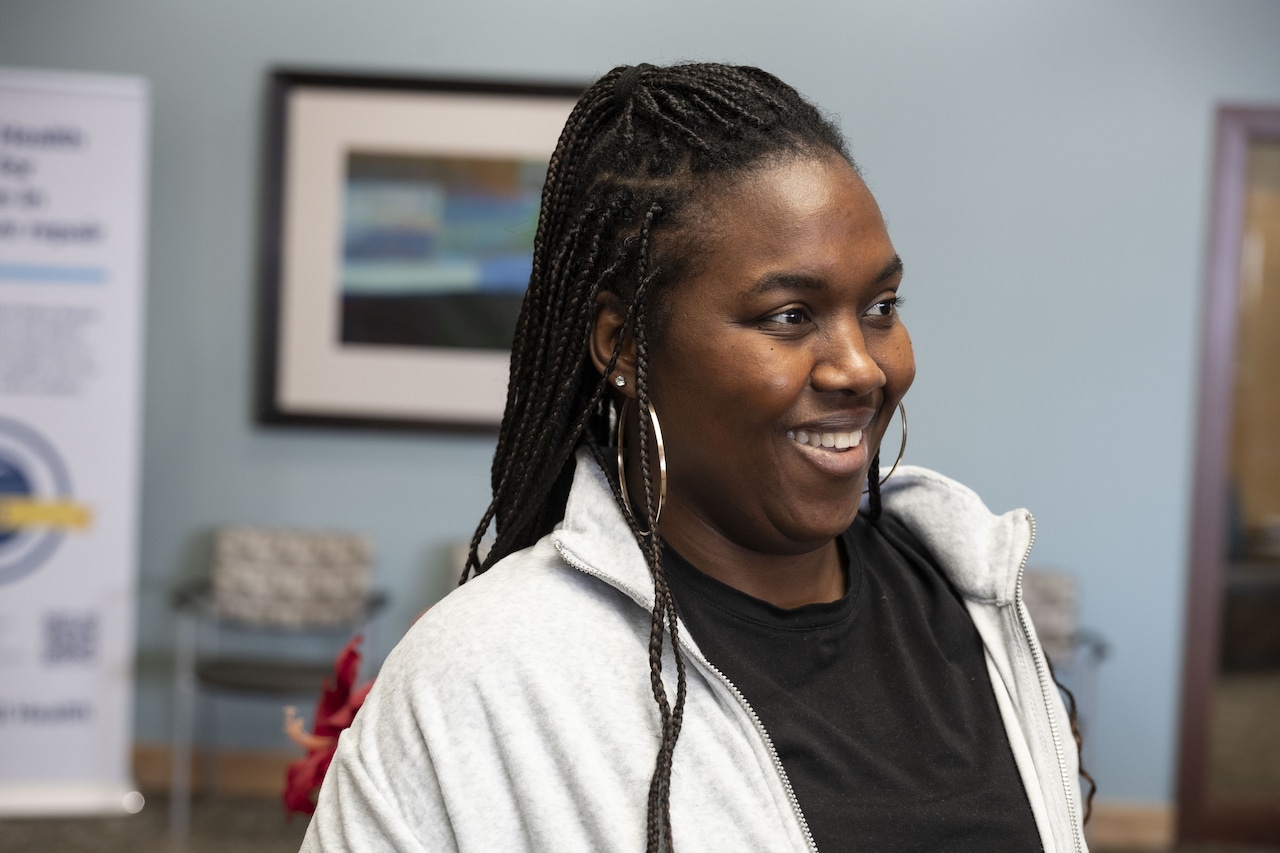
Reflecting on the procedure, Robinson, Symonette’s mom, said she’s grateful for the care and support she and her daughter received at Corewell.
Her family, who live in Florida, provided comfort over the phone, but she didn’t have anyone to lean on at the hospital. Nurses and doctors at Corewell helped fill that gap, providing kind words and encouragement.
“They really treated us as if we were family,” said Robinson, who added that her and her daughter’s faith in Jesus was another source of hope and resilience.
“We had no worries, no concerns with anything.”
Five months after her surgery, Symonette is doing better than ever, her mom says.
She can once again style and dye her hair — her source of creativity and self-expression. She looks forward to completing her education at Lansing Community College, getting her own car and, one day, moving into her own apartment.
“After a few days, I was just perfectly fine and normal, and it was so nice,” Symonette said.
First Appeared on
Source link






