


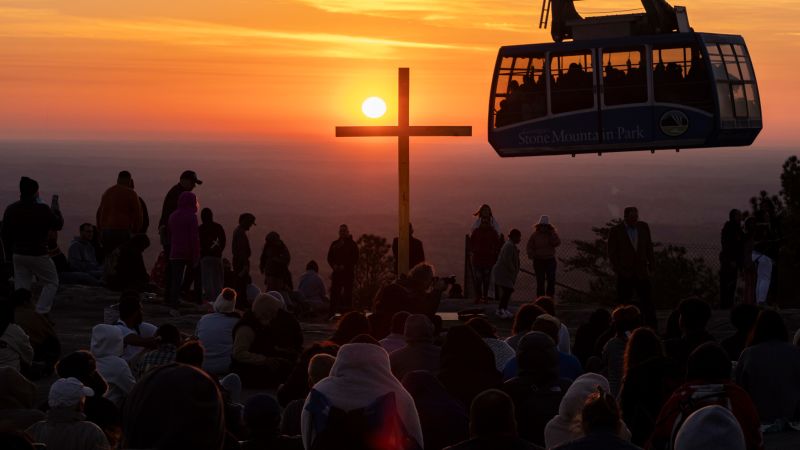
Historian Tom Holland was investigating the death of Jesus when he had a conversion — and a brush with the supernatural
Tom Holland gasped for breath. His head started to spin. He loosened the straps on the bulletproof vest protecting his slender frame and doubled over in pain.
“Oh, I’m going to be sick,” he said as he stood in a deserted town of pulverized homes and mounds of rubble. “I’ve got to sit down.”
It was July in 2016, and Holland was in the northern Iraq city of Sinjar. He had arrived with a BBC film crew about three months after ISIS, the murderous jihadist group, had tried and failed to retake the town after massacring members of the Yazidis, an ancient religious and ethnic minority in Iraq.
Holland knew something about ancient history. He was an award-winning British historian who had written popular books about ruthless Spartan and Roman leaders he called the “apex predators” of the Greco-Roman world. They lived by the Athenian dictum: The strong do what they can and the weak suffer what they must.
ISIS applied that logic to Sinjar. They executed hundreds — some say thousands — of men and sold women into sexual slavery. They desecrated churches and hung some of their victims on crosses. The stench of death in Sinjar was so overpowering that Holland had to stop talking on camera.
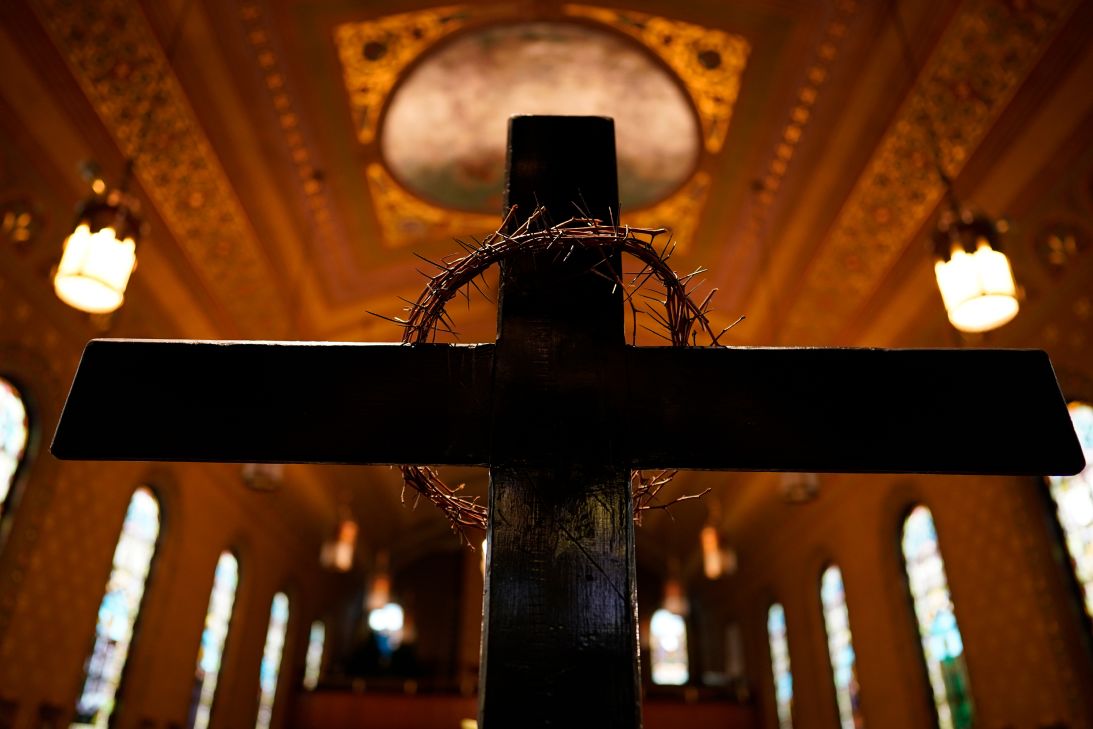
As he paused to compose himself, the camera panned to a startling sight: a wooden cross, perched precariously atop the rubble of a demolished church and still standing over Sinjar’s skyline.
But the camera could not capture how that cross would change Holland’s life. He was an atheist-turned-agnostic who had rejected the Christian faith in which he had been raised. He had little use for the Bible or stories about miracles.
When he arrived in Sinjar, he was writing a book about Christianity, but from an objective historian’s point of view. Somehow along the way, though, investigating Jesus’ crucifixion transformed him — along with a possible brush with the supernatural.
An unlikely chain of events forced him to ask a momentous question: What if I were wrong about Christianity?
He wrote a book that ‘landed like a bombshell’
Today millions of Americans commemorate Easter, the holiest day of the Christian calendar. The holiday, though, comes at a troubling time for Christians. Church attendance is plummeting across America and churches are closing. Church leaders warn that the US is becoming a secularized society following the path of Western Europe, with its soaring Gothic cathedrals and empty pews.
But Holland has emerged as an unlikely evangelist from what some call “Godless Europe.” He wrote a 2019 book about the impact of Jesus’ death that, according to one commentator, “landed like a bombshell … and continues to send shockwaves through the academy and popular discourse.”
In the book, “Dominion: How the Christian Revolution Remade the World,” Holland says reports of Christianity’s death are greatly exaggerated. He says plenty of non-Christians, such as atheists and agnostics, have Christian beliefs — and they don’t know it.
Holland argues that Western secular values, such as belief in the importance of compassion, equality, and human rights, are not universal human instincts. They are the products of Christianity.
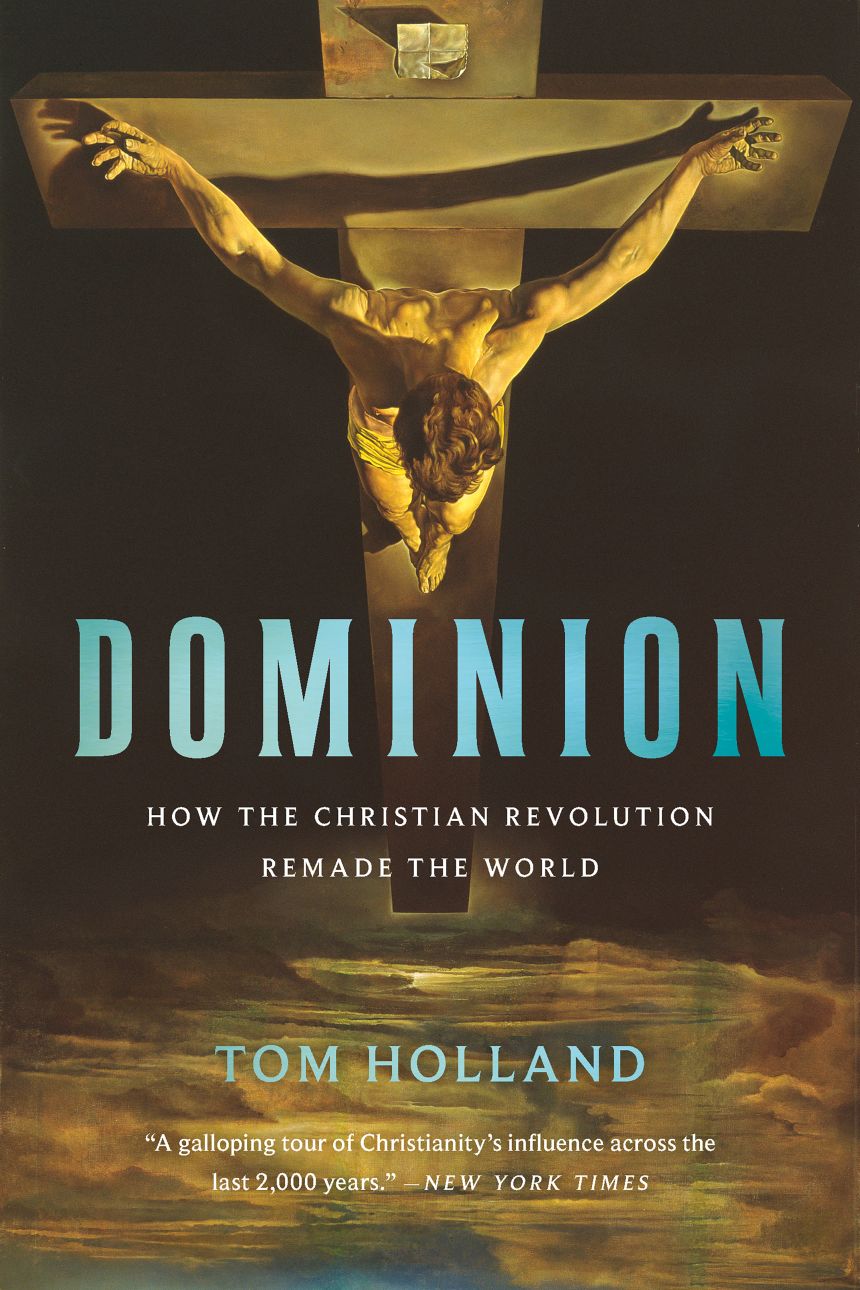
“To live in a Western country is to live in a society still utterly saturated by Christian concepts and assumptions,” Holland wrote in his book. “This is no less true for Jews or Muslims than it is for Catholics or Protestants. Two thousand years on from the birth of Christ, it does not require a belief that he rose from the dead to be stamped by the formidable — indeed the inescapable — influence of Christianity.’’
The most revolutionary idea that Christianity introduced to the West is reflected in its central symbol: the cross, Holland wrote. For the Romans, dying on a cross was the most agonizing and humiliating method of death imaginable. It was reserved only for slaves, criminals and political rebels. But Early Christians turned the cross into “the most globally recognized symbol of a god that there has ever been” — and evoked it to declare that God identified with the weak and powerless instead of the strong, Holland wrote.
Holland later said he didn’t appreciate how Christians had inverted the meaning of the cross until he went to Sinjar. ISIS reminded him of the Romans he wrote about in books like “Rubicon: The Last Years of the Roman Republic.” The Romans worshipped power and dominance. They admired Julius Caesar, for example, who enslaved a million people and killed another million during his conquest of Gaul.
“To be in this place where people had been crucified for exactly the reasons the Roman crucified people — to intimidate as a statement of power — opened up this existential abyss for me,” Holland told CNN in a recent interview. “This was a place that had been occupied by a people who saw the world as the Romans saw it.”
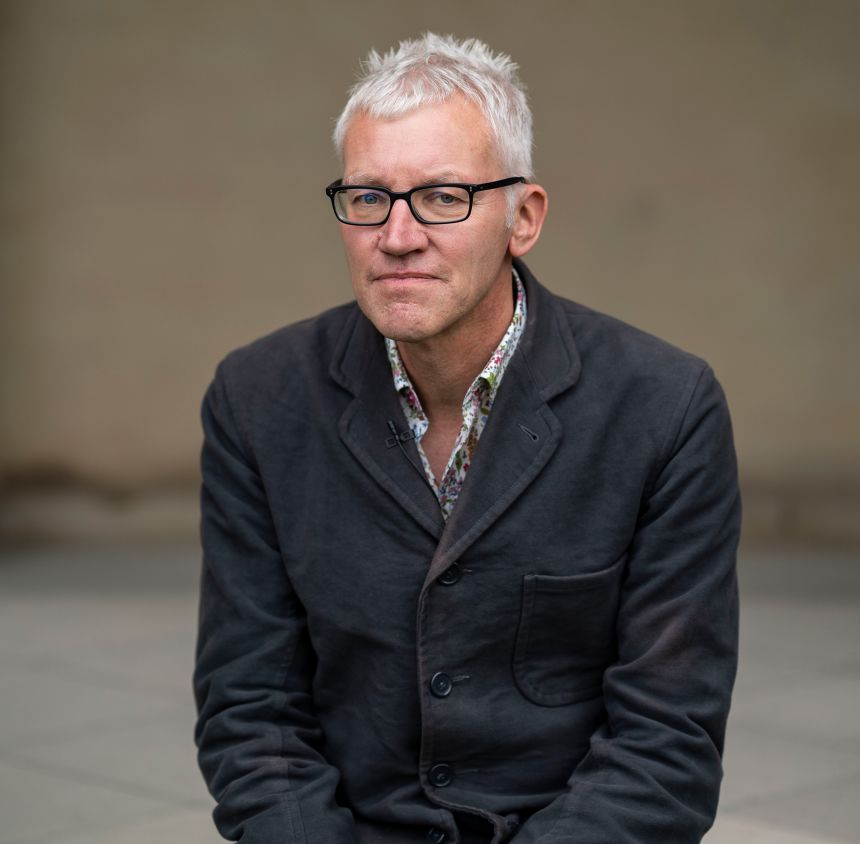
Holland, 58, is a stylishly dressed man with a “PBS Masterpiece” accent and a self-deprecating sense of humor. He’s a celebrity in the United Kingdom, where he co-hosts a popular podcast, “The Rest is History,” with Dominic Sandbrook.
Holland, a passionate fan of cricket, lives in London with his wife Sadie and their two daughters. His schedule is packed: He’s also written plays, adapted Greek classics for the BBC and produced several documentaries.
In some circles Holland is seen as a modern-day C.S. Lewis, the brilliant British author whose defense of Christianity made him popular with American audiences. He’s debated prominent atheists, humanists and skeptics. These debates often turn into YouTube segments and stories with headlines such as, “Tom Holland is taking on secular humanists. And he’s winning.”
One of those humanists says Holland’s belief that Western morality is based on Christianity is not only wrong but also dangerous. People can lead ethical lives without belief in God or the supernatural, said Fish Stark, executive director of the American Humanist Association.
“The idea that we should love our neighbor and treat everyone with dignity — Christianity has never had a monopoly on those ideas,” Stark said. “Those concepts exist in every religious tradition, and they also have existed in every non-religious tradition.”
Stark pointed to scientific research that says people are born with instinctive desires to protect and care for others. In such books as “Survival of the Friendliest,” scientists say humans are hardwired to cooperate with others.
“We deal everyday with people who get fired from their jobs or lose custody of their kids because there are some folks in America who think if you’re not a Christian, you’re a bad person,” Stark said.
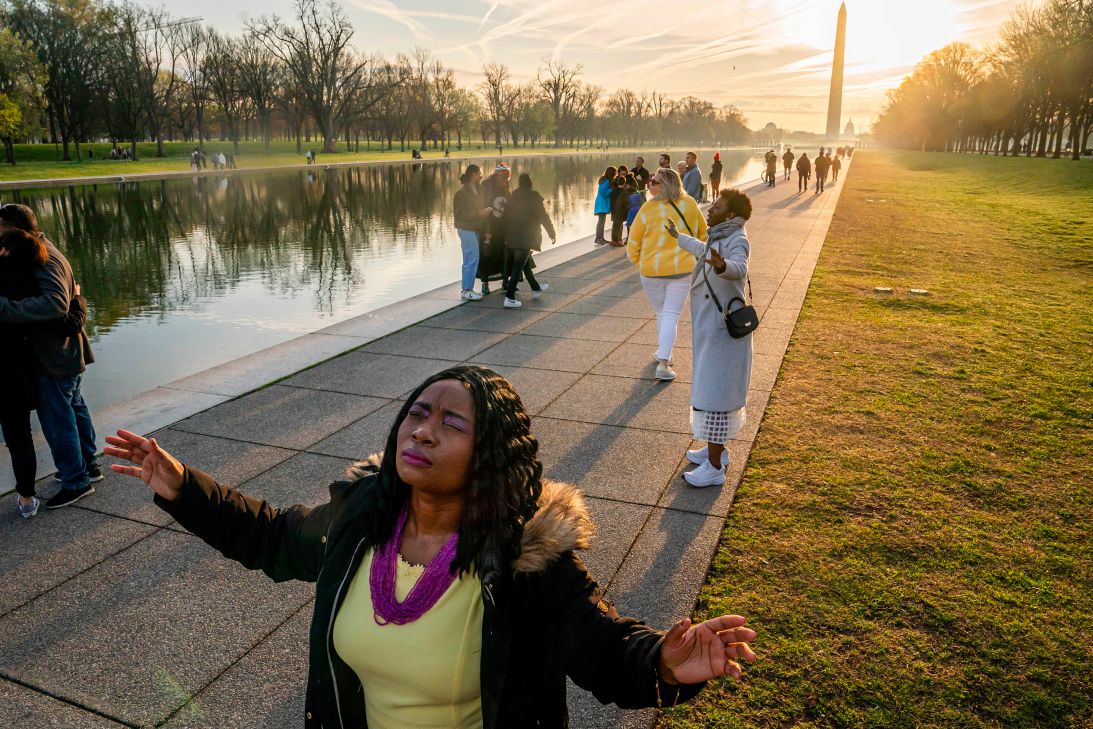
Holland’s perspective on Christianity has made him an admired figure among evangelicals in America.
The Rev. Albert Mohler Jr., president of the Southern Baptist Theological Seminary in Kentucky, said Holland’s premise about the pervasiveness of Christianity’s influence on Western civilization is “fairly unassailable.”
Mohler, author of “The Gathering Storm,” pointed to Christian language that routinely appears in secular marriage ceremonies.
“Tom Holland’s point is just so correct. There are basic Christian impulses, even explicit Christian language, that show up in places that modern Westerners think are secular,” Mohler told CNN, citing the political debate over transgender issues. “Those places aren’t nearly as secular as you think.”
Holland’s background helps him to identify with religious skeptics. He’s been one for much of his life. He was born in Oxford and raised in a village outside Salisbury, a medieval city not far from Stonehenge. He was raised by a devout Christian mother and confirmed at an Anglican church.
Holland’s first crisis of faith started with a dinosaur. When he was about seven, he attended a Sunday School class and opened a children’s Bible. The first page had an illustration of a brachiosaur sharing the Garden of Eden with Adam and Eve. Non-avian dinosaurs went extinct about 65 million years before the appearance of human beings. Young Tom challenged his Sunday School teachers.
“I knew no human being had ever seen a brachiosaur,” Holland told CNN. “So I asked them what was going on here, and it was obviously above their pay grade. They didn’t want into get into a discussion about how dinosaurs fit into (the book of) Genesis.”
Holland became an atheist as an adolescent before moving toward what he called a “mushy agnosticism.” When he started writing novels about the Greeks and Romans, the Biblical stories he grew up on seemed even more dull. He said he liked the “rock-star glamour” of the Spartan warriors who made their last stand at the battle of Thermopylae (“This is Sparta!”) and the Roman legionaries who crossed the Rubicon.
Yet at the same time, other experiences in his life planted seeds of faith that would later bloom. There was the kindness and faithfulness shown by his mother and devout godmother, “Aunty Deb,” or the vicar at his boyhood church who didn’t talk down to him during sermons and lent him books that fed his love of history.
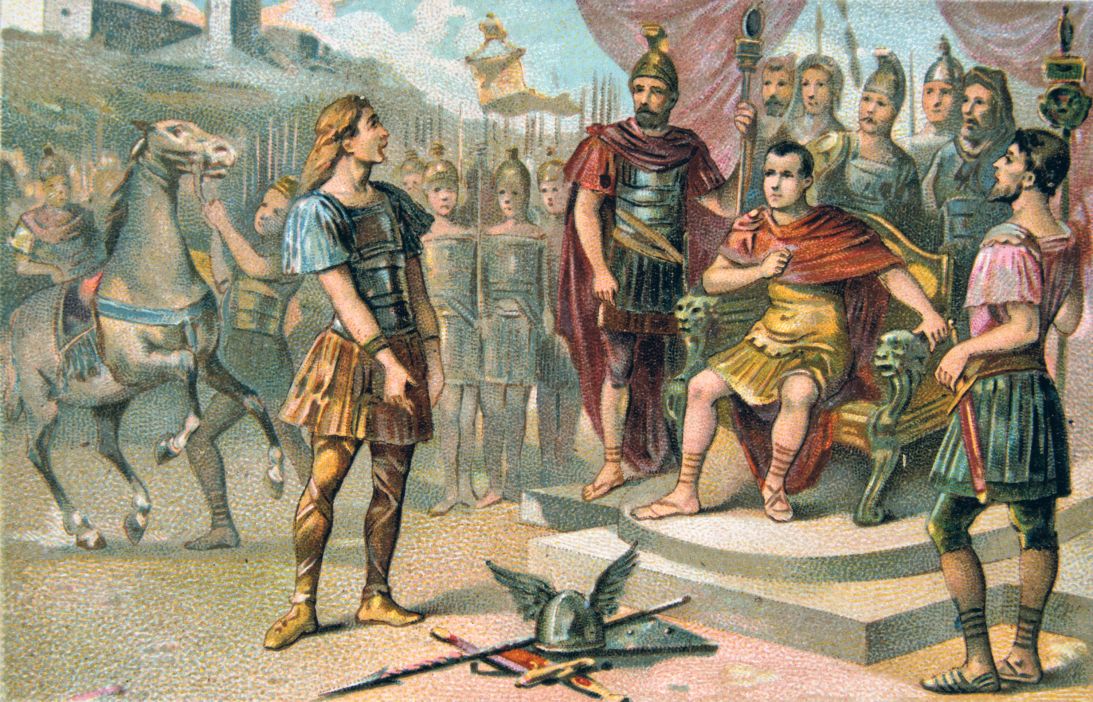
By the time he had arrived in Sinjar, he was already questioning his assumptions about Christianity. The more years he spent studying the Greeks and Romans, the more alien their morality seemed to be. They glorified violence and casually accepted practices such as infanticide, or abandoning unwanted babies. It was only natural, they thought, that the strong should dominate.
“The Romans thought that they were the most moral people — that was why the gods had given them the world to rule,” he told CNN. “But it was not my morality. And I found it frightening when I got close to it.”
Holland started thinking about his childhood faith and wondering where his values came from.
But it was another experience that also rekindled his faith. Holland still struggles to explain it.
In December of 2021, he was diagnosed with bowel cancer. Doctors told him he would have to undergo a serious operation which might leave him incontinent and infertile. They ordered more tests but warned him his prognosis didn’t look good.
While waiting for the results, Holland went to a midnight mass at one of London’s oldest churches on Christmas Eve. The church was St. Bartholomew the Great, reputedly the site of an appearance by the Virgin Mary in the 12th century. After the service ended, Holland did something he hadn’t done since he was 10. He offered a fervent prayer to God.
“There’s no atheists in foxholes,” Holland said, repeating an aphorism about how people often turn to prayer when faced with death. “I … begged assistance.”
The test results came back: His cancer had not spread. Today he’s clear of cancer.
Was he the recipient of a miracle?
Two years ago Holland cited a more prosaic explanation: His brother put him in touch with a doctor who specialized in the type of cancer he had.
What does he think today?
“It’s a coincidence, but I don’t want to 100 percent say it’s a coincidence,” he said. “I like seeing the shimmering possibility of the supernatural. I love the idea of being in receipt of a Marian miracle.”
What Holland believes happened at the Resurrection
Since his health scare, Holland seems more open to talk about the miracles recorded in the New Testament.
Does he believe that Jesus rose bodily from the dead?
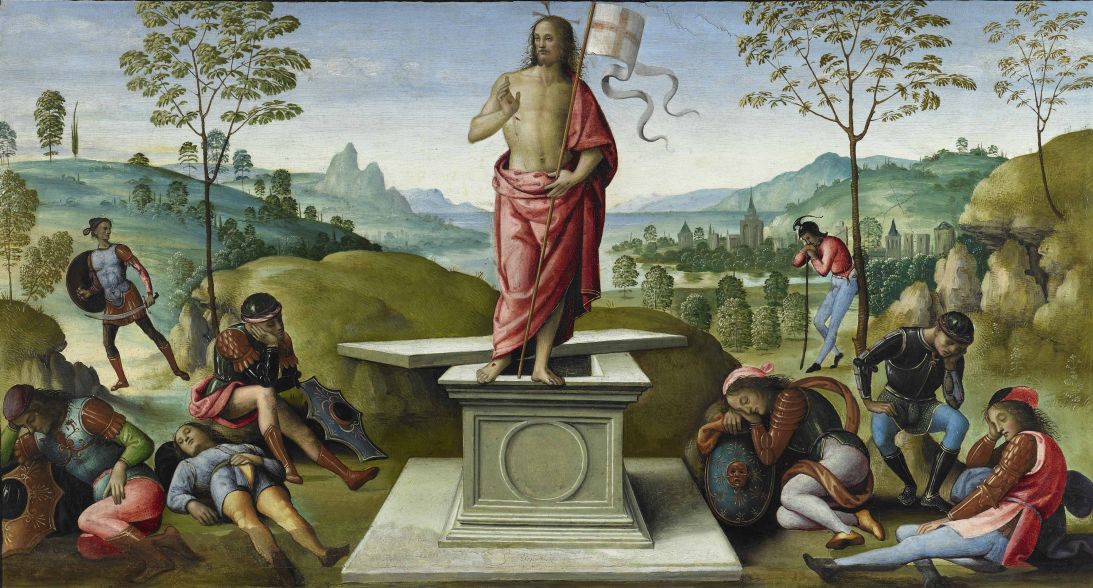
He said that Christianity would not exist unless early Christians believed that something “spectacularly odd” had happened on the first Easter morning.
“I find it hard to believe that people would be writing this stuff, preaching this stuff, believing this stuff and risk death for this stuff if they didn’t think it was true,” he told CNN.
Is he a Christian? In the past, such questions made him visibly uncomfortable. As recently as two years ago, he called himself a “Protestant agnostic.”
And today?
“I would say I’m a Christian,” he said.
As to what kind of Christian, Holland didn’t cite doctrine. Instead he mentioned “The Answer,” a poem by the Welsh poet R.C. Thomas as emblematic of his faith. Thomas’ poetry has been described as the “poet of the Cross, the unanswered prayer, the bleak trek through darkness.”
Holland said he likes the combination of “doubt” and “religious triumph” in Thomas’ poetry.
“There are other ways to approach God,” he said. “Poetry would be one, or surrendering to symbolism or mystery.”
His mother, Janet Holland, 92, didn’t hesitate when asked whether she thinks her son is a Christian.
“Yes, I do. But he never quite acknowledges it, does he?” she told CNN. “I think he kind of needs it,” his mother said of her son’s faith.
Holland still struggles with belief in the miracles attached to Christianity.
“There are times where I can feel that I believe it. There are times when I don’t feel it at all,” he said. “But I would like to be able to believe it because, aside from anything else, it does provide nutrients and sustenance to the roots of my beliefs. It also makes the universe more interesting.”
Holland’s ambivalence is not unusual. It was shared by another group of people: Jesus’ first disciples. Their encounters with Jesus on the first Easter morning are some of the strangest stories in the Bible. Some don’t initially recognize him. Others react not with joy but with terror. One Gospel account ends abruptly with women fleeing from the empty tomb.
Christians eventually called these stories the “good news.” They say the cross proves the “last shall be first,” and that “unarmed truth and unconditional love will have the final word in reality.”
Maybe it shouldn’t be a surprise that Holland still veers between faith and doubt. Apex predators still roam the earth. Armies still march, and the weak suffer what they must.
The type of atrocities that Holland saw in Sinjar persist today. But at least for some, there’s still the cross — it points toward another way.
John Blake is a CNN senior writer and author of the award-winning memoir, “More Than I Imagined: What a Black Man Discovered About the White Mother He Never Knew.”
First Appeared on
Source link






