


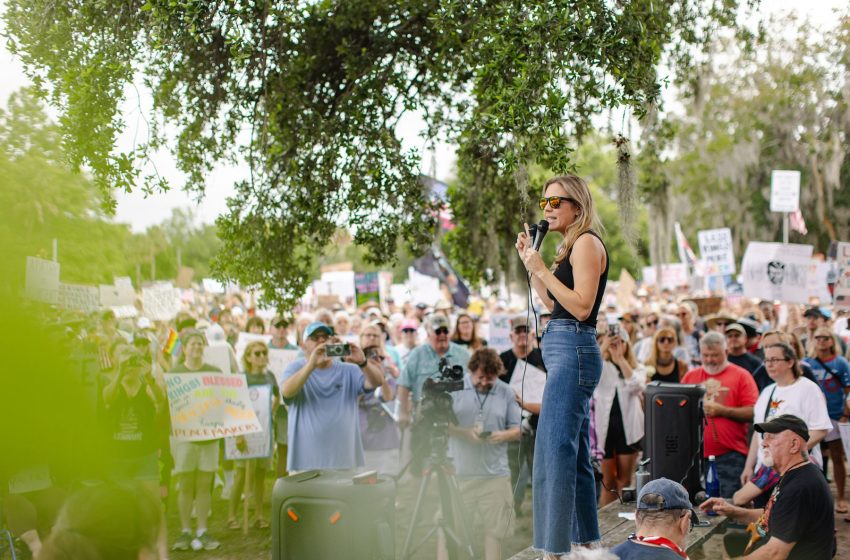
How South Carolina’s measles outbreak is shaping pediatrician’s run for Senate
In mid-December, Dr. Annie Andrews turned on her camera to record. The pediatrician — among a growing cohort of medical professionals who use social media to break down health care news and misinformation — had a public service announcement.
“As the entire country is aware, we have a measles outbreak in the upstate of South Carolina,” Andrews said. At the time, there had been over 120 cases of the highly contagious disease in the state, where she and her three school-aged children reside.
Andrews noted that the vaccine available to prevent measles — known as the measles-mumps-rubella (MMR) vaccine — is incredibly safe and effective. She offered practical advice for adults who might want to check if their measles immunity had waned. And she cautioned people to be extra mindful amid holiday travel.
“Please stay home if you have a fever, stay home if you have obvious cold symptoms like a cough and a runny nose,” she said. “Certainly stay home if you have a rash along with that fever. Protect your loved ones and do what you can to stop the spread of measles here in South Carolina and in the other parts of the country where it is currently spreading.”
Her video ended with an image promoting her campaign for the U.S. Senate.
“I never in a million years, when I was in medical school, thought that I would be running for the U.S. Senate and also talking about measles nearly every single day,” Andrews told The 19th.
A growing measles outbreak — since start of the year, more than 700 cases have been reported in the United States, with South Carolina being the epicenter — has become a cornerstone of Andrews’ messaging for her campaign, which she balances while working at a children’s hospital and parenting.
And Andrews suspects that mothers are paying close attention to her campaign. She calls mothers of school-aged children her most loyal base of supporters. They leave positive messages on social media, stop her after campaign events and while she’s shopping at the grocery store.
“As we see our children under constant threats — whether it’s from the gun violence epidemic or now sort of the politicization of HHS and vaccine recommendations — moms have had enough and they’re fighting back,” she said. “I think I’m tapping into something here in South Carolina and across the country. Moms who just get that ‘mama bear’ instinct — and now they understand that politics is a really important way to fight back and protect their kids.”
The Democrat faces an uphill battle as she challenges Sen. Lindsey Graham, a four-term Republican incumbent who’s held the seat for more than 20 years. While Andrews outraised Graham in the third and fourth quarters of 2025 and polling indicates a close race, the senator has more cash-on-hand to spend. Both candidates are heavily favored to win their primaries in June.
Andrews first ran unsuccessfully for Congress against Republican Rep. Nancy Mace in the 2022 midterm election. Mace easily won, capturing more than 56 percent of the vote over Andrews’ 42 percent in a race that centered health care and abortion. After her last congressional bid, Andrews did not plan to run again.
Then Robert F. Kennedy Jr. was confirmed as health secretary.
“The fact that it is 2026 and here I am in South Carolina, where we are in the midst of a measles outbreak because of disinformation and conspiracy theories spread by people like RFK Jr. — is just really mind-blowing to me as a health care professional, as a physician, as a clinical researcher,” she said. “And so it really was the reason I decided to get in this race.”
Andrews connects Kennedy’s actions on vaccines — his department has made several changes to the childhood vaccine schedule, including cutting the number of recommended universal shots, to senators like Graham in part by noting their critical confirmation votes. A spokesperson for Graham did not respond to a request for comment about the senator’s stance on the measles outbreak in his home state. A review of recent public news releases on Graham’s Senate website does not appear to address the topic.
But Andrews’ campaign also focuses on health concerns more broadly: Andrews believes the political headwinds are shifting. Republicans, who control Congress, last year enacted massive budget cuts to programs like Medicaid and SNAP, and they allowed enhanced subsidies that helped people afford insurance coverage under the Affordable Care Act to lapse, sending premiums skyrocketing.
“South Carolina has a lot of health care deserts, folks who live in rural areas, who have to drive many, many miles and cross county lines to reach a hospital system and an emergency department and maternity care,” she said. “All of that is going to be made so much worse because of what we’ve seen from this Trump administration — of course, enabled and supported by Lindsey Graham.”
Andrews is tapping into a topic with massive implications on public health, said Shaughnessy Naughton, president of 314 Action, a political action committee that tries to elect Democrats with a STEM background to office and has endorsed Andrews. Before the record-setting cases in 2025, the United States had averaged 180 cases of measles annually since 2000, when the disease was declared eliminated. Four times as many cases have been reported this year and the United States is on the brink of losing its elimination status.
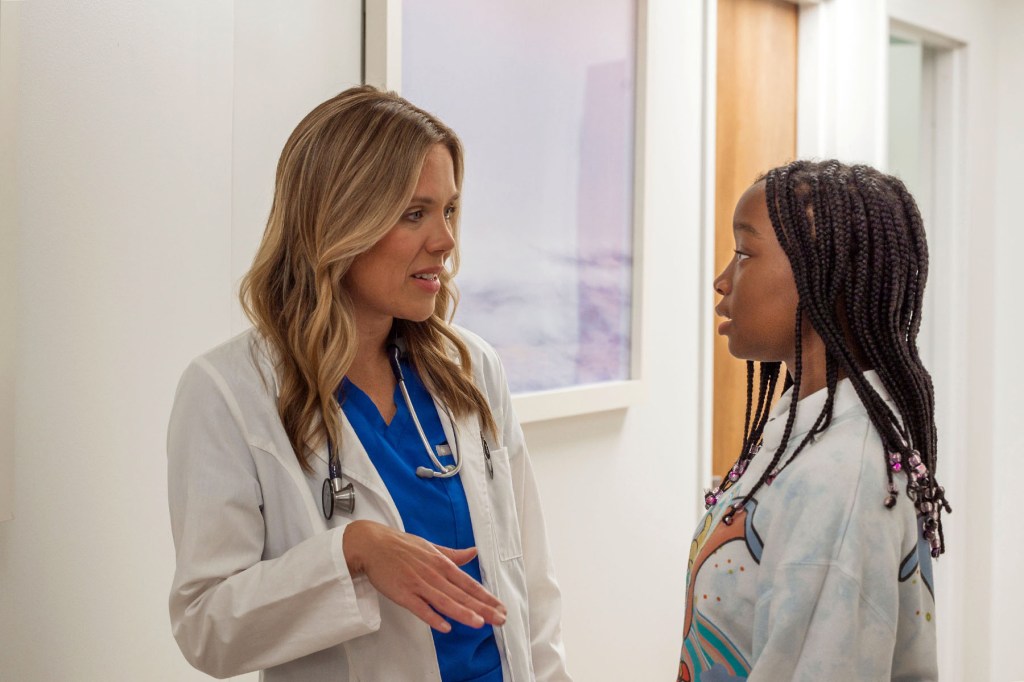
(REBEKAH HULLIHEN/Annie Andrews Campaign)
“As a pediatrician in kind of ground zero of the measles outbreak in South Carolina, she is a voice of real credibility and authority,” Naughton said.
Doctors and health care professionals have increasingly declared candidacies ahead of the midterms, according to 314 Action. Last November, the group endorsed and supported 148 candidates in races that included seats in New Jersey and Virginia — 108 won.
314 Action launched a new recruitment campaign last year aimed at electing more doctors, nurses and public health experts to state and federal offices. It has received 200 applications from doctors interested in running, according to Naughton.
“Americans overwhelmingly support childhood vaccines that have been shown to be effective and safe. Americans wanted the ACA subsidies to be extended so they could continue to purchase health insurance to keep their family safe and healthy,” she said. “You couple it with a cut to public health and research that provides future hope for people and cures — it’s just an administration that is not listening to what Americans want.”
Kayla Hancock is director of Public Health Watch, a health-focused communications initiative from the health care advocacy group Protect Our Care. She said the Trump administration’s health policies — led in part by Kennedy — have forced the electorate to pay attention. Recent public polling shows 75 percent of voters say the cost of health care will impact how they vote in the midterms.
“Every day, the consequences of the Trump administration’s policies around health and public health are mounting,” she said. “Between disruptive vaccine development and now deadly outbreaks of diseases that we had previously had under control, and then, of course, shattering research programs.”
Andrews is running for office while commuting between Charleston, where her children attend public school and she co-parents with her ex-spouse, and Washington, D.C, where she works at a children’s hospital. She said going back and forth between these two worlds — the campaign trail and her job as a doctor — has grounded her candidacy.
“I’m taking care of kids who are struggling with food insecurity. Kids who have asthma and live in a home with mold on the walls and can’t afford to move to a different apartment. Kids whose parents can’t afford their prescription drugs. Kids who can’t access mental health resources in their community, and kids who have a past medical history of gunshot wounds, which is really only something you see in America,” she said. “It reminds me of all the reasons I’ve sacrificed so much to run for office. Because these problems are so urgent.”
Andrews’ campaign platform extends beyond health care. Through her lens as a parent, she talks about addressing gun violence, making groceries more affordable for families and restoring federal abortion rights.
Still, disease prevention has been a central issue for her. Even before the outbreak in South Carolina, Andrews featured an X-ray of a kid with measles pneumonia in her campaign launch ad last May and noted the condition could be prevented by vaccines. It’s a point she often brings up now both online and on the campaign trail, partially because the outbreak in her state has worsened since her December PSA: As of early February, cases in the state have jumped to more than 900 since last fall, mostly involving children 17 and under.
More than 240 cases involve children under the age of 5, some of the most vulnerable to infection since children under the age of 1 are typically too young to get the MMR vaccine. Most of the infections reported were among people not vaccinated.
The consequences to children only crystallize Andrews’ decision to run. She pointed out that while doctors have served in the Senate, a pediatrician has never been elected into the centuries-old chamber. (Rep. Kim Schrier of Washington state, a Democrat elected in 2018, is the first pediatrician in the U.S. House.)
This week, Andrews added an FAQ page on her campaign site focused on measles and related resources for parents.
“There’s never been a more important time for people who have an understanding of our health care system and basic medical principles to be in the room where decisions about our health care system — decisions about the public health guidance that is coming out of the federal government — are being made,” Andrews said.
First Appeared on
Source link






