


how to manage it with diet changes
A relevant statistic is worth repeating: Per the American Diabetes Association, more than 115 million Americans have prediabetes, and the vast majority don’t know it. Since it’s a borderline condition — higher than normal blood sugar, but not to the level of diabetes — eating a healthful diet and making moderate lifestyle changes can help people improve their blood sugar levels to prevent the onset of type 2 diabetes and its serious health impacts.
The main takeaway, I learned, for prediabetics: Eat fewer carbs, especially refined carbs. These include sugary foods and beverages, white bread, white rice, and white pasta, which offer minimal or no nutrients or fiber, are absorbed quickly, and typically spike your blood sugar. Aim for the ADA’s Diabetes Plate: half non-starchy vegetables, one-quarter lean protein, and one-quarter carbs, such as whole grains, beans, or fruit.
When making changes to my diet, I started small, fixing one healthier meal every day. Then I added another low-carb meal, and so on. Every meal you’re paying attention to is a step in the right direction. An occasional splurge is inevitable; just make it a small portion, a few bites you savor, not a whole slice of cake. As Teresa Fung, professor of nutrition at Harvard T.H. Chan School of Public Health, told me in February: “Next day, do better.”
A few readers asked about the continuous glucose monitor (CGM) I wore and if it was worth it. There are many brands to choose from, including Abbott’s FreeStyle Libre 3 Plus, which is what I used. If your budget allows, I would recommend wearing a CGM at least once to learn how your blood sugar level responds to the foods you eat and which combinations of foods allow for better management of your blood sugar. With a CGM, the data is right there on your phone.
I started wearing a CGM again about two months ago as I was eager to test a few foods. I learned it mattered little whether I ate half or a whole medium apple or a small or medium portion of my homemade granola. About two-thirds of a cup of that granola, which is mostly nuts and seeds (i.e. protein and healthy fats), caused a moderate blood sugar increase, less than the spike after eating one cup of my favorite whole grain flakes. Twice, after the cereal, the reading peaked at 165 mg/dL, which was about the highest during the two-week CGM period. Both times, my glucose dropped to below 125 mg/dL within two hours. For prediabetics, I learned that keeping post-meal spikes under 160 mg/dL is a good goal, and two hours after eating, a level under 140 mg/dL is considered normal. (A fasting blood glucose level of less than 100 mg/dL is normal; between 100 mg/dL and 125 mg/dL indicates prediabetes.)
A medium bowl of oatmeal with some nuts and dried cranberries lifted my blood sugar to 155 mg/dL, but dropped to 120 mg/dL after an hour. Half a croissant eaten with two fried eggs hardly budged the needle; the reading was a mere 122 mg/dL. I built the “protein dam” that Brigham and Women’s Hospital nutritionist Marc O’Meara referred to in my original story: Combining protein with carbs helps slow down the absorption of sugar into the blood, reducing or eliminating spikes. As further proof of the dam’s effectiveness, my blood sugar level was lower when I had half a cup of plain yogurt before eating one of my homemade oat, nut, and seed bars than when I had the bar with just coffee.
Eating protein and/or vegetables with carbs creates a meal where, by default, you’re consuming fewer carbs. Better not to fill up on carbs before you get to the healthy stuff. (Bye-bye, bread basket.)
A handful of readers asked about changes to my baking routine. I still bake, as I enjoy both the process and the results, but I’m fussier with the ingredients I use. For muffins, quick breads, granola bars, and most cookies, I always substitute whole wheat flour for all-purpose white flour. I usually add a half-cup of ground flaxseed or wheat bran and reduce the flour by about the same amount. Depending on the recipe, I might replace one-third to a half cup of wheat flour with almond flour. (The two flours are not interchangeable, though; wheat flour contains gluten, providing structure, and is less dense than almond flour.)
For muffins and quick breads, I often add a cup of grated carrot, zucchini, or apple, as these provide both natural sweetness, fiber, and moisture. Dried fruits, such as cherries, cranberries, prunes, and figs, bring bites of chewy sweetness. I usually cut the sugar by about a quarter cup when adding a cup of dried or grated fruit or vegetables. Of course, fruit, and dried fruit in particular, contains natural sugars, i.e. carbs. When I add chunks of bittersweet chocolate (with 70 percent or higher cacao) to a recipe, I also reduce the sugar.
In a nutshell, baked goods made with more protein, healthy fats, and fiber, including nuts, seeds, ground flaxseed, yogurt, avocado, and veggies or fruit, become a more healthful treat. When you learn to like (or tolerate) less sweet foods, such as moderately sweetened baked goods, plain yogurt, unsweetened oatmeal, bittersweet chocolate, and coffee without creamers or syrups, you can more easily reduce your carb consumption to manage prediabetes.
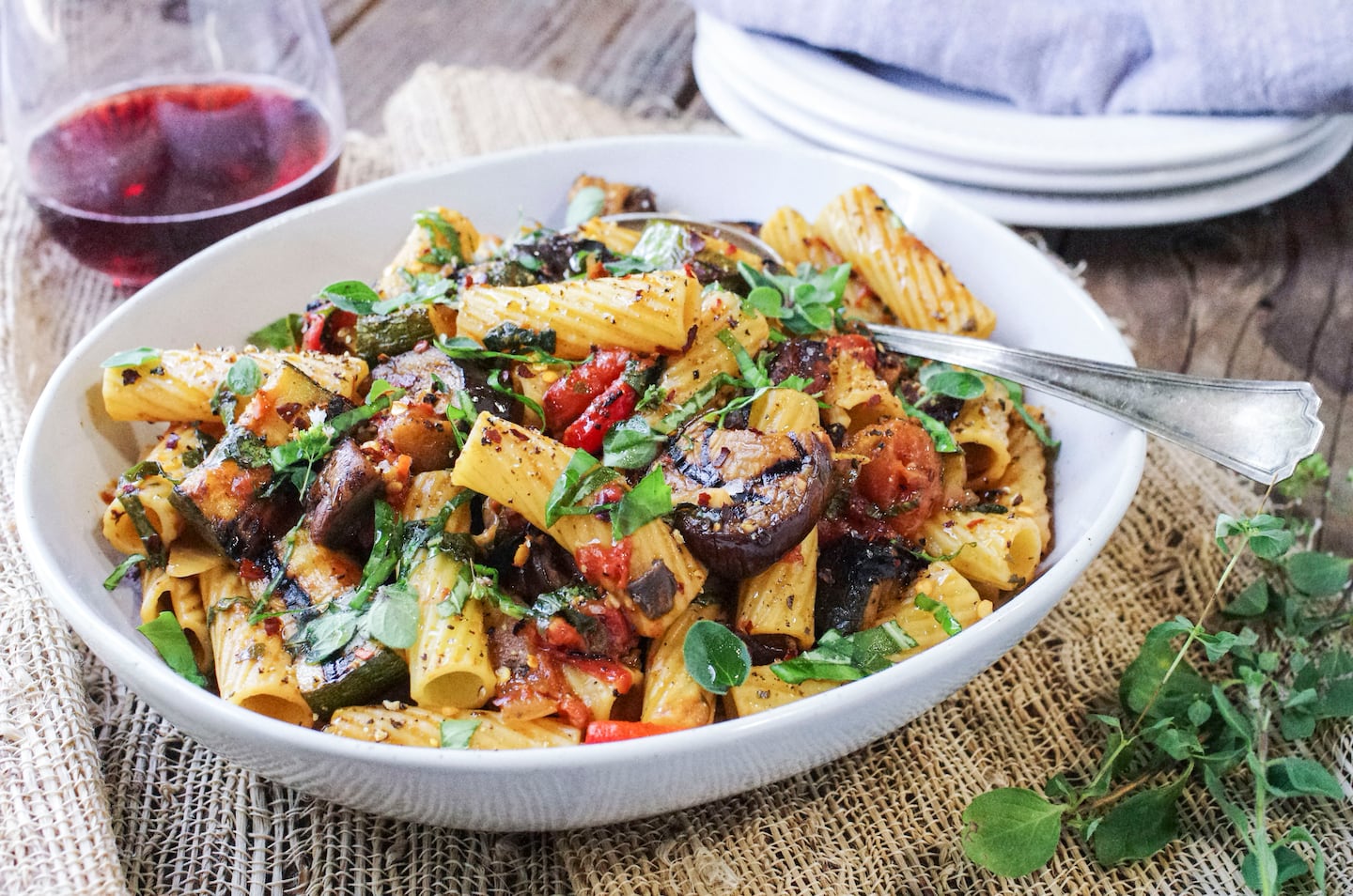
Pasta, I love as much as the next guy. At home, I make only whole wheat pasta; at restaurants I’ll occasionally eat “white” pasta if that’s all that’s available. In either case, I eat a smaller portion than I used to and make sure there’s plenty of protein and vegetables along for the ride. I hardly ever eat white rice or white bread now, although I will make an exception for a truly excellent baguette.
One of the best habits to get into is roasting a large sheet pan of vegetables every week. I typically cook a combo of broccoli (sometimes cauliflower), diced red bell pepper, chopped cabbage, and slivered onion. I’ll eat a portion for meals with chicken, seafood, turkey burgers, or tofu; add them to tomato sauce for pasta or grains; make a chili-style bowl of beans and veggies; or eat them cold as a salad. One of my newfound easy meals is a small portion of bulgur, farro, or quinoa, a heaping cup or more of roasted veggies, and a fried egg (or two) on top.
Overall, it’s critical to read nutrition labels. Focus on the categories of total carbohydrates, dietary fiber, added sugars, and protein. Remember that the associated portion size is often too large for your low-carb goals. (Here’s looking at you, pasta.) Some people like to nibble on rice cakes for a crispy low-calorie snack, but watch out for carb grams. Use them, instead, as a vehicle for cheese, nut butter, avocado, or lean meats so you’re not just eating carbs. If you’ve switched from dairy milk to plant-based products, be aware that some plant milks are sweetened and contain more carbs (ahem, oat milk) or more fat and less protein (that’s you, coconut milk).
Eating well is the first priority for managing prediabetes. Exercise is a close second. Make time for at least the recommended 150 minutes per week and add short exercise breaks to your day. Get up and do something that moves you (literally!) to help you burn calories and build strength, balance, and flexibility. Try planks, mountain climbers, squats, jumping jacks, dancing, walking briskly, and stair-climbing, a few times a day if possible.
When you plan and prepare low-carb meals, punch up the flavor with herbs, spices, citrus, Parmesan, vinegar, and good olive oil. Make every bite count. A sandwich is still a sandwich if it’s open-faced on one slice of bread. Granola is still granola if there’s more protein (nuts and seeds) and fewer oats. One piece of toast with two eggs is a mighty fine breakfast. A small bowl of frozen fruit with a dollop of plain yogurt will satisfy some of what you love about ice cream. Take it from a carb lover that reducing the quantity and improving the quality of the carbs you eat is perhaps easier than you think. Your long-term health may depend on it.
Lisa Zwirn can be reached at [email protected].
Lisa Zwirn can be reached at [email protected].
First Appeared on
Source link






