


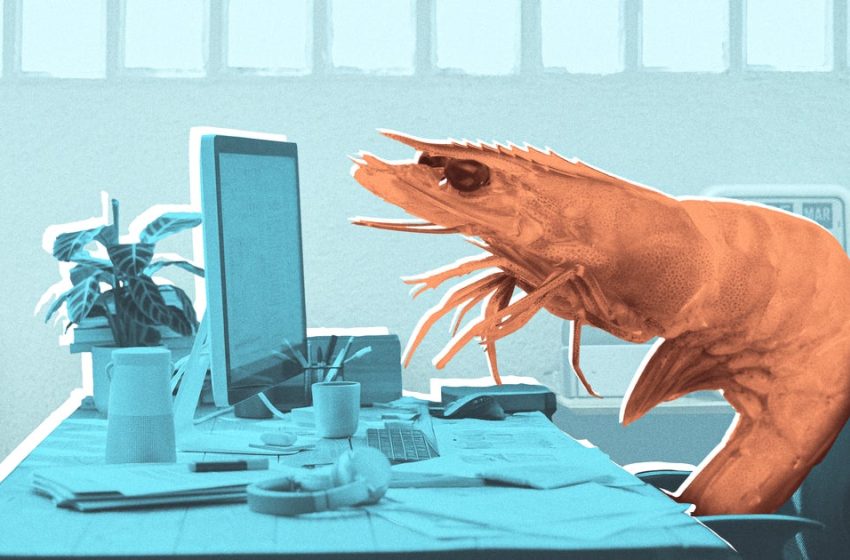
How To Stop Being A ‘Desk Shrimp’ And Improve Your Desk Posture
When I’m typing on my laptop, I transform from a human woman into a shrimp. As the day goes on, I curl forward as I clatter away on my keyboard, and I know I’m not the only person who becomes a crustacean under deadline pressure.
The idea of a “desk shrimp” is so familiar that it has become a popular internet meme, but it’s not just a joke. If you keep hunching forward over your phone and computer screens, you could be putting your body and mind at real risk.
“If you hunch forward over something, you’re doing yourself a disservice,” said Alan Hedge, an ergonomics expert and professor emeritus for the human centered design department at Cornell University. “You are creating lot of muscle tension in the back as your body leans forward. You’re actually reducing air capacity to the lungs. You’re restricting blood flow as you lean forward.”
The more we “shrimp” forward while working, the more our bodies pay a price.
“Over time, things will get worse and worse for you, and you will end up with an injury, and it will either be a neck, back, hip injury or a hand, wrist, arm, elbow injury,” Hedge said about the common injuries that “desk shrimping” causes, like carpal tunnel syndrome.
What ‘Desk Shrimping’ Does To Our Bodies And Brains
The first early warning sign that your “desk shrimping” is hurting your body will often simply be stiffness or a bodily twinge. “You’ll be rubbing your wrists, or something’s not comfortable. Don’t ignore that,” Hedge said. “Discomfort is the first stage of the path to injury.”
Your hunched posture adds up to pain over time.
“Slouching can lead to severe neck, back and shoulder issues, which can not only cause pain but upper back weakness, joint stiffness and even disc degeneration,” said Karen Loesing, owner of The Ergonomic Expert, which evaluates ergonomics for businesses. “Unnatural positions can even cause numbness, tingling and pain due to nerve compression.”
If you deal with indigestion, being a “desk shrimp” might also be a cause, because this posture compresses your abdomen and restricts space for digestion, which in turn slows metabolism and increases abdominal pressure, Loesing said.
“Compression forces stomach acid upwards,” she said. “This can lead to acid reflux, constipation and bloating. Any abdominal pressure makes it harder for the body to process food effectively.”
Beyond your stomach and other body aches, there’s also a mental toll to being a “desk shrimp.” Minor headaches, twinging wrists and neck aches become bigger distractions. “It becomes much more difficult for you to think clearly about things,” Hedge warned. “If your back starts twinging, that distracts you.”
This distraction will lead to fatigue, which will start to cause more mistakes at work too. “When you get tired, your error rate goes up, your decision-making abilities go down,” Hedge said.
How To Avoid Being A ‘Desk Shrimp’
Illustration: HuffPost; Photos: Getty
To avoid shrimping, you need to relax the tension in your body; the more we relax, the more we naturally lean back. “As you sit back, your back comes into contact with a chair back, and that takes some of the body weight, so you get less weight going through to the hips. Your ability to breathe improves,” Hedge explained.
That’s why having an office chair with a back and setting it up properly for your height is so crucial. If you are using a laptop to type, get a laptop riser and a Bluetooth-connected keyboard, Hedge recommended. This way, you can adjust the height of the screen and avoid “desk shrimp” behavior.
Loesing said the “most important rule is to know that [computer] monitor height dictates your posture.”
“If your monitor is too low, you will likely be flexing downward. If your monitor is too high, you will crank your neck into extension,” she said. “Keep your eyes aligned with your shoulders. Rolling shoulders back and down can help.”
And if you are a shrimp while using your phone, try lifting your phone to eye level, or rest your elbows on a surface or your body if possible for support, Loesing suggested.
These adjustments take practice, but it’s better than being a desk shrimp for life with aches and debilitating pains. Your human body will thank you.
First Appeared on
Source link






