


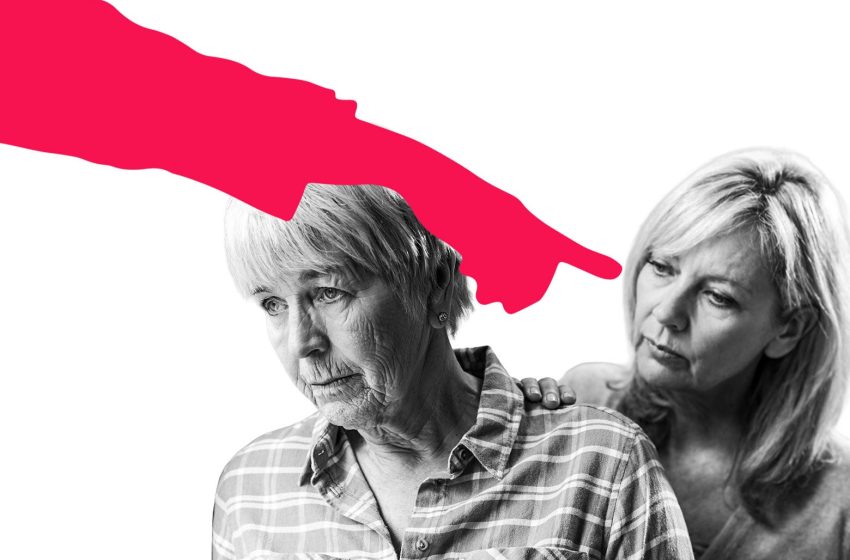
I helped my mother-in-law after a bad storm. Then I was met with a wild accusation.
Dear Prudence is Slate’s advice column. Submit questions here.
Dear Prudence,
I lost my first husband 20 years ago after he died of a heart attack at 27. He had just gone to bed and never woke up. We had been married for barely a year, and I never really got over waking up to a cold body next to me. “Jenna” was my mother-in-law and basically my mother in truth because my mom was narcissistic and cruel. Even when I remarried and had babies of my own, Jenna stayed in my life. We lived in the same city, and my husband embraced her as “Aunt Jenna.”
Her daughters lived on opposite coasts and seemed to resent that I’ve stayed so close to their mother. They have complained about me not knowing my place and Jenna “favoring” my kids over theirs, but they never made an effort to visit Jenna or fly her out to visit them, despite them both taking multiple expensive vacations a year.
Jenna is not doing well but is resisting the idea of appointing an executor or looking at professional care. My husband and I run our own business and have two teenagers. I am willing to take on more responsibility with Jenna, but not when I have to constantly argue with her daughters over every little thing. We recently had a bad storm, and Jenna’s roof was badly damaged. I am the only one who went upstairs and noticed the broken window and damaged roof. Her daughter accused me of getting a “kick back” from recommending a roofer—the same one Jenna’s niece, neighbor, and I have used! I am so tired of this. Jenna’s niece is a sensible woman, but she lives two hours away, while I am less than 20 minutes from her. I love her, but I am sick of this song and dance from the daughters who claim to love her but can’t be bothered to join a Zoom call with her doctors unless I hold their hands and remind them. I only overstep because they refuse to step up. What do I do here?
—About Jenna
Dear About Jenna,
Jenna is lucky to have you! You should continue to help her. But caregiving is hard enough work on its own. I don’t want you to have to deal with people who, for some reason, resent your presence in their mom’s life (why? Have they seen how much a professional would cost per hour?). And the allegation that you received a kickback from the handyman really concerns me.
So, you should do two things that I hope will make this experience more pleasant and protect you:
-
Reach out to the daughters in writing, explain your role in Jenna’s life and what it means to you, and ask whether they have any concerns about it or would like you to step back. Explain that you care about her very much but don’t want to be the source of any family tension or stay involved without their permission, especially as Jenna gets older and faces some big changes. I am almost certain that they will panic at the thought of the gap in care that would exist if you weren’t around and assure you that you can keep doing what you’re doing. It may also be disarming for them to feel they’ve signed off on the arrangement.
-
Then, put everything—especially anything related to money or property—in writing. Send a weekly email covering any chores or errands you helped with, any money that changed hands, and any medical updates. It doesn’t seem like you’re likely to get a lot of gratitude from these people, but at the very least, you can protect yourself from unfair accusations and unnecessary stress.
Please keep questions short (<150 words), and don‘t submit the same question to multiple columns. We are unable to edit or remove questions after publication. Use pseudonyms to maintain anonymity. Your submission may be used in other Slate advice columns and may be edited for publication.
Dear Prudence,
My father, who is 84, and I (I’m 53) were recently in a high-stress situation, with my mom being in the hospital. My father, who has never hit me before but has raised a hand about three times, raised his hand as if to backhand me, then grabbed me by the shoulders and gave me a little shove toward the door.
I e-mailed him and told him that if he ever actually hit me, everything would change. He wrote back and said he didn’t do it consciously, and the tone of his email was a little victim-blaming. For instance, he apologized if raising his hand was a threat! Anyway, I’m adjusting to losing respect for him as a person. It feels worse to me that he said he did not do it consciously, rather than if he had said he did do it consciously. I can’t understand why that part bothers me. Any suggestions?
—Can’t Understand My Reaction
Dear Reaction,
I can understand why. The fact that he says he didn’t do it consciously both lets him avoid taking responsibility and makes it possible that he could hit you (or do anything else for that matter!) in the future and just blame his arm for acting on its own. Being around someone who had admitted to not being in control of their own actions is frightening. You should tell him as much and see if he changes his story.
Prudie Wants to Hear From You!
Readers often have great suggestions for our letter writers, occasionally disagree with a point Prudie makes, or simply want to provide some additional advice. Each week, Prudie will be replying to some of these comments and suggestions from readers, which will be featured on the site on Fridays for Slate Plus members. Write to us! Or submit a question here.
Dear Prudence,
I’m a 43-year-old woman and have been friends with “Jacob” for several years. Lately (the last six months or so), they’ve begun reflecting on their gender identity, coming to realize that they’re nonbinary and that “Jane” (she/they) is a more authentic version of themselves. They aren’t transgender, and still consider “Jacob” to be a valid part of who they are, but they prefer living as Jane as much as possible in their day-to-day life.
I am proud of my friend for choosing to allow this journey to happen, and I’ve witnessed their evolution with love and support. But … you know how people have a certain energy to them? How we “vibe” with people? Jane feels very different to me. We definitely have less in common, and I don’t feel as comfortable around them as I did when they were just Jacob. I find myself making excuses to not hang out lately, and I’ve realized it’s because I just don’t really enjoy hanging out with Jane.
As an ally, I have no problem being present and supporting anyone’s efforts to be who they truly are. I’m one of the few people Jane trusts to be on their side, and I am honored to be there. But, maybe because I have so few people I’d consider close friends to begin with, I’m really having trouble processing this change, and I’m feeling sad that my friend isn’t who they used to be. I don’t know what to say to them to communicate my feelings about how the friendship is changing, without leaving them feeling rejected. I’d appreciate getting your perspective.
—Conflicted
Dear Conflicted,
I’m as interested in energy and vibes as the next person, but in this sensitive situation, it would be really helpful if you could try to identify something more concrete that is making your time with Jane unpleasant. You mention having less in common these days, and I would have loved to hear more about why—and about what exactly they’re doing that makes you feel less comfortable.
I’ll take you at your word that you’re totally supportive of their identity, so one guess about what’s going on is that this friendship is being strained in the way many adult friendships are strained when one person goes through a big change or is experiencing something that demands a lot of their energy. Jane could be in a period of being a bit self-absorbed or preoccupied with their own presentation and the new experiences they’re having. This isn’t totally unlike what can happen when one friend has a baby, loses a ton of weight, survives cancer, or battles depression. In all these cases, being the other friend in the relationship means having some patience and also probably doing a bit more work.
Without a hint of intolerance or transphobia, and with transparency about how much you value the relationship, you can ask Jane to join you in thinking about what the next iteration of your friendship will be like. The key will be to frame it as requesting help fitting into their new life, rather than expressing distaste for the current situation. Try saying something like this: “You’re one of my best friends, and I want to make sure we stay close and that I’m there for you through all these big changes. So I was thinking we should really be intentional about what kinds of things we can still do together that keep us connected. Do you still want to train for that marathon we planned? What about coming over to watch a show we both like and make dinner once a week?”
When you do get together, instead of sitting back and letting Jane set the tone and determine the topics of conversation, you can take the lead a bit by asking for advice about a situation at work or a situation with your family, picking their brain for insights on politics, cooking, or whatever they’ve always been into. Or propose an activity—like redecorating your living room or borrowing dogs from the shelter to walk—that provides an outlet for energy and conversation and doesn’t leave you just sitting there evaluating them and how they’ve changed. They really are the same person you were originally drawn to as a friend, and while Jane may be different in a lot of ways, I’m sure there’s enough in common that means you can still have a great friendship. The cruel thing to do at this moment in their life isn’t to identify the distance between you and try to find solutions, it’s to fade away without trying to close that gap.
Classic Prudie
I signed up for this political chat line on Reddit. There are thousands of people all talking at the same time, so you have to get in to fit in. This one guy sent me a request so we could chat off-side. I don’t know exactly what it is about him, but he turned me on big time. I’ve never heard his voice or seen a picture of him, but I’m attracted to him. No one there uses their real names, but he asked me if I was married or seeing anyone. He lives in California, and he’s 42…
First Appeared on
Source link






