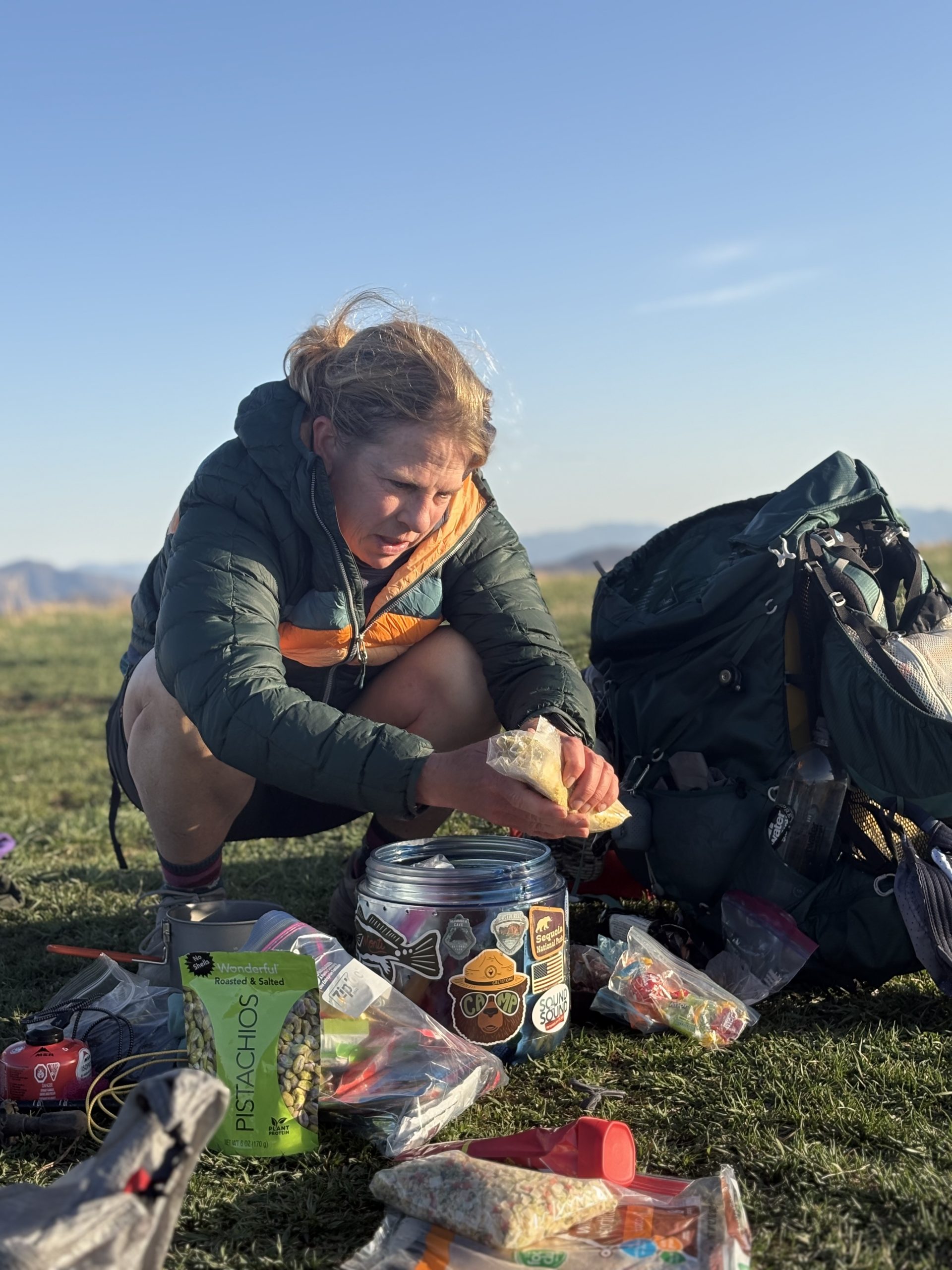
I took a bear can last year. Why I am not taking one this year.
Securing my food may have been the topic I researched the most before getting on trail. I’ve come across black bears while solo backpacking, and although they ran off as soon as I yelled, their size and speed were enough to scare the *** out of me. In the months before getting on trail, I vacillated between taking my bear can and my bear bag. In fact, I didn’t make the decision until the night before I left.
Why I took a Bear Vault 450 last year.
- Hurricane damage: I was worried about the damage Hurricane Helene might have done to the trees. (spoiler: a lot) Would there be good trees to do a hang? I wasn’t sure.
- Cold weather: With a March 17 start date, I anticipated very cold evenings. I struggle to maintain body heat when I finish for the day. (I usually throw on every layer I own when I get to camp.) I knew I would not want to spend 20-30 minutes finding a good limb to do a proper PCT hang.
- Intact food: Unlike a bear bag, a bear can’s hard shell keeps food from being pulverized. It’s also super easy to find what you want without digging around a deep bag for 3 minutes.
- Peace of mind: A bear can is rodent proof and bear resistant. No mice crawling into a bag to shred my protein bars. It was a delight to walk away from camp, stash it next to a tree, and forget about it.
Why I am not taking a bear can this year.
- Resupply and space: I prefer to resupply every 5-6 days, so I carry more food than someone who resupplies often. The space in a bear can is finite and unforgiving. I never once ate a backpacker meal on trail because the packaging took up too much room to even consider it. I quietly envied my fellow hikers who pulled a backpacker meal from their bear bags every few days.
- More calories, more problems: By week 3, my caloric needs had soared and I was mowing through food like it was my job. (Is this what it’s like to be a teenage boy?) The bear can had always served me well on weeklong trips, but long distance hiking is a whole ‘nother kettle of fish. I simply could not fit all that food into my bear can. I constantly had “spillover snacks” stashed in a grocery store bag, and there was no good way to secure it.
- Weight: My bear can weighs 2.16 lbs, which in long distance backpacking is the equivalent of a baby elephant. It was JUST. SO. HEAVY. At the start of my LASH, I had a lot of winter gear, and with a full pack, I was probably carrying 34-35 lbs. As the saying goes, ounces are pounds and pounds are pain. I am trying to jettison as much weight as possible for LASH #2, so the bear can is staying at home.
What I am taking this year?
I will take a 14L Adotec UL bear bag on this year’s LASH. (Using a Garage Grown Gear gift card took the edge off of spending more $$$.) Like the Ursack, the Adotec is a heavily reinforced bear bag that can be tied to a tree instead of being hung. Weighing just 6.5 ounces, it saves well over 1 lb of weight from the bear can. The Adotec is made of Dyneema, so it doesn’t absorb water or get heavier after a night of rain. Its shape makes it easy to fit in my pack, I can fit more food, and unlike the bear can, it takes up less space as I eat through my rations.
But the bears?! What about the bears?!
At the end of the day, nothing is bear proof. As noted by park rangers, the difference between a smart bear and a dumb human is negligible. If a bear really wants my food, it will probably maul my bag while trying to get it. The chances of this happening, however, are fairly slim. I will take advantage of every bear box/cable along the trail and only tie my Adotec bag to a tree when necessary. If my food gets squished, it will be a huge bummer but not the end of the world. The nice thing about hiking the AT is that there is usually a town within a day or two of hiking. I will arrive to that town ready to consume everything in sight, and that’s alright.
This website contains affiliate links, which means The Trek may receive a percentage of any product or service you purchase using the links in the articles or advertisements. The buyer pays the same price as they would otherwise, and your purchase helps to support The Trek’s ongoing goal to serve you quality backpacking advice and information. Thanks for your support!
To learn more, please visit the About This Site page.
First Appeared on
Source link