


I’m Already Tired of ‘Nintendo Switch 2 Editions’, and Even New Mario Wonder Content Can’t Change That
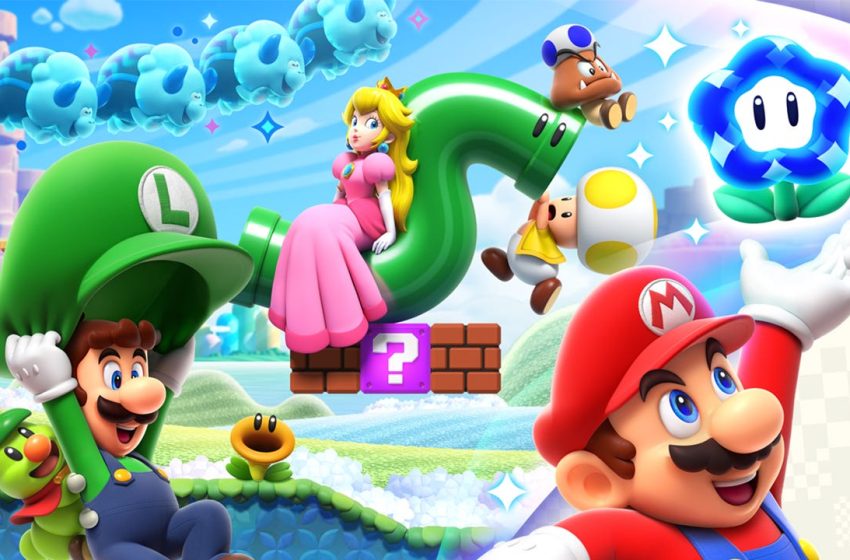
There have been many storylines to follow in the Switch 2’s first year, but there’s one specific thread that’s bugged me since Nintendo unveiled its plans last April – and it’s only grown more bothersome over the last several months: the Nintendo Switch 2 Edition. This series of enhanced Switch 1 ports have been wildly inconsistent across their price points, amount of new content, and quality of enhancements, and I’m frankly tired of Nintendo filling out its release calendar with slightly updated versions of games millions of Switch owners already played several years ago. These feelings were solidified when I attended a preview event to play Super Mario Bros. Wonder – Nintendo Switch 2 Edition + Meetup in Bellabel Park (yes, that’s the full title, and it’s one of the most hilariously unwieldy names in Nintendo history), which is already the eighth first-party Nintendo Switch 2 Edition since the console launched last June.
That’s not to say what I played was bad, it just wasn’t particularly inspiring, and complete indifference has been an unfortunate theme across these releases. I sat down with three other journalists to try out a handful of cooperative and competitive minigames found in Bellabel Park, Wonder’s new hub area that contains more than a dozen multiplayer challenges. After selecting our characters from the Nintendo Switch 2 Edition’s slightly expanded roster that now includes Rosalina, we dove into our first co-op level. This one had two of us use the Joy-Con 2’s mouse controls to place platforms for the other two characters to leap across. It felt like something you’d have seen the GamePad used for back in the Wii U era, and it did lead to some clever puzzles for the mouse users where we had to guide a rolling ball along to break a barrier that was blocking the way for our partners.
The other co-op mission we tried was essentially hot potato with a Bob-omb, where the four of us had to work our way through a level while also passing an explosive back and forth. A timer would tick down whenever the incorrect player was holding the Bob-omb, leading to a frantic rush to both get to the end as fast as possible while making sure the right person was in control. On the competitive side, one game had us battling to feed our personal baby Yoshi the most fruit, while the other ones we tried were pretty standard races that had us bouncing to the goal or flying on a flower propeller. Before the match begins, each player picks from a small selection of Wonder’s badges to try to get a leg up, which is a smart way to remix the lineup of special abilities that felt somewhat underutilized in the main adventure.
Each game certainly had some fun to offer, but afterwards I couldn’t help but feel like this concept is awkwardly straddling the line: if I wanted multiplayer mayhem with Mario characters, there are so many other, better options like Mario Kart, Party, or 3D World, just to name a few. And, if I wanted 2D Mario, I’d much rather play the traditional Super Mario Bros. Wonder campaign, which I adore. To be completely fair, there is more traditional content on the way in Wonder’s Nintendo Switch 2 Edition in the form of Wonder Effect boss fights against the returning Koopalings and extra challenges that take place in pre-existing levels, but I didn’t get to try any of that at this preview event. Even so, none of this Edition’s additions currently feel as exciting as a couple of extra brand-new worlds likely would have.
The Problems with Nintendo Switch 2 Editions
And nothing here comes close to justifying the $80 price tag attached to Mario Wonder’s Nintendo Switch 2 Edition. Yes, there’s a $20 upgrade pack for folks who already own Wonder, but for new buyers, a visually upgraded version of a 2023 Switch 1 game with a few new Bellabells and whistles costs more than 2025’s Switch 2-exclusive Donkey Kong Bananza, which just feels completely out of whack.
Pricing has been a big problem across the lineup of Nintendo Switch 2 Editions. On paper, I understand the math Nintendo is doing. First-party Switch games notoriously almost never see permanent price drops, so the Nintendo equation is a $60 game plus a $20 content expansion equals an $80 product. But it’s hard not to look at that and just think that it feels kind of greedy. A new generation is the perfect time to discount the prices of your last-gen games, and if Nintendo knocked the Switch 1 version of Wonder down to $40 and priced the Switch 2 version at $60, I don’t think anyone would bat an eye. And Nintendo’s third-party partners aren’t following suit with this steep pricing model: Square Enix recently released Final Fantasy VII Remake Intergrade on Switch 2 for just $40 – $20 cheaper than it was at launch six years ago, and with all of its DLC and post-launch updates included. That’s a much more enticing offer for prospective buyers.
It’d be easier to accept the price points if the additional content was reliably great, but that hasn’t been the case. Last July’s Super Mario Party Jamboree – Nintendo Switch 2 Edition + Jamboree TV (another mouthful, and another $80 game/$20 upgrade) launched in what I would consider an unacceptable state for an enhanced rerelease. Firstly, its new content was fairly throwaway, and mostly felt like a way to try and sell the Nintendo Switch 2 Camera accessory for its gimmicky minigames. But the bigger issue is that the enhanced resolution – a huge selling point of these upgrades – only applied to half of the game, while one half was quite literally a drag-and-drop port of the Switch 1 version, 1080p resolution and all. Nintendo eventually released an update that ironed out some of that messy edition’s issues, but it’s still a more misleading, clunkier, and overall worse product than the Switch 1 version that dropped a year earlier for $20 less.
Performance and graphical updates for Switch 1 games on Switch 2 have been a very positive part of this generation so far. Games like Zelda: Link’s Awakening, Echoes of Wisdom, Super Mario Odyssey, and Pokémon Scarlet & Violet all look and run way better now on Switch 2, and those patches were released for free! Which is why it’s all the more frustrating when Nintendo paywalls performance patches for the arbitrary games they happen to make more content for.
Kirby and the Forgotten Land had some noticeable framerate issues on Switch 1, and on Switch 2 it now runs at a flawless 60 fps… but only if you buy the Kirby and the Forgotten Land – Nintendo Switch 2 Edition + Star-Crossed World game ($80) or upgrade pack ($20). Sorry, Kirby fans, Forgotten Land was chosen to get a batch of new levels, which means you have to pay 20 bucks to get the improved performance that’s free across most of Nintendo’s other releases. The Legend of Zelda: Breath of the Wild – Nintendo Switch 2 Edition and The Legend of Zelda: Tears of the Kingdom – Nintendo Switch 2 Edition didn’t get any new content outside of extra lore and quality of life updates only accessible through a Nintendo smartphone app, but those cost $10 more rather than being free upgrades. Those two are also included as part of your Nintendo Switch Online + Expansion Pack membership, but none of the others are. Oh, and Breath of the Wild’s Nintendo Switch 2 Edition doesn’t come with its DLC, that’s still another $20 on its own. There’s a lot to follow!
I may not be a game developer, but apart from things like mouse, microphone, or camera controls, there’s not much actual content in any of these expansions that appear to warrant being next-gen only. I’m sure most of these multiplayer minigames in Mario Wonder would work just fine on Switch 1, but for seemingly no reason other than to push people toward Nintendo’s next-gen console, they’re locked behind the Nintendo Switch 2 Edition. Animal Crossing: New Horizons is actually the exception that handled this correctly, adding its new items and features in a free update for both Switch 1 and 2 players to enjoy, while keeping the Nintendo Switch 2 Edition upgrades limited to higher resolution, mouse controls, and other niceties that actually don’t work on Switch 1. That Nintendo Switch 2 Edition costs $65 standalone or $5 for the upgrade pack, if you’re keeping score at home.
The only two I haven’t mentioned yet are Metroid Prime 4: Beyond – Nintendo Switch 2 Edition and Pokémon Legends: Z-A – Nintendo Switch 2 Edition, which I don’t have much of a problem with. These two launched alongside their Switch 1 counterparts on the same day as cross-gen releases. They cost $10 more than the Switch 1 versions, and deliver higher resolution and framerates, but don’t feature any Switch 2-exclusive content. It’s still technically a paywalled performance update, but it feels slightly more acceptable when it’s a brand-new game rather than dusting off an old one.
In the grand scheme of things, this obviously isn’t the biggest deal in the world, and Nintendo has still put out plenty of actual Switch 2 games like Bananza, Mario Kart World, Kirby Air Riders, and more. But in an era where being a Nintendo fan is the most expensive it’s been since the cartridge days of the Nintendo 64, the Nintendo Switch 2 Editions feel like the most egregious example of Nintendo squeezing its most dedicated fans for a few extra dollars. It seems Nintendo wanted to repeat its strategy from the last console generation of porting as many Wii U games as possible to Nintendo Switch to make some more money and make the wait for the next truly new thing feel shorter, but it just isn’t coming across the same way this time. There were barely any Wii U owners – as of this morning, Switch 2 has already passed Wii U’s lifetime sales in just seven months – so enhanced ports like Mario Kart 8 Deluxe and Super Mario 3D World + Bowser’s Fury were basically new games to most of the audience. And even though it was unfortunate that people who already owned these games on Wii U had to pay full price again to get them on Switch because of the shift from discs back to cartridges, they didn’t cost $5, $10, or even $20 more than they did originally for people jumping in for the first time.
Surely we’re still in the first wave of Nintendo Switch 2 Editions that were planned before the Switch 2 launched, so it’ll be interesting to see if Nintendo continues pumping them out based on how the marketplace responds. It’s tough to get a comprehensive grasp of their success because of how Nintendo reports its sales data across upgrade packs and the two platforms, but it’s worth noting they’ve failed to provide updated numbers for Kirby at all in the last two quarterly financial reports, suggesting its totals were likely soft. It’s entirely possible one reason these Editions exist to train studios on how to develop for more powerful hardware on projects with a short turnaround time, and now those teams are onto the next new 2D Mario, Animal Crossing, Kirby, and Mario Party with a bit more knowledge. I hope all of Nintendo’s teams swiftly move on, because this is a pattern I don’t really want to continue for the rest of the generation.
I also went hands-on with plenty of Switch 2 games that don’t have ridiculously wordy titles (and box art, for that matter), so you should check out my impressions of Mario Tennis Fever, Resident Evil Requiem and Pragmata on Switch 2, and my lovely time discovering Nintendo’s greatest failure: the Virtual Boy.
Logan Plant is the host of Nintendo Voice Chat and IGN’s Database Manager & Playlist Editor. The Legend of Zelda is his favorite video game franchise of all time, and he is patiently awaiting the day Nintendo announces a brand new F-Zero. You can find new episodes of NVC every Friday on the IGN Games YouTube channel, Apple Podcasts, Spotify, or your favorite podcast app.
First Appeared on
Source link






