


IMF urges Japan to keep raising rates, avoid reducing sales tax
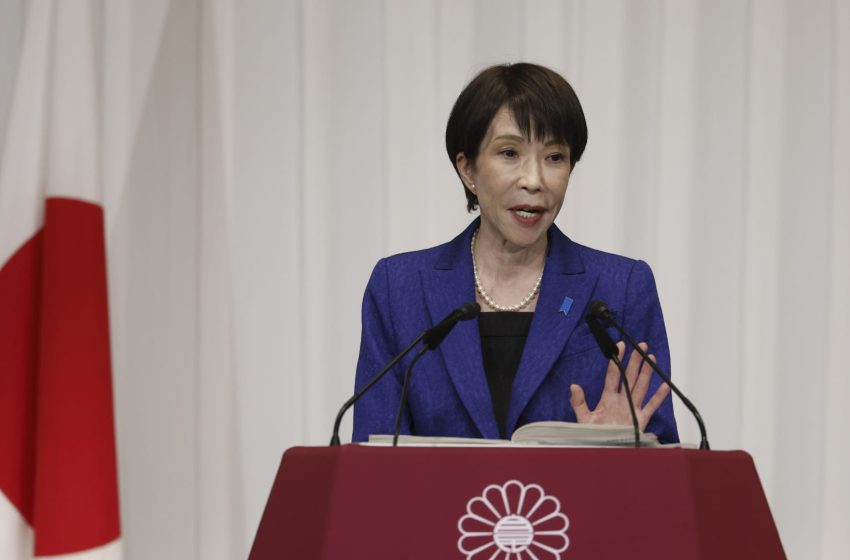
Japan’s Prime Minister Sanae Takaichi, leader of the ruling Liberal Democratic Party (LDP), speaks during a press conference at the LDP headquarters in Tokyo, Japan, on February 9, 2026.
Franck Robicho | Anadolu | Getty Images
The International Monetary Fund urged Japan to keep raising interest rates and avoid loosening fiscal policy further, warning that trimming the consumption tax would erode its capacity to respond to future economic shocks.
The recommendation came as dovish Prime Minister Sanae Takaichi’s landslide election win heightens market attention to whether she will push back against further rate hikes by the central bank. It also follows Takaichi’s pledge to suspend by two years an 8% consumption tax on food sales.
The IMF said the Bank of Japan’s “continued independence and credibility” will help keep inflation expectations well anchored, warning the government against meddling too much in monetary policy.
“The BOJ is appropriately withdrawing monetary accommodation, and gradual hikes should continue to move the policy rate toward neutral,” the IMF said in its preliminary policy recommendation to Japan released on Wednesday.
“As the baseline projection continues to materialize, withdrawal of policy accommodation should continue so that the policy rate reaches a neutral stance in 2027,” it said.
The BOJ exited a massive stimulus programme in 2024 and raised interest rates several times including in December last year, when it pushed up its policy rate to a 30-year high of 0.75%.
With inflation exceeding its 2% target for nearly four years, the BOJ has signalled its readiness to keep hiking rates.
Higher borrowing costs could complicate Takaichi’s tax cut and spending plans, which triggered a selloff in bonds and yen late last year on concern over Japan’s worsening finances.
The IMF said Japan should avoid reducing the consumption tax as it would “erode fiscal space and add to fiscal risks.”
While limiting the tax cut to essential goods and ensuring it is temporary would help contain fiscal costs, Japan needs fiscal restraint to help keep bond markets stable, it said.
“Near-term fiscal policy should refrain from further loosening,” the IMF said, calling for a credible medium-term fiscal framework with a “clearly defined fiscal anchor.”
“High and persistent debt levels, together with a deteriorating fiscal balance, leave Japan’s economy exposed to a range of shocks,” the IMF said, warning that interest rate payments are projected to double from 2025 to 2031 as debt is rolled over at higher yields.
A quarter of Japan’s total spending is funded by debt, of which roughly half is held by the BOJ after years of heavy money printing to reflate the economy.
As the BOJ tapers its bond buying and reduces the size of its balance sheet, Japan must closely monitor market liquidity and shifting demand across investors, the IMF said.
If heightened volatility undermines liquidity, the BOJ should be prepared to make “exceptional targeted interventions,” such as emergency bond-buying operations, it said.
On yen moves, the IMF welcomed authorities’ “continued commitment to a flexible exchange rate regime,” adding that exchange-rate flexibility should “help absorb external shocks and support monetary policy’s focus on price stability.”
First Appeared on
Source link






