


‘In Ireland, things are coded. You don’t necessarily have the code when you arrive’ – The Irish Times
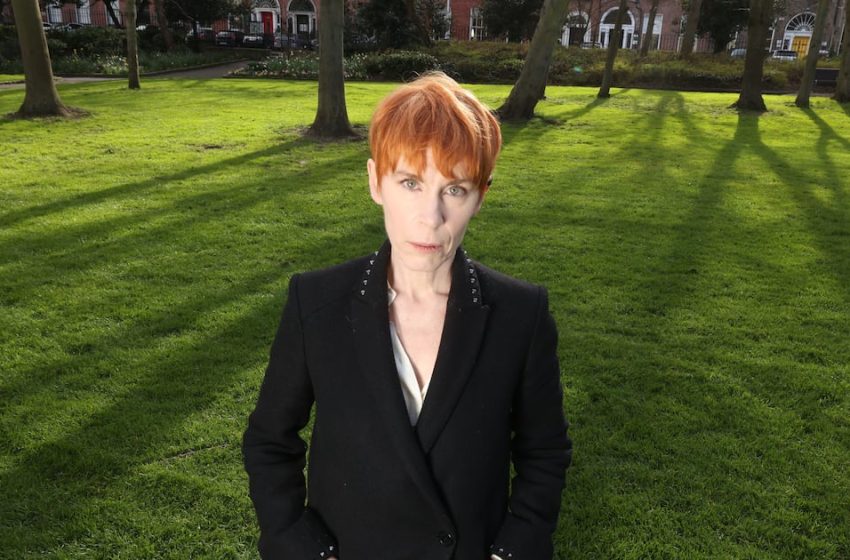
Tana French might be best known and lauded as a writer of mysteries, but beyond the basic genre requirements – dead bodies, troubled detectives, institutionalised corruption – her books also operate as instruments of social critique. More lately, with the Cal Hooper trilogy, based on the premise of a Chicago detective who takes early retirement and moves to the small Irish townland of Ardnakelty, she has relocated the western to the west of Ireland.
French was born in Vermont but grew up in constant transit – her father was an economist working in developing-world resource management – before she settled in Dublin in 1990 to study theatre and film at Trinity College. The precariousness of the acting profession, plus a preoccupation with character and motivation as drivers of story, resulted in her first book, In the Woods, a vanguard title in the millennial Irish crime boom. It went on to sell a million copies and scoop a hatful of mystery-novel awards, including the much-coveted Edgar.
Further books won high-profile supporters such as Stephen King and Gillian Flynn. The BBC and RTÉ adapted her early novels into a TV series, The Dublin Murders, in 2019. Now the Cal Hooper books – The Searcher, The Hunter and The Keeper – allow her to dissect Irish culture from an interloper’s perspective.
“One of those western tropes is the stranger who blows into town,” she says. “He arrives in the saloon, he’s probably got a past of his own; he’s going to be this catalyst. So whether he’s going to get rid of the evil sheriff and set a new regime in place, or whether he’s going to kill the girl’s lover and wreck everything, he’s going to be a force of change. I like that idea of the stranger in town. It’s a perspective I’m interested in because I’m what they call a third-culture kid, which means I’m not really from anywhere. I grew up all over the world.”
Was she the perpetual new kid in class, like an army brat?
“An international brat, a UN brat. Except within the international schools everyone’s either the new kid in class or else leaving. So I’m not an insider anywhere. Every place you go to, you’re new, and you have to come to it with an outsider’s eye.”
So how much of Cal Hooper’s culture shock did she experience when she settled in Ireland?
“I had a couple of advantages over Cal. One was that we’d been coming back here for summers for ages, so I was a little bit tuned in. I’m used to going into places and observing very sharply. You have to be on the lookout: how far apart do people stand when they talk, how loud do they talk, how do you slag, and how hard do you slag them? Is it a sign of affection? Is it a hierarchical establisher? What do all these little things mean?
“Whereas Cal comes from a monoculture. He’s used to certain things in the default, so it’s more of a shock to him to go, ‘Wait, it doesn’t work like that here.’
“I was coming from Rome before Ireland, so if anyone [in Rome] is annoyed, if anyone has something to say, they say it loud, they say it with a lot of emotion, and then it’s done. Arguments are thunderstorms: quick, loud, gone. Whereas here it’s so very different. Things are oblique. They’re coded, and you don’t necessarily have the code when you come in. You have to get used to the idea that what someone’s saying might actually be a signpost towards what they mean. It might not be what they mean. It’s just something that’s pointing you in that vague direction. So that was a big cultural switch.”
It’s also hard to be anonymous in a small Irish town. Sooner or later, in order to become part of a community, you must declare allegiances. In The Keeper, Cal Hooper is forced to take a stand against the figure of Tommy Moynihan, the big man in the parish, the jobs conjuror. In western terms he’s the tyrannical sheriff or the mining magnate, Little Bill in Unforgiven or George Hearst in Deadwood.
“Being part of a community is going to demand sacrifices,” French says, “but it offers amazing things as well. There’s also a redefinition of yourself. Cal came here as an ex-detective who was not enamoured about what being a detective meant. He really didn’t like what he had realised about the job; he was trying to shed it, take it off.
“But he came from a system where law and justice were very clearly defined, as they are in detective novels and the mystery genre: what constitutes law and what constitutes justice are clearly set out in black and white. Whereas in westerns, law and justice are very home-made and raggedy around the edges; they’re sort of winging it. Justice is whatever we can cobble together from who we’ve got at the moment, as the situation demands. And Cal is having to redefine himself as someone who’s much more willing to go with the rough-and-ready, in-the-moment idea of what’s right and wrong.”
Even the antagonist Tommy Moynihan is a complicated figure. He’s brought life to a marginalised rural community that exists beyond the purview of media and power centres. But he’s also vindictive and manipulative, a microcosm of the global imperialist bully, keeping dissenting locals in line with threats of planning-authority machinations or tip-offs to the taxman.
“You’ve got to keep your power established, because if you let people away with stuff, then your authority crumbles. The power of the big man in the small town is based on consensus, because you’re not elected, you don’t have an official post. It’s based purely on the community’s opinions that you are the big guy.”
Hence French’s books operating as works of social realism as much as suspense novels.
[ Author Tana French: ‘I like the feeling that I’m just getting started’Opens in new window ]
“I’ve always thought of the crime genre as a nice starting point to do stuff. I know we still have people going, ‘Mystery is very limited and it doesn’t have room for good writing or characterisation or a theme,’ but I think it’s been a long time since most people thought that way. Because you’ve got this framework, right? It’s neatly delineated. A kills B, C finds out whodunnit. And you’ve also got an instant window into whatever society you’re writing about, because murder happens everywhere.
“People get killed in every time and place, but not for the same reasons. So if you have somebody murdered over a piece of land, or if you have somebody murdered over jealousy in a relationship, that tells you something about that society: it’s not happening in some nomadic tribe; it’s happening in a society that considers land to be so vital, so highly charged, emotionally and practically, that it is a top priority; it’s worth killing for.”
So Chinatown and The Field are essentially about the same subjects, albeit worlds apart: competition over resources, water rights, land.
“I know The Field is sometimes seen as not being in the great canon of Irish literature, but I think it really is, because it digs deep into what murder tells us about the dark places, the tangles of the society, the priorities, the values.”
French spoke in an interview some years ago about a sort of national schizophrenia that prevailed during the boom years. Refusal to buy into the property bubble was regarded by the political elites as a kind of treason. Are we a nation of magical realists?
“I don’t think it’s the Irish specifically. I think it’s possible that we may be slightly more vulnerable because of being a small country, so during the boom I think it was easier for it to become, ‘Rising house prices are a good thing. They will keep on rising forever. Of course you can spend 10 times your income on a drawing on a piece of paper in an estate that doesn’t exist yet. As long as everybody keeps believing, it’ll be great forever, and we’ll just keep going.’
I don’t know anybody else who gets you quite as intimately inside the character’s mind. With Donna Tartt, you come away feeling like you know these people better than your best friend.
“And I think in a small country it’s easier to unify narrative to an extent where any competing voice can just be squashed down.”
She cites the former taoiseach Bertie Ahern wondering how anyone engaged in moaning about the economy wouldn’t just kill themselves. “It’s easier to do that in a country where everyone knows the same figures and listens to the same stations. But I think in general people are quite susceptible to that idea of magical thinking. If we all agree on the thing, it becomes real.”
And so to a different kind of suspension-of-disbelief: what were French’s reading habits as a child?
“I loved time-travel books, anything where somebody had a hidden door or hidden staircases. I like settings and stories where there are about five layers going on underneath the one you see. They’re all fully fleshed-out worlds, but you have to find the access points, the idea that there’s a world under whatever world you’re seeing, through some liminal space, if you can just get there.
“It goes well with the mystery genre, I suppose, the whole premise that at least one character here has been experiencing this world in a very different way from everybody else, to lead them to the point where they kill somebody.
“The first book that I fell in love with that’s still on my top-10 list was Watership Down, by Richard Adams. I was six or seven. I’ve read it maybe a dozen times since, and there’s always some new strand that I didn’t recognise before. And [Donna Tartt’s] The Secret History is up there as a genre redefiner.
“Talk about breaking the rules: she tells you on the first page who killed him, and yet it is this gripping mystery, and it’s also a literary novel, and nobody can deny that it’s all of those things. She’s refusing to be confined by what she’s been told. I don’t know anybody else who gets you quite as intimately inside the character’s mind. With Donna Tartt, you come away feeling like you know these people better than your best friend.”
The plot of The Keeper hinges on the murder of a local girl, Rachel Holohan. The device of the beautiful dead girl and the obsessive detective recurs through generations of noir stories, from Otto Preminger’s Laura to Ellroy’s The Black Dahlia, from Twin Peaks to True Detective: the impact of the murder of an innocent on an entire community.
“I was thinking more in terms of human sacrifice. We’ve found bog bodies that point to that happening for thousands of years. And the tradition is not gone. If you look at the Catholic Church, the number of girls who were sacrificed to the gods and sentenced to life, the laundries or punished in various horrifying ways…
“And now we make human sacrifices to whatever billionaire or corporation comes along. There’s so much going on here with data centres; we have to put up with the electricity demands, the water demands. We’re the ones paying the fines for increased emissions. We as individuals are the ones who need to suck it up for the corporate gods. The whole Grok scandal, pumping out illegal AI images.
“Grok is the one creating and distributing illegal images, but there’s been no hint at any point that anything will be done” about that.
French is unimpressed by the way the Government is handling the issue.
“Again, it’s the individual, it’s the people who are being victimised that were sacrificed to the big corporation to save us.”
[ ‘Concerns remain’ around Grok despite X’s assurances, says MinisterOpens in new window ]
Which is as about as chilling as any murder ballad. I conclude our meeting by asking French how she maintains creative health over a 20-year career, playing the publishing game but avoiding burnout.
“I’m in one of the luckiest positions in the world. I get to do something I love and get paid for it. I think it’s much easier to stay sane that way than it would be if you were fighting a day job that you hated and then trying to cram in the creative writing after the kids.”
And yet there’s no guarantee that a novel will show up in the next two years and behave itself sufficiently to the point where you can execute it to your standards of pride and professionalism, on a deadline.
“That’s the leap of faith, isn’t it? The courage it takes to go, ‘I’m just going to dive in.’ I know some writers do it the other way around. They’ve got it all plotted out, they’ve got a structure, they’ve got the full outline before they ever put it down. And I envy them, because they do have the luxury of knowing that there is in fact a book in there. But I can’t work that way. I’m not going to know the characters well enough to know who would do what until I’ve been writing them for a while. So I just have to jump in there figure and out who these people are.”
The Keeper is published by Viking on Thursday, April 2nd
First Appeared on
Source link






