


In the Depths of the Rainforest, Scientists Just Found a Living Fossil Without Ears
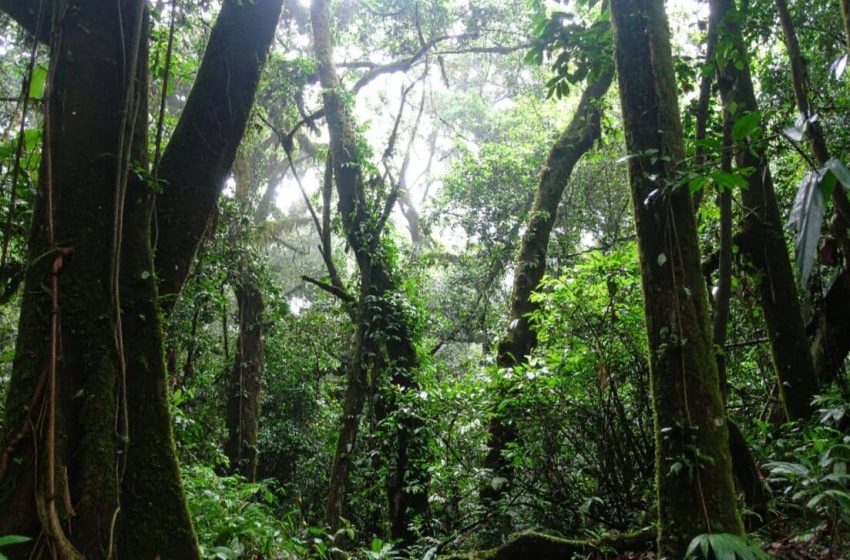
Deep in the heart of Borneo’s tropical rainforests, a rare and mysterious living fossil lurks in the shadows: the earless monitor lizard, known as the “mini-dragon.” This elusive creature, with its almost mythical appearance, has captivated scientists and nature enthusiasts alike.
However, its survival is increasingly threatened by habitat destruction and illegal wildlife trade, making it one of the most endangered reptiles on the planet. Lanthanotus borneensis, the official name of the earless monitor lizard, is considered a living fossil, with evolutionary roots stretching back over 66 million years, to the age of dinosaurs.
A Living Fossil from the Age of Dinosaurs
The Lanthanotus borneensis isone of the rarest reptiles in the world, found only in Borneo. It is a relic from the distant past, representing a direct evolutionary link to a time long before humans. According to Futura-Sciences, the lizard’s ancestors date back to the Cretaceous period, making it a living fossil and a unique specimen for evolutionary study.
“The earless monitor lizard (Lanthanotus borneensis) is a semiaquatic, brown lizard native to the Southeast Asian island of Borneo. It is the only living species in the family Lanthanotidae and it is related to the true monitor lizards,” explained Earth.com.
What makes the earless monitor lizard particularly fascinating is its striking appearance and rare biological traits. It has no external ears, a rare feature among reptiles, and its body is covered in rough, soil-retaining scales that help it camouflage perfectly in the dense forest.
As explained by the source, reaching up to 50 cm in length, it also has a prehensile tail, an adaptation that allows it to navigate the riverbanks and dense undergrowth of Borneo’s forests.
A Mysterious and Elusive Lifestyle
Despite its captivating nature, the Lanthanotus borneensis is incredibly difficult to observe in the wild. The lizard is primarily nocturnal, hiding during the day under vegetation or rocks, making it almost invisible to anyone attempting to study it. Its unique camouflage, reinforced by the dirt that clings to its body, allows it to blend seamlessly into its surroundings. As a result, this creature remains one of the most mysterious reptiles on Earth.
A recent study, available on Treubia journal, has shed some light on its lifestyle. The living fossil feeds on earthworms, small crabs, and fish, and has been observed using its prehensile tail to anchor itself during floods, an adaptation to the frequent seasonal changes in its environment. However, much of its behavior remains a mystery, especially since its elusive nature makes it difficult to track in its natural habitat.
First Appeared on
Source link






