


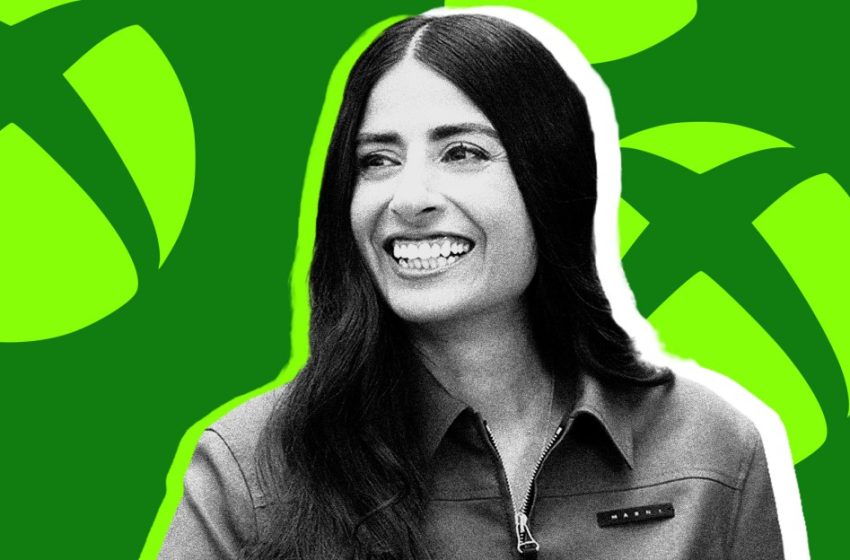
Inside Microsoft’s big Xbox leadership shake-up
Xbox fans had been anticipating the retirement of Microsoft Gaming CEO Phil Spencer for years, but what most hadn’t expected was the departure of Xbox president Sarah Bond too. For many outside the company, Bond seemed like Spencer’s natural successor, a deputy of sorts.
Microsoft CEO Satya Nadella and Microsoft CFO Amy Hood clearly didn’t agree.
Instead of picking Bond for the role, Microsoft promoted Asha Sharma, a former Microsoft AI executive, to the top of Xbox. The decision to overlook Bond might have surprised many Xbox fans, but for the more than a dozen current and former Microsoft employees I’ve been speaking to, it’s felt inevitable in recent months.
Phil Spencer, Microsoft’s long-term Xbox chief, made the decision to resign from Microsoft last year after a tough few years for Xbox. The giant Activision Blizzard acquisition had dragged on for far longer than Microsoft had anticipated, and the need to grow the business saw Microsoft walk away from Xbox-exclusive games in favor of a multiplatform strategy. Microsoft has also been trying to reinvent the Xbox brand beyond the console, with mixed results.
Spencer’s decision led to months of careful successor planning. It was announced to the world on Friday, but it was supposed to be today. Microsoft was forced to announce early because it started to leak and IGN was planning to run a story, according to sources familiar with the situation.
That kicked off a day of chaos, where teams inside Xbox were hearing the news first through reporters and news outlets, instead of via internal memos. The team running Sarah Bond’s social media accounts was so unprepared that a LinkedIn post inviting people to provide feedback about Xbox accessibility features went live just before her departure was announced. It sat there for hours, until Bond’s team eventually posted her own memo.
Microsoft executives shared four memos with Xbox teams on Friday, but only Phil Spencer mentioned Bond. Satya Nadella, Microsoft Gaming EVP Matt Booty, and new Microsoft Gaming CEO Asha Sharma all had kind words for Spencer, but no mention of Bond. Even Bond’s own memo to her teams didn’t arrive until hours after the announcement and wasn’t part of Microsoft’s blog.
Some Xbox employees I’ve been speaking with saw the writing on the wall for Bond last year. She was promoted to Xbox president in October 2023, just days after Microsoft finalized its $68.7 billion deal to acquire Activision Blizzard. Bond had been crucial in getting the deal over the line with regulators and slowly started to become the face of Xbox as Spencer took on the complicated duties of integrating a huge new business into Microsoft Gaming.
Six months after Bond’s promotion, Xbox executive Kareem Choudhry, who reported directly to Bond, departed Microsoft and triggered another shake-up of some teams inside Xbox. Choudhry was key to Xbox’s backward compatibility support and helped bring Xbox Cloud Gaming to life as xCloud in 2019.
Just weeks after Choudhry departed, former Xbox chief marketing officer Jerret West also left Microsoft in June 2024. That meant the Xbox marketing team was now reporting directly to Bond. A month later, Microsoft delivered a marketing campaign that signalled people didn’t need to buy an Xbox console anymore. The message was that “you don’t need an Xbox to play Xbox,” because games were available through Xbox Cloud Gaming on TVs.
This was all part of the “Xbox everywhere” strategy that Bond had been pursuing, a vision to move the Xbox brand beyond its roots in console hardware. Months later the “This is an Xbox” campaign launched, with commercials that positioned a phone or a tablet as an Xbox instead of just a console. It was a confusing campaign, and I’m told it offended many Xbox employees internally.
“This is an Xbox” also debuted months after Bond appeared on stage at the Bloomberg Technology Summit and announced an Xbox mobile gaming store that was supposed to launch in July 2024. It still doesn’t exist almost two years later. Although attempts to redefine Xbox were clearly tied to the mobile store efforts, Microsoft still went ahead with “This is an Xbox” after the store was delayed.
The pivot away from console, led by Bond, under Spencer’s direction, hasn’t gone well for Xbox. Microsoft’s Xbox hardware revenue has declined for three financial years in a row, and it looks like those declining revenues are going to continue throughout fiscal 2026.
Most of the current and former Xbox employees I’ve spoken to in recent days are relieved that Bond is leaving Microsoft. I’ve heard from multiple sources that Bond has been tough to work with, and built a team structure that meant if you didn’t follow the vision or questioned it, you were out. Most have praised her ability to strike partnerships with companies and developers, though.
I wrote in December 2024 that Bond had “staked her career reputation on the idea of Xbox being everywhere, across multiple platforms and devices.” This also involved carefully managing her image both internally and externally, making her appear to be a gamer like Phil Spencer. In reality, she wasn’t.
I understand that Bond’s strategy had been failing internally and been questioned multiple times. Bond had tried to push mobile and cloud over console, to reach potentially millions more Xbox customers, but the result has been a classic case of chasing tomorrow’s customers by neglecting today’s.
Phil Spencer’s retirement has seemed inevitable to Xbox employees, particularly over the past year. In February last year, Spencer took a long vacation, and I’m told some teams had to wait weeks for sign-off on some key changes. Shortly after this vacation, rumors started circulating inside Microsoft that Spencer was getting ready to retire. Microsoft was eventually forced to deny the rumors in July, claiming Spencer wouldn’t be retiring “anytime soon.”
With Spencer’s retirement official, Microsoft is hitting the reset button on Bond’s Xbox strategy instead of embracing it further. Microsoft Gaming CEO Asha Sharma is now promising “the return of Xbox,” in a clear message to employees that the strategy over the past few years has not been working. “I want to return to the renegade spirit that built Xbox in the first place,” says Sharma.
Xbox employees I’ve been speaking to have been concerned about the Sharma appointment, particularly because of her previous role as an AI executive at Microsoft. There is also concern about her lack of industry experience in entertainment and gaming. Sharma has been clear she’s not a gamer and has spent the weekend responding to people on X and even taking game recommendations.
Some Xbox employees worry she’ll force AI into everything Xbox does, but Sharma was clearly ready for that reaction. “As monetization and AI evolve and influence this future, we will not chase short-term efficiency or flood our ecosystem with soulless AI slop,” said Sharma in her memo. “Games are and always will be art, crafted by humans, and created with the most innovative technology provided by us.”
The other concern is that she’s been appointed by Nadella as some kind of executioner of the Xbox console. Her memo doesn’t suggest that, and Microsoft could have easily appointed Matt Booty into that kind of role to push game publishing instead of the Xbox console. I get the impression from sources that Microsoft wants a turnaround and is worried about losing Xbox, as it’s one of its only remaining successful consumer brands.
Those who know Sharma better describe her as enthusiastic, willing to learn, and very capable of getting teams to execute on a clear vision rather than coming in as a product executioner. She also has a history at Instacart and Meta of overseeing platform launches and getting people to use products, the type of user acquisition that Xbox has failed at in recent years.
Sharma’s non-gaming credentials don’t mean she can’t do a good job at Xbox, but it will still be a tough gig to step into the shoes of Phil Spencer, who is widely respected inside and outside of Microsoft. He will be remembered for the impact he had in turning Xbox around more than a decade ago. Xbox could have easily died after the Xbox One disaster, but Spencer made transformative decisions that have benefited the entire gaming industry.
Xbox led the way in consumer-friendly decisions like crossplay, or allowing consumers to buy a game once and play it across both PC and console. Under Spencer’s watch, Game Pass has also forced competitors to offer similar subscription services.
Spencer is also departing at a time when the Xbox Series S / X generation has failed to put a dent in Sony’s PlayStation sales and during a period of turmoil in the game industry and within Xbox. Layoffs and studio closures have plagued the Xbox division after the Activision Blizzard acquisition, and there are big questions about Microsoft’s gaming acquisitions, the side effects of its Game Pass push, and the future of the Xbox console itself. Spencer won’t be here to answer them anymore.
Sharma now has the opportunity to define the next 25 years of Xbox, and we’re about to find out if she can turn Xbox around and execute on a clearer strategy. “The next 25 years belong to the teams who dare to build something surprising, something no one else is willing to try, and have the patience to see it through,” says Sharma. “We have done this before, and I am here to help us do it again.”
First Appeared on
Source link






