


Inside Savannah Guthrie’s ‘Today’ Return Amid Mom’s Disappearance
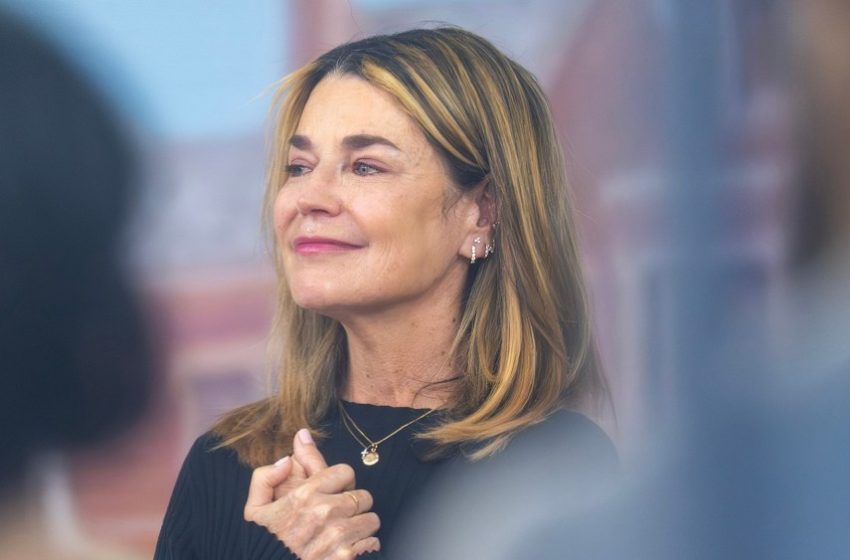
When Savannah Guthrie returns Monday, April 6, to NBC’s “Today” after two months of grappling with the surreal abduction in Arizona of her mother, Nancy, producers and staffers will breathe a sigh of relief. Here is the scene many have hoped for: the morning program’s mainstay anchor back where she belongs after a prolonged period of tumult.
Getting back to normal, however, won’t be so easy.
Guthrie is stepping into uncharted territory. Anchors aren’t supposed to be part of the news cycle. Normally, they just report it. But Guthrie is emerging from a bizarre moment during which she and her family were part of a gripping national story — and, because her mother has yet to be found, the narrative has not come to any conclusion.
Indeed, every time audiences have seen Guthrie in recent weeks, she’s been almost unrecognizable, bereft in self-made videos addressing her mother’s kidnapper or crying in her interview recently with her former co-anchor, Hoda Kotb. This has created questions about whether she is up to the job of anchoring a morning show right now, and even she has expressed doubts. “I don’t know if I can do it,” Guthrie said last week to Kotb. “I don’t know if I’ll belong anymore, but I would like to try. I would like to try.”
AP Images
Their exchange — the most extensively Guthrie has spoken publicly about her mother’s disappearance and the criminal case that is still active — was raw and compelling. It no doubt absorbed some of the emotion that will accompany her return to NBC Monday morning. But it didn’t offer a road map for how the show will proceed.
There may not be one. Guthrie’s situation is without parallel in the world of morning news, which has in recent years seen anchors like Robin Roberts and Sheinelle Jones return to programs after dealing, respectively, with bone marrow cancer and the death of a spouse. In Guthrie’s case, the challenge hasn’t faded. Few leads or people of interest have emerged in the Nancy Guthrie case since she went missing on Jan. 31. And new discoveries or twists in the case could pull her daughter away from her TV duties.
NBC can’t afford to let “Today” lose its bearings. Savannah Guthrie helps lead a program that continues to deliver millions of dollars in advertising revenue and serves as the financial linchpin of a network news division, even in the age of streaming. Indeed, money from “Today” may be even more important now that NBC News is no longer part of a group that once included MS NOW and CNBC, both spun off into a separate company called Versant Media in early 2026. The first two hours of “Today” — watched by around 3 million viewers each weekday — generated nearly $203.5 million in advertising in 2025, according to Guideline, a tracker of ad spending. Add the 9 a.m. and 10 a.m. hours to the mix, and NBC nabbed around $315.4 million from the weekday editions of the program.
Steering the franchise is up to Libby Leist, the NBC News senior vice president who oversees the entire “Today” franchise. She and Guthrie are close; Leist joined NBC News’ Washington Bureau as a desk assistant in 2001 and worked with Guthrie as both climbed the newsroom ranks. In a New York Times article from 2022, Guthrie described how she used to try to set Leist up on dates and was part of an ongoing text chain with Leist and Jenna Bush Hager as the executive found romance with her now-husband. Tom Mazzarelli, an even-keeled executive producer of “Today” who has been working senior roles at the show since 2013, is also charged with keeping things on track.
Guthrie’s return to anchoring on Monday is expected to draw big crowds. Monday’s “Today” may be one of the most-watched morning-news telecasts in recent memory.
Some TV publicity executives with no current connection to NBC can envision a segment in which the anchor, flanked by as many of her “Today” colleagues as possible, addresses the audience, expresses her happiness at being able to return and asks viewers to “please bear with me” as she moves through her first weeks during what is likely to be a tender time. These executives, who, like many interviewed for this story declined to be identified to avoid the appearance of criticizing “Today” staff during a horrible ordeal, felt such a segment could take place after the show’s first half hour, which is typically devoted to the news of the day — a signal that “Today” will stay on the headlines no matter what happens off camera. NBC News declined to make “Today” producers available for comment on how they might orchestrate Guthrie’s first day back.
Two people familiar with the show say producers are prepared for a period during which they “play it by ear,” trying to work segments around their suitability to Guthrie. In her earliest days back, might she steer away from stories about true crime or violence, or pull back from comedic moments? Perhaps, one of the people suggests, but she may feel more comfortable taking part in more as she regains her footing.
NBC has little choice but to bring the anchor back. There is no obvious immediate successor at “Today.”
She can do hard-hitting newsmaker interviews and explain complicated legal matters, but also pal around with sports figures and movie stars. Internally, she is known for helping the show “set the tone” around each day’s news cycle, says one of the people familiar with the show. And she has helped NBC and “Today” during some of their greatest and most public trials.
Guthrie’s presence as co-anchor helped the show move forward after the awkward exit of Ann Curry in 2012, which spurred a viewer backlash. When Matt Lauer was exiled in 2017 following revelations of “inappropriate sexual behavior,” Guthrie forged ahead, this time with Kotb in the seat beside her (Lauer has denied all allegations). Guthrie also helped NBC through a whirlwind in 2020 when the news division decided to hold a town hall with President Trump during his first term opposite an event ABC News arranged with then-candidate Joe Biden and George Stephanopoulos. Guthrie lifted the event out of publicity-stunt status by keeping the president to short answers — no small feat — and adding fact-checks and follow-ups. “‘You’re the president, you’re not like somebody’s crazy uncle who can retweet whatever,’” Guthrie told President Trump after asking why he recently retweeted a conspiracy theory.
If Trump didn’t like the interview, he didn’t show it. He was among those offering to help the Guthrie family during their moment of crisis.
Craig Melvin holds the other anchor chair on “Today,” and in recent weeks, Kotb has filled in for Guthrie — a natural choice because she still is affiliated with the show even though her anchor stint ended in early 2025. Laura Jarrett, one of the weekend “Today” co-anchors, has also covered some duties as has Jones, who recently kicked off a new tenure a co-host of Today’s 10 a.m. hour opposite Jenna Bush Hager. Willie Geist, who leads “Sunday Today” at NBC and works on MS NOW’s “Morning Joe,” filled in for Melvin on Tuesday.
Some of these folks might be seen as potential internal candidates, but NBC News would probably prefer to have them play a larger role over many months in the show’s first two hours — as Kotb and Melvin did before picking up co-anchor duties at 7 a.m. — so audiences can develop a stronger relationship with them.
Viewers already have a bond with Guthrie. News networks in recent months have sent veteran anchors packing in a bid to control costs, but there has recently been new recognition of their value. Gayle King recently extended her deal to stay with “CBS Mornings,” and CNN re-signed Anderson Cooper. It’s almost as if the people who run TV realized anew they still need personalities who can lure a broad audience to their screens.
Advertisers are eager for Guthrie to come back to the show, says one media buyer who helps decide how to allocate commercial dollars to TV programs. Sponsors are increasingly wary of political commentary and see “Today” as a “valuable, trusted environment,” the executive says. NBC’s sales staff has described Guthrie’s travail as a family matter at NBC, this person says, and advertisers have been sympathetic. “I have not had one client pull or walk away,” the buyer adds.
Guthrie’s willingness to take part in an interview with a visibly emotional Kotb was heart-rending. Guthrie acknowledged fears that the abductors may have been inspired to act because of her own fame. She also offered details about the crime that were not previously known, such as the fact that back doors to Nancy’s house were found open and that two ransom notes the family received are believed to have been real.
At the same time, viewers didn’t get a sense of how Guthrie felt about how Pima County Sheriff Chris Nanos, who has been the public face of the investigation into her mother’s disappearance in Arizona, has handled the case. Kotb did ask a question about it, but Guthrie didn’t offer a deep response. The sheriff has been the subject of much criticism among followers of the case.
Kotb’s interview contrasts with a similar interrogation NBC News held with another anchor trying to chart a return. When Brian Williams was suspended for six months after making false statements about a past reporting trip to Iraq, he was grilled on-air in 2018 by Lauer — on “Today” — in an exchange that was at turns tense and awkward.
But those two examples aren’t comparable, one former morning producer suggests. When it comes to the Guthrie interview, “moments like these are where shows have to resist the instinct to ‘produce’ too much. You don’t want to be in a position where it feels like you’re producing the moment while she’s living it,” this person says. “The right approach is usually to keep it simple, let Savannah set the tone and follow her lead on how much she wants to say. Viewers will understand without it feeling too predetermined.”
If NBC has devised a solid strategy for how to proceed in recent weeks, executives haven’t shared it with the broader “Today” production team, according to the people with knowledge of the inner workings of the show. There may be good reasons: TV newsrooms leak more than a termite-infested rowboat patched with Swiss cheese. Telegraphing a single idea in the open before it gets on air would lend an advantage to rivals that include ABC’s “Good Morning America,” Fox News Channel’s “Fox & Friends,” MS NOW’s “Morning Joe,” CNN’s “News Central” and CBS’s “CBS Mornings.”
Another factor in the corporate hush: Who would even have a plan for something like this?
“Today” has room to maneuver. The show, which has been bolstered in recent weeks by NBC’s Winter Olympics telecasts and the interest audiences have in the Nancy Guthrie case, is broadcast TV’s most-watched morning show so far this season. And it commands the largest audience among people between 25 and 54 — the viewership most coveted by advertisers.
And NBC has developed a history of helping its anchors return to the public stage after terrible personal episodes. Jones took months away from her “Today” duties to help her husband, Uche Ojeh, fight an aggressive form of brain cancer, and to mourn him following his death in 2025. Katie Couric returned to “Today” and held forth for many years following the death of her husband, Jay Monahan, in 1998, from colon cancer. Couric called for more awareness of the disease by getting a colonoscopy on “Today” in 2000. Others have also turned their personal ordeals into stories of inspiration. Robin Roberts chronicled her battle with myelodysplastic syndrome in 2012 and 2013 and won a Peabody Award.
“Today” must step gingerly, says Ben Bogardus, chair of the department of journalism at Quinnipiac University. Yes, viewers will be rooting for her. “Many can relate to the sadness and pain that comes from resuming a ‘normal’ life after a tragedy involving a loved one,” he says. “Morning shows like ‘Today’ thrive on creating a sense of friendship and family between the anchors and viewers. So having her co-anchors and people at home embrace her return to work and recognize the pain she has gone through can be a part of the healing process.”
Still, covering new developments in the case “must still be handled carefully by reporters who don’t have a close relationship to Guthrie, and with the added sensitivity of knowing that she could be on set or in the newsroom when those stories are discussed and aired,” the professor adds. “NBC has the journalistic obligation to keep covering the story, but also the personal and moral obligation to make sure Guthrie is protected from any undue stress or emotional harm from the coverage.”
Audiences want to see Guthrie do well, says Kate West, an assistant professor at the School of Journalism and Media at the University of Texas at Austin, who studies the effects of journalism on mental health.
“The audience might see a journalist who is more visibly shaken talking about certain stories. It’s hard to avoid sad, difficult and traumatic stories in the news. Stories that might have been ‘normal’ to cover on a day-to-day basis, might feel a lot different for Ms. Guthrie upon her return,” says West. “I think it’s important for the audience to remember she’s a human first and to offer empathy not just in the first week of her return, but in the weeks and months that ensue.”
How “Today” producers manage the situation will be watched closely by the entire TV news business. Morning viewers develop close relationships with their a.m. favorites, and one family’s choice of a morning show can be handed down across generations. And while the rise of digital newsletters and web-based programming has eroded the hold morning news has on the public, the shows remain powerful, nabbing large simultaneous audiences their digital rivals cannot.
Viewers tend to refer to anchors like Savannah Guthrie, Robin Roberts and Gayle King by their first names and regard watching them as part of a morning ritual. The rise of digital media has turbocharged that demand. Now people move to social media to wonder why a favorite host hasn’t been on screen for a few days. More of the hosts talk about their family dynamics on screen. “Today” viewers have heard about anchor Dylan Dreyer’s decision to get a divorce or learned about one of Kotb’s daughters getting sick. “Good Morning America” audiences followed along as one of host Michael Strahan’s daughters grappled with the effects of a brain tumor.
Maintaining the anchors’ private lives has become even more difficult for the shows and the networks that run them. “It has always been thus. With social media, it has never been more,” says Steve Friedman, a TV news veteran who ran “Today” and CBS’s “The Early Show” at different points in a long career. The relationship between hosts and viewers “has become more and more personal, and since the advent of the internet and social media, it has exploded,” he adds.
NBC is counting on Savannah Guthrie to deliver an overwhelming response from viewers. But it will also have to proceed carefully. After all, the return will be overwhelming for her, too.
First Appeared on
Source link






