


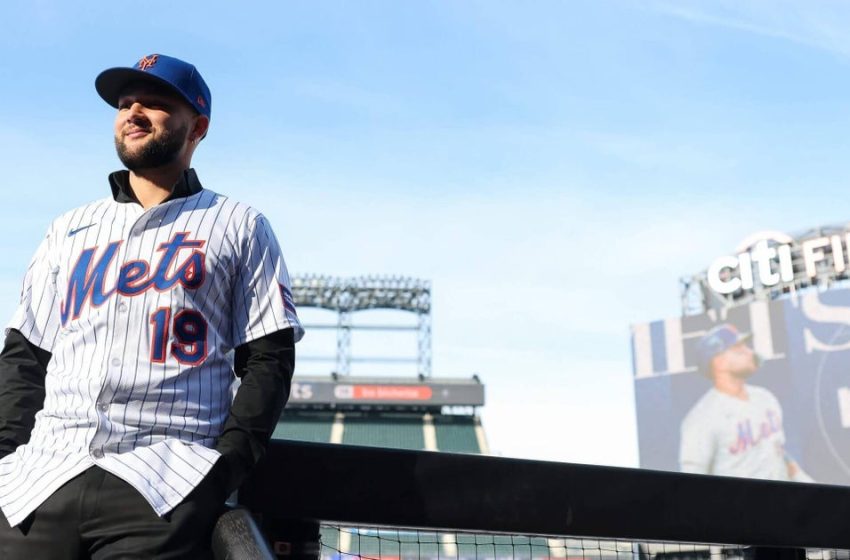
Inside the Mets’ offseason: A Bo Bichette plot twist and a methodical overhaul
The New York Mets’ talks from start to finish with Bo Bichette best illustrate the principles that guided their transformative winter.
They wanted a new look. They wanted more flexibility on the field and on the payroll. They wanted a better team.
And they were willing to wait things out in order to make sure that they thought they had one.
While the Mets were absorbing hits for moving on from fan favorites publicly, they were patiently plotting privately. Bichette? It wasn’t known that the Mets had initially talked with Bichette in November until they agreed to a three-year, $126 million deal with him in mid-January.
Here’s another telling, previously untold thing about those talks way back at the GM Meetings between the Mets and Bichette: New York first approached the then-free agent, league sources said, about playing second base.
Not shortstop, the position he played while with the Toronto Blue Jays the prior seven years.
Not third base, the position he agreed to play upon accepting the Mets’ offer more than two months after their initial conversation.
Second base. Which just so happens to be the position that kickstarted everything.
Seismic change defined the Mets’ winter. Owner Steve Cohen, president of baseball operations David Stearns and the front office overhauled a roster that massively underachieved last season. Former Mets mainstays Pete Alonso, Brandon Nimmo, Jeff McNeil and Edwin Díaz are gone. When spring training starts in just over a week, name tags might be necessary. The inside story of changing more than one-third of the Mets’ roster reveals a desire for stronger up-the-middle defense, a propensity to seek flexibility and an ability to act decisively in the face of angst.
“They got better,” an executive from a rival team said. “Are they at the top of their division? Probably, but along with the Philadelphia Phillies and Atlanta Braves. Are they serious contenders beyond that? I’m still not sold on that. Are they different? In more ways than one.”
The transformation all started at second base.
Marcus Semien highlights the Mets’ new emphasis on defense up the middle. (Ron Jenkins / Getty Images)
When the Mets ended their season with a mediocre 83-79 record and without a playoff appearance, club officials resolved to improve defensively, particularly up the middle and on the right side of the infield.
Bichette was among the early names the Mets contemplated at second base, which demonstrated that the Mets were willing to keep an open mind. Bichette was a neophyte at the position, playing second base only five times, all in the World Series. But others presented better fits defensively.
Among the other possibilities, according to people briefed on the Mets’ plans: sacrificing offense and giving the runway to Luisangel Acuña (whom they later traded) or signing Isiah Kiner-Falefa (who remains a free agent). Sticking with McNeil was never going to be the answer at second base.
Soon after the World Series, the Texas Rangers indicated to other clubs that they were ready to move on from veteran second baseman Marcus Semien, owed $72 million over the next three seasons. Around the same time, people within the Mets believed a deal involving Nimmo, who was owed $102.5 million over the next five seasons, was unlikely because of his contract and no-trade clause. Within three weeks, the Mets and Rangers lined up on a one-for-one swap, though it took a couple of days for Nimmo, who entered the offseason as the club’s longest-tenured player, to fully sign off.
From the Mets’ perspective, the move checked a few key boxes and foretold even more. Despite being 35 years old, Semien remains one of the game’s best defenders; he won his second Gold Glove last season. Meanwhile, the Mets viewed Nimmo, once the club’s everyday center fielder, as locked into left field, rendering their corner outfield spots expensive and inflexible. Superstar right fielder Juan Soto isn’t going anywhere.
In a major part of the conversation when working with Nimmo to waive his no-trade clause, Mets officials told the homegrown veteran that they wanted to create room for their young outfielders, league sources said.
Nimmo, whose affable personality and sprints to first base after walks won over New Yorkers, was just the first fan favorite to divorce from the Mets. By trading him, the Mets’ front office revealed sentimentality would not interfere with plans for improvement nor change their stances on players’ values.
The Mets held interest in re-signing Díaz to a three-year deal, league sources said. A week before Díaz took the Los Angeles Dodgers’ offer (three years, $69 million) at the Winter Meetings in December, the Mets agreed to a deal with Devin Williams. They did not tell Díaz’s camp that a deal with Williams was imminent. Interest in Williams was hot across the league. If the Mets wanted him, either as a setup reliever to Díaz or as their new closer, they needed to act. The Mets operated with direct knowledge of the Dodgers’ interest in Díaz, league sources said. Díaz did not bring the Dodgers’ offer to the Mets. It is possible that Díaz’s camp felt the Mets’ offer, which fell short of Los Angeles’ numbers, wasn’t going to change enough.
Without Díaz, the Mets’ bullpen behind Williams features just two notable short-inning additions: Luke Weaver (two years, $22 million) and Luis Garcia (one year, $1.75 million). Before agreeing with Weaver, the Mets were heavily involved in the market for Tyler Rogers (who signed a three-year, $37 million deal with the Toronto Blue Jays), but they always wanted to keep options open in the bullpen. As constructed, there is at least one and as many as three spots up for grabs in the Mets’ bullpen.
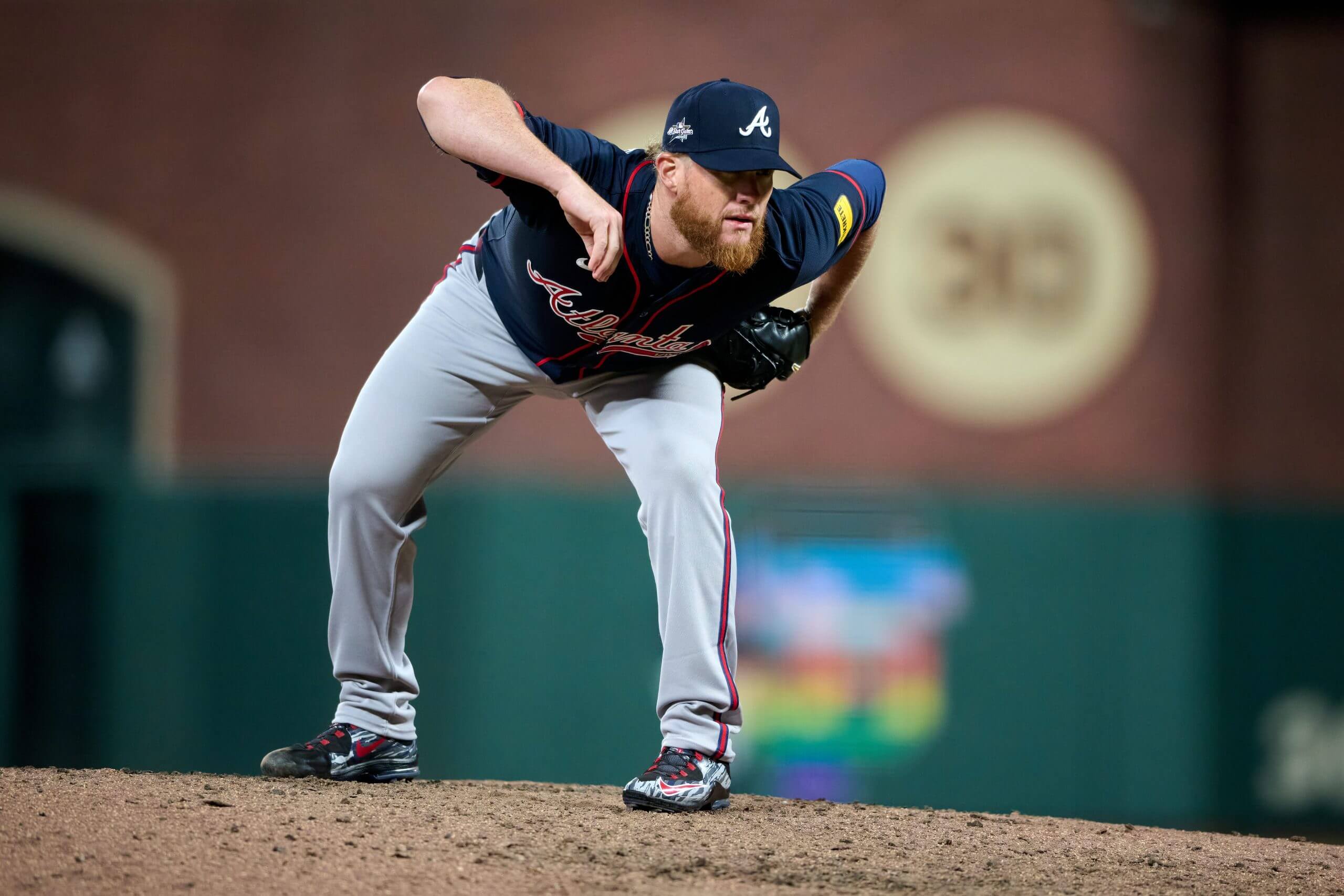
Craig Kimbrel is a non-roster invitee to spring training as the Mets consider a wide range of options for their bullpen. (Robert Edwards / Imagn Images)
The leftover room in the bullpen is by design, people with knowledge of the Mets’ thinking said. Some within the Mets believe that they did a poor job of constructing their bullpen last season. In their view, the best bullpens include under-the-radar guys who pop over the course of the season, and the Mets did not allow enough flexibility for such options to emerge.
Beyond Craig Kimbrel, who is a non-roster invitee to spring training, Mets officials are also intrigued by the potential of relievers Dylan Ross, Ryan Lambert, Jonathan Pintaro (multi-inning capacity), Alex Carrillo, Daniel Duarte, Nate Lavender and Adbert Alzolay, who is expected to be healthy as a full-go at spring training.
Unlike negotiations with Díaz, the Mets never made Alonso, their career leader in home runs, an offer to stay. Stearns led all discussions about Alonso. Shortly after Alonso agreed to a five-year, $155 million deal with the Baltimore Orioles on Dec. 10, agent Scott Boras informed Cohen of the news. Though Alonso’s camp talked with others, executives from different clubs viewed the situation as primarily a one-team market. Some were surprised Alonso went as early as he did, going shortly after designated hitter Kyle Schwarber agreed to return to the Philadelphia Phillies. However, the Orioles always eyed a premium bat.
The Mets held some interest in bringing Alonso back, but did not meet with him at the Winter Meetings, wanted him to serve more as a designated hitter than in the past and preferred a short-term pact. New York was never going to go to the lengths that Baltimore did to get him.
Losing Díaz and Alonso to free agency at the Winter Meetings in Orlando angered a segment of Mets fans and created doubt in the industry, prompting one executive in Orlando to say, “I hope David packed a hard hat with him on the flight back to New York.”
The fan reaction, however, did not surprise Mets officials, some of whom, like Stearns, grew up in New York.
At the start of the offseason, the Mets’ front office determined it was not going to run back the same club. But the scope and timing were unknown. They had no way of knowing Nimmo would approve a trade, McNeil would have trade interest coming off a procedure for thoracic outlet syndrome and that Alonso’s market would lead to a relatively early deal — all before the Mets made all their major additions. The situation created a period of purgatory. For a while, movement was slow. All the while, however, the Mets never ruled out acquiring star power if the market moved to their liking with premium players interested in short-term arrangements.
Before the Mets explored deep negotiations with stars, they made an unconventional move that raised eyebrows. They agreed to a two-year, $40 million deal with Jorge Polanco, who would be expected to play some first base, a new position for the veteran infielder. The Mets liked Polanco for his bat; he had a 134 OPS-plus last season and tends to put the ball in play (something they set out to improve from last year’s club). The Mets think he can play first base. But Polanco can also provide insurance at second base and third base. The way some within the Mets see it, if Polanco ends up a poor defender at his new spot, he can simply DH with Brett Baty or Mark Vientos seeing more time at first base.
The Mets’ dalliances with free-agent stars included interest in Schwarber (first reported by the New York Post) and then Kyle Tucker, who ended up signing with the Dodgers. Tucker made his decision late into the night of Jan. 15. Earlier that same day, the Mets met with Bichette on a video call. Once the Mets acquired Semien, their talks with Bichette shifted to third base. After Tucker made his decision, New York went all-in on Bichette, who is believed to have held an implicit understanding that Tucker was the domino that needed to fall first.
As far as premium players go, the Mets held conversations about Cody Bellinger (a free agent who re-signed with the New York Yankees), Willson Contreras (whom the St. Louis Cardinals traded to the Boston Red Sox) and Ketel Marte (whom the Arizona Diamondbacks haven’t traded), but never got close on either player, league sources said.
In the big picture, Mets officials view Soto and Francisco Lindor as long-term stars to build around while developing a consensus top-10 farm system. In Bichette and other new additions, the Mets believe they acquired the right mix of personnel to do just that in the short term.
Bichette’s stabilizing presence in the lineup (he hits for a high average, produces consistent results, puts the ball in play) made Luis Robert Jr.’s variance at the plate more of a feature than a bug. At Robert’s worst, he is a gifted defender at center field, which helps the Mets’ desire for strength up the middle. The Mets talked with the White Sox about Robert at last summer’s trade deadline, but New York deemed Chicago’s asking price too high because it included multiple prospects, league sources said.
After agreeing to a deal with Bichette, the Mets informed Chicago they were willing to absorb all of Robert’s salary ($20 million for 2026), which lowered the asking price to Acuna and minor-league pitcher Truman Pauley.
Other outfielders such as Steven Kwan (Cleveland Guardians), Lars Nootbar (St. Louis Cardinals), Brendan Donovan (St. Louis Cardinals), Ramón Laureano (San Diego Padres) and Harrison Bader (free agent at the time who agreed to a deal with the San Francisco Giants) were all in play for the Mets, league sources said, though the likelihood of acquiring any of them varied.
Once the Mets landed Bichette and Robert, they believed they needed to go all-in on a starting pitcher. All offseason, the Mets telegraphed their desire to land a starter they could plug into the front of their rotation. All offseason, they covered the market, talking about Detroit Tigers ace Tarik Skubal, who hasn’t been moved, to essentially every pitcher who did end up moving. And all offseason, they were tied to Freddy Peralta. It was just a matter of the Mets meeting the Milwaukee Brewers’ asking price.
“They needed pitching in the worst way,” one AL executive said.
There were different variations of a deal with the Brewers before the Mets traded Brandon Sproat and Jett Williams, a pair of consensus top-100 prospects, for Peralta and swingman Tobias Myers. Prospect Carson Benge was never seriously on the table. A package of Williams and prospect Jonah Tong was never presented either. The Mets held interest in Brewers relievers Abner Uribe and Trevor Megill in separate deals, but the pitchers were never discussed as a package with Peralta, people familiar with the clubs’ negotiations said.
“They traded guys they wanted to trade, held onto the guys who were untouchable,” a National League executive said. “So they held to that discipline all offseason.”
Stearns and assistant general manager Eduardo Brizuela know Peralta well from their days with the Brewers. and someone they think highly of in terms of character.
In a video conference with reporters about the deal for Peralta, Stearns opened his comments by thanking his front office for the time they spent working over the offseason. It felt like an ending to an immensely consequential three-month stretch. The Mets might add another non-roster invite or low-level free agent for competition in the outfield or elsewhere, but their flexibility creates some depth.
In the infield, they have multiple players who can play multiple positions (which deemed Acuña, who was out of minor-league options, expendable). In the outfield, they could still stay true to what they told Nimmo about allowing space for someone like Benge in the move that served as the turning point for their offseason. Their work is likely all but done.
Scouts and executives from different teams now wonder how well the Mets’ new personalities will mesh, how their defense will fare with two infielders at new positions, how consistent their lineup will be and if they still end up needing more starting pitching.
What they’re essentially all getting at, after such a transformative winter, is: Will it work?
— The Athletic’s Ken Rosenthal contributed to this report
First Appeared on
Source link






