


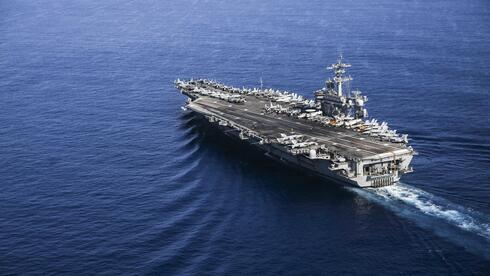
Iran cites US carrier ‘withdrawal’ as talks begin amid deep disagreements

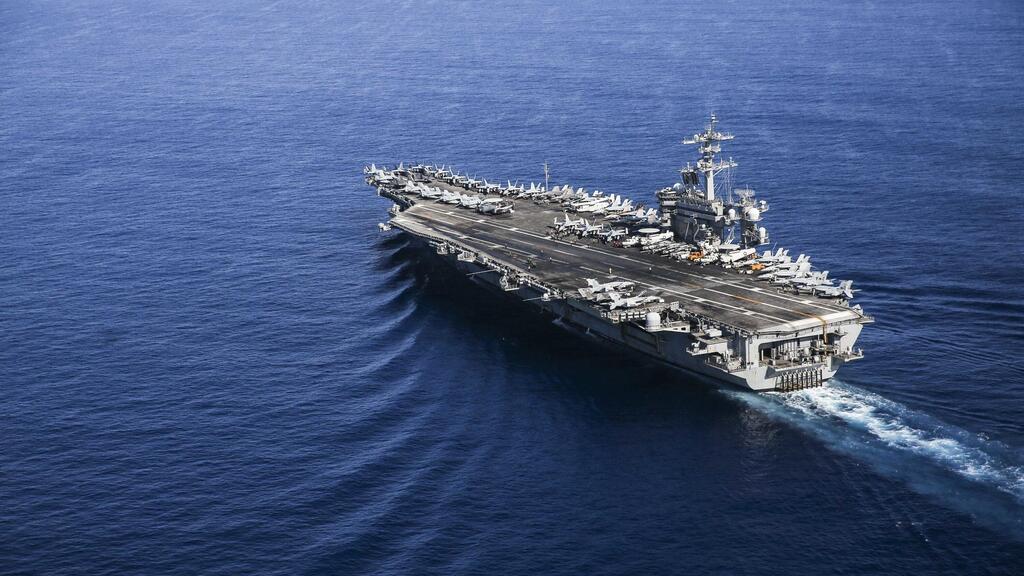
At the same time, Iran’s semiofficial Fars news agency, which is close to the country’s ruling establishment, reported that the U.S. aircraft carrier Abraham Lincoln had “withdrawn” about 1,400 kilometers (870 miles) from the port city of Chabahar in southern Iran. According to the report, the carrier strike group is now operating near the Gulf of Aden, east of Yemen’s Socotra Island. U.S. officials have not confirmed the account.
The Wall Street Journal reported that senior U.S. and Iranian officials are preparing to meet later this week in Turkey. People familiar with the matter said Witkoff and Trump’s son-in-law, Jared Kushner, are expected to join talks with Iranian Foreign Minister Abbas Araghchi in Istanbul on Friday. The foreign ministers of Saudi Arabia, Qatar, the United Arab Emirates, Egypt, Pakistan and Oman have also been invited, according to the report.
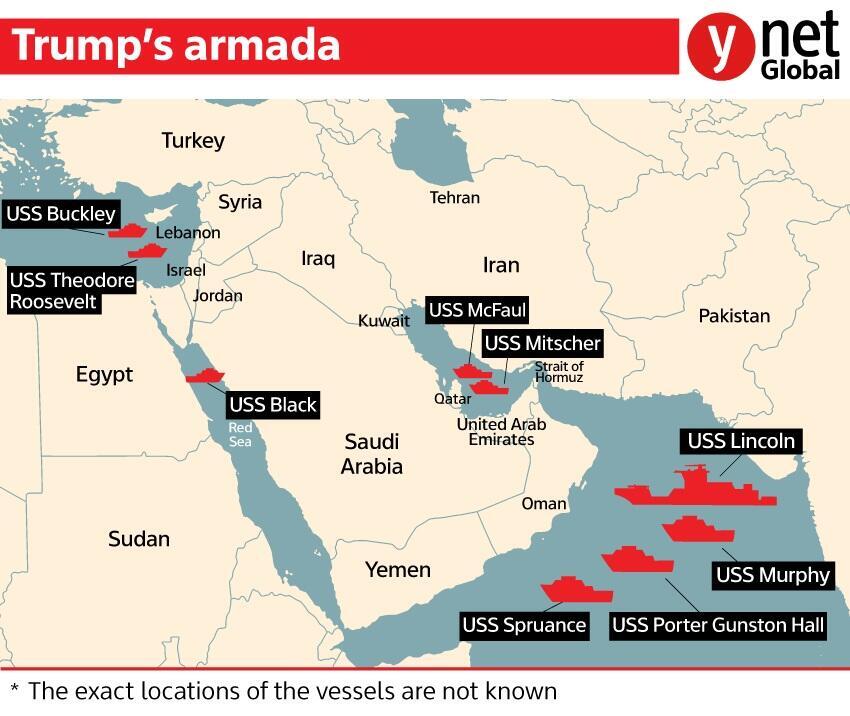
One official said the discussions could be divided into two tracks: one focused on Iran’s nuclear program and another addressing a broader set of issues, including U.S. demands for limits on Iran’s missile program. Major differences remain, particularly over uranium enrichment and Iran’s ballistic missile capabilities. Despite those gaps, both Trump and Iran’s leadership have expressed a willingness in recent days to talk, opening what officials described as a narrow diplomatic window. That comes as the United States continues to position forces in the region and as Trump has warned of a possible strike if negotiations collapse.
Obstacles remain significant. Iran has told regional mediators it is prepared to discuss only its nuclear program, while the United States is pressing for wider talks that would also include restrictions on Iran’s missile program and its support for allied groups across the Middle East. Tehran continues to reject key U.S. demands on the nuclear issue, including halting the production of enriched uranium and surrendering existing stockpiles. Arab mediators said Iran fears Washington may be using diplomacy to buy time ahead of a military attack. Planned U.S.-Iranian meetings in June were derailed after Israel launched a military operation days before the scheduled talks.
In recent days, regional countries have launched an intensified diplomatic effort to avert war. Qatar’s prime minister, Mohammed bin Abdulrahman Al Thani, made an unannounced visit to Tehran on Saturday, and Egyptian President Abdel Fattah el-Sisi later spoke by phone with Pezeshkian. People familiar with the discussions said they reviewed a comprehensive proposal drafted by Oman and Qatar, influenced by frameworks used in efforts to resolve the wars in Gaza and Ukraine.
The proposal reportedly combines steps addressing uranium enrichment with economic incentives and security guarantees. It was not clear whether the United States was involved in the initiative or supports it. According to those familiar with the talks, Pezeshkian told el-Sissi he was seeking U.S. assurances that Iran would not be attacked while negotiations are underway.
U.S. officials have told regional mediators that Trump has not yet made a final decision on whether to strike Iran. Meanwhile, plans by Iran’s Revolutionary Guard to conduct live-fire drills on Sunday and Monday in the strategic Strait of Hormuz were canceled, according to a person familiar with the matter, after a warning from the United States.
Warning to Khamenei: ‘A river of blood is boiling’
Senior figures in Iran’s ruling establishment are increasingly concerned that a U.S. military strike could undermine their grip on power and reignite mass anti-government protests, despite the harsh crackdown in which thousands of demonstrators were killed, Reuters reported.
The report cited six current and former government officials. While Reuters did not specify whether the sources were Iranian, the language of the report indicated they were. Four officials familiar with internal discussions said that during high-level meetings in Tehran, Supreme Leader Ayatollah Ali Khamenei was warned that public anger over the brutal suppression of protests has reached such a level that fear of the regime’s security forces is no longer a sufficient deterrent.
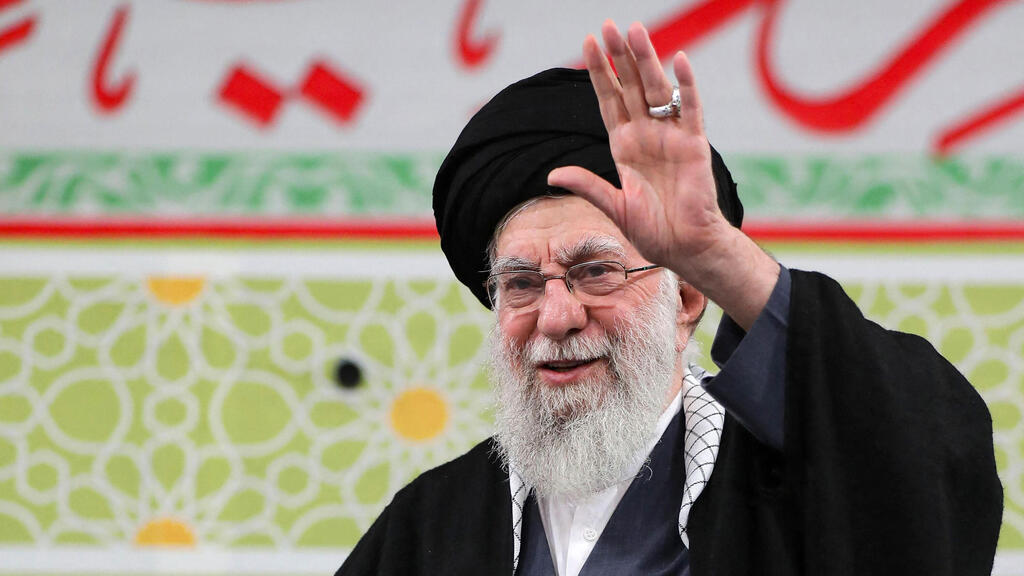
According to the officials, the crackdown marked the deadliest suppression of protests since the Islamic Republic was established in the 1979 Islamic Revolution. The report noted that officials in Israel and several Arab countries have questioned whether the Iranian regime could be toppled by airstrikes alone.
The officials said Khamenei was also told that many Iranians would be prepared to confront security forces again and that external pressure, such as a limited U.S. attack, could embolden them and inflict what was described as “irreversible damage” to Iran’s political establishment.
One of the officials told Reuters that Iran’s enemies hope renewed protests would lead to the fall of the regime, adding that “unfortunately” there would be further violence if an uprising resumes. “An attack combined with protests by angry people could lead to collapse,” the official said. “This is the main fear of senior officials and this is what our enemies want.” Reuters also reported that several senior figures in Iran’s opposition have warned the leadership that what they described as “boiling public anger” could bring down the Islamist system led by the ayatollahs.
Former Prime Minister Mir Hossein Mousavi, who has been under house arrest without trial since 2011, was quoted as saying that the regime faces inevitable collapse. “The river of warm blood spilled in the cold month of January will not stop flowing until it changes the course of history,” Mousavi said in a statement published on a news website associated with Iran’s reformist camp. “In what language do people need to say that they do not want this regime and do not believe your lies? Enough. We are fed up. The game is over,” he added.
First Appeared on
Source link






