


Iran Gets a Vote in This War
THE TRUMP ADMINISTRATION APPEARS to have gone to war against Iran with two assumptions: First, they assumed they could adjust their objectives as the war went on based on how much they thought they would accomplish; and second, they assumed that because the United States and Israel are, together, militarily superior to Iran, they would have complete control over the timing, intensity, domains, repercussions, and outcomes of the conflict, and they could determine the end of the conflict when they decided.
Those are dangerous assumptions. Just a few weeks into the war, they are being tested. While it’s common for war aims to shift over the course of a conflict, doing so is a complicated and delicate process that requires military leaders and politicians to balance political desires against military realities. This administration, which has repeatedly proven to be improvisatory in its approach to policy and rhetoric, has so far in this conflict not been able to manage that balance between political desires and military actions.
As for the second assumption—every soldier, sailor, marine, airman, and guardian knows and often repeats this truism: The enemy always gets a vote.
WAR ALWAYS BEGINS WITH POLITICS. Political leaders define the objectives of the conflict—the ends that the nation seeks to achieve. Military planners then develop the ways to pursue those ends through campaigns, operations, and even specific battles. Finally come the means: the forces, resources, and capabilities required to execute the plan. This framework—ends, ways, and means—is not simply an abstraction taught in war colleges. It is the basic logic that connects political objectives to military action. When those three elements align, military operations can achieve meaningful strategic outcomes. When there is even the slightest misalignment, leaders discover that even the most powerful military can find itself operating without a clear direction.
It’s been said that good tactics with a bad strategy is the slowest way to lose a war, and bad tactics with a good strategy is the slowest way to win one. To put it another way, if your ends, ways, and means are misaligned, you can win all the battles and lose the war. If your ends, ways, and means are aligned, you can lose battle after battle and yet win in the end. In his book On Strategy, U.S. Army Col. Harry Summers Jr. recounts a statement he made to North Vietnamese Col. Tu in 1975. “You know,” Summers said, “you never defeated us on the battlefield.” Tu replied, “That may be so, but it is also irrelevant.”
The secretary of defense serves as the bridge between political leadership and military planners. The secretary is the one who must interpret and transmit guidance to those in uniform so that they can produce feasible military options for the president. Those require an understanding of what forces are available, how long they are required to deploy, and what risks accompany different missions and courses of action. The secretary’s role is not simply to celebrate the power of the military and to bash reporters who ask pertinent questions about the use of our military might; one of his primary jobs is to ensure that the relationship among ends, ways, and means is understood before combat operations begin. When civilian leadership in the Pentagon reduces conduct of operations to slogans—such as “maximum lethality, not tepid legality”—the essential planning conversation is lost. Because lethality is not a strategy.
This is where operational art enters the picture. Operational art is the discipline that links strategy to tactics—the design of campaigns that connect individual battles and strikes to broader strategic objectives. Operational art determines how air campaigns, naval operations, cyber-attacks, and ground actions combine into a coherent effort across time and space. But operational art also depends on clarity of purpose. Without a stable strategic objective, planners struggle to determine what mission they are trying to accomplish, how they will apply forces to the battlefield, and how resources will be allocated.
This process is familiar to military planners around the world, and it is called troop-to-task analysis. The outcome allows commanders to determine whether the available forces are appropriate for the assigned mission. This was the aspect of planning at which the Russians failed so miserably when invading Ukraine, and it’s becoming increasingly apparent that it is one of the most critical actions the United States has failed to do in striking Iran.
It’s not enough that forces exist; they must possess the right capabilities, readiness levels, and equipment to accomplish the task assigned. An armored brigade cannot suddenly conduct amphibious operations. A bomber designed for strategic strike cannot easily perform close air support. Naval ships are designed and deployed for specific mission sets, often as a part of a carrier strike group that requires air defense, strike warfare, anti-submarine operations, maritime security, and more. When planners assign missions, they must ensure that the available forces match the task of the mission they are assigned.
One of the emerging problems in the current conflict is that the stated objectives have shifted repeatedly, each one implying a different series of tasks that the military would need to perform. Destroying nuclear infrastructure requires a sustained air and cyber effort against hardened facilities. Eliminating mobile missile forces demands persistent intelligence and precision targeting through air and sea. Neutralizing proxy networks requires regional partnerships and ground intelligence. Regime change, if that’s the goal, requires something far larger and far more complex. And even an Army guy like me knows that escorting oil tankers through a restricted waterway requires diverting forces from one critical mission—supporting the kinetic strikes and missile defense associated with the critical aircraft carriers—to another, support to naval escort operations.
But war is not a video game, where new missions can be loaded and executed instantly. Military operations depend on intelligence preparation, positioning forces, logistics planning, and coordination with allies. Aircraft must deploy, ships must reposition, individual service members need to pack and move their equipment, trusted and informed allies need to provide forces that only they have, and supply chains must be set up to support sustained joint and coalition operations.
And still, the enemy always gets a vote.
NO MATTER HOW CAREFULLY a plan is crafted, no matter how powerful the force assembled to execute it, war never unfolds exactly the way anyone expects. That’s because the adversary is thinking, adapting, finding vulnerabilities, probing for weaknesses, and searching constantly for ways to disrupt assumptions.
The unpredictability of war is precisely why planning is so important, and why serious militaries devote so much time and attention to planning before beginning any operation. Planning is not an academic exercise or a stage direction for how a war will look. It is an attempt to anticipate friction, allocate resources intelligently, and link individual battles (be they on the ground, on the sea, in space, or in cyberspace) into operational plans to serve a political purpose. The challenge is not simply to strike the enemy, but to ensure that every military action contributes to achieving a clear political objective. Only once a plan has been developed, analyzed, war-gamed, and assessed can commanders be confident that they can adapt and improvise once combat starts.
All of that requires an achievable, well-articulated goal determined by the political leadership, and a lot of really smart military leaders.
In the current war with Iran, the political goals are becoming increasingly unmoored from the operations the military is conducting. The administration, with a great deal of swagger, has projected confidence—sometimes bordering on triumphalism and cockiness—about the progress of the campaign. The president said the United States “won in the first hour” and that the war would end as soon as “I feel it, feel it in my bones.” Secretary of Defense Pete Hegseth agreed that President Trump alone will “determine the pace, the tempo and the timing of this conflict, his hand firmly on the wheel as well as on the throttle setting.” And Hegseth described the closure of the Strait of Hormuz as “something we’re dealing with, we have been dealing with it and don’t need to worry about it.” The history of war proves all of those assertions to be naïve.
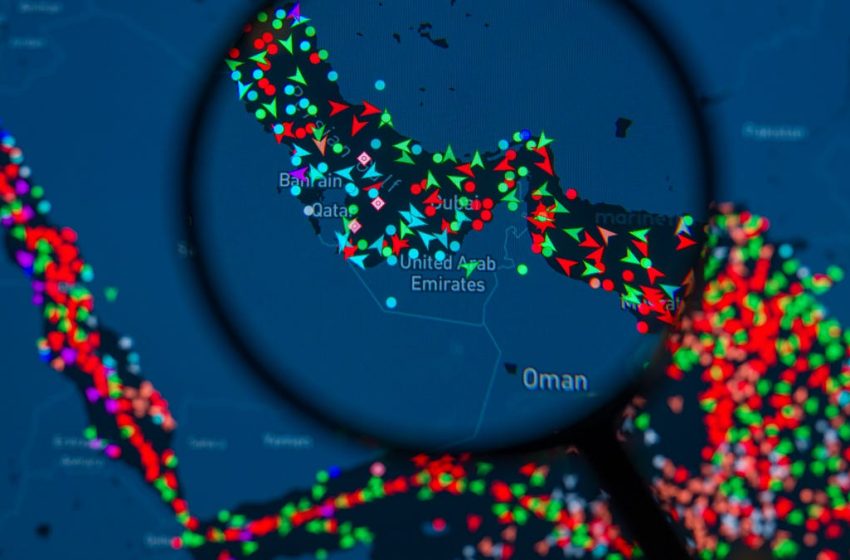
Iranian missile launches, drone attacks, and maritime threats have increased concerns about the safety of commercial shipping through the Persian Gulf and the Strait of Hormuz, causing oil prices to spike. To counter that, a new mission has emerged: protecting merchant shipping. While this is not a new mission for the U.S. Navy, escort operations require ships positioned along maritime routes, equipped and prepared for sustained defensive patrols, with minesweepers maneuvering in front of the vessels.
But many of the U.S. naval vessels currently operating in and around the Persian Gulf—destroyers and cruisers—are currently supporting offensive and defensive operations. They are defending carrier strike groups from air and missile threats while also launching Tomahawk missiles. These are demanding missions in and of themselves that require constant vigilance, coordination, and massive supply operations.
A destroyer assigned to defend an aircraft carrier cannot simultaneously escort merchant ships hundreds of miles away. A cruiser launching land-attack missiles cannot simultaneously provide persistent maritime security across a vast trade corridor. The requisite number of minesweeping ships are not part of the carrier strike group, and the carrier commander isn’t fond of losing his protection to another mission. None of this is a failure of capability; it is a basic reality of troop-to-task analysis. Ships assigned to one mission are not automatically available for another.
The recent call from President Trump for other nations to send warships to help secure the Strait of Hormuz suggests that the administration is beginning to confront this reality. Allies can often support and help distribute the burden of maritime security, but only when they are treated, over years and decades, as the friends and security partners every nation requires. When they are pushed aside, they rightfully refuse to help during a crisis. Allies help distribute the operational burden of sustained combat, and often supply forces and equipment that are in short supply in the U.S. military, but only when they train, exercise, and garner trust with their U.S. counterparts. Several governments that might otherwise support U.S. operations have expressed uncertainty about the campaign’s objectives and long-term implications, and others have stated they will not contribute due to the way they have been treated by this administration. Those hesitations have operational consequences.
Meanwhile, Iran has begun casting its vote well beyond the Strait of Hormuz. Over the past several days, retaliatory missile and drone attacks have struck targets across the region. One missile struck the U.S. embassy compound in Baghdad, hitting the helipad area and underscoring the reality that the conflict is not confined to Iran itself. The Wall Street Journal also reported that several U.S. aerial refueling aircraft were damaged during an Iranian strike on Prince Sultan Air Base in Saudi Arabia. President Trump disputed the extent of the damage but acknowledged that at least four aircraft had sustained what he described as “minimal damage.”
At sea, the situation has grown equally complex. U.S. and Israeli strikes on or near Kharg Island—the critical hub through which most Iranian oil exports move—appear intended to pressure Tehran without destroying the country’s energy infrastructure. But even limited strikes near such a strategic facility immediately reverberate through global energy markets and intensifies the fears about disruptions to shipping through Hormuz.
The battlefield is not confined to the physical targets struck by missiles or aircraft. Economic and diplomatic consequences spread outward almost instantly. The military strength of the United States is being countered by the economic battlefield established by the Iranians. This is how militarily weaker powers complicate the plans of stronger ones. They impose costs, stretch resources, and create friction across multiple domains.
Where there is the will, the enemy finds a way to vote, no matter the strength of a military power.
PRESIDENT TRUMP HAS LONG demonstrated a powerful instinct for political messaging. In domestic politics, narrative can shape perception, and perception can influence outcomes. War, however, operates under different rules.
Military campaigns unfold according to political and national will, geography, logistics, physics, human interactions when life and death is involved, and the decisions of a thinking adversary. Messaging cannot change the number of interceptor missiles in a battery or instantly reposition ships across thousands of miles. And it can’t change the economic advantage that an oil-rich nation can impose by closing shipping routes.
Yet much of the administration’s public communication resembles a marketing campaign—projecting decisive victories while minimizing complications. This approach carries significant risks. When the narrative presented to the public diverges from operational reality—what is happening on the ground—citizens become skeptical, allies become reticent, adversaries become emboldened, and military planners are left struggling with conflicting expectations. War demands clarity; that’s something we haven’t had during this operation.
No matter how many times they are struck with precision weapons, no matter how divided their society is perceived to be, Iran will continue probing for weaknesses—through missile strikes, proxy operations, cyber-attacks, and economic disruptions. Each action will demand a response. Each response will consume resources. Each development will test whether the will and the strategy guiding the campaign align with the capabilities assigned to carry it out. That is the reality of war. It is messy, unpredictable, and shaped by the interaction of determined adversaries.
The president and his senior advisers didn’t consider that the Iranians would get a say in what happens in this war. As a result, they failed to plan for the potential and foreseeable consequences of attacking Iran. Regardless of what they say on social media or in front of the press, victory doesn’t come merely by proclaiming it louder and more often. It takes careful planning and clear objectives—and until we have those, no amount of “obliteration” will magically produce victory.
First Appeared on
Source link






