


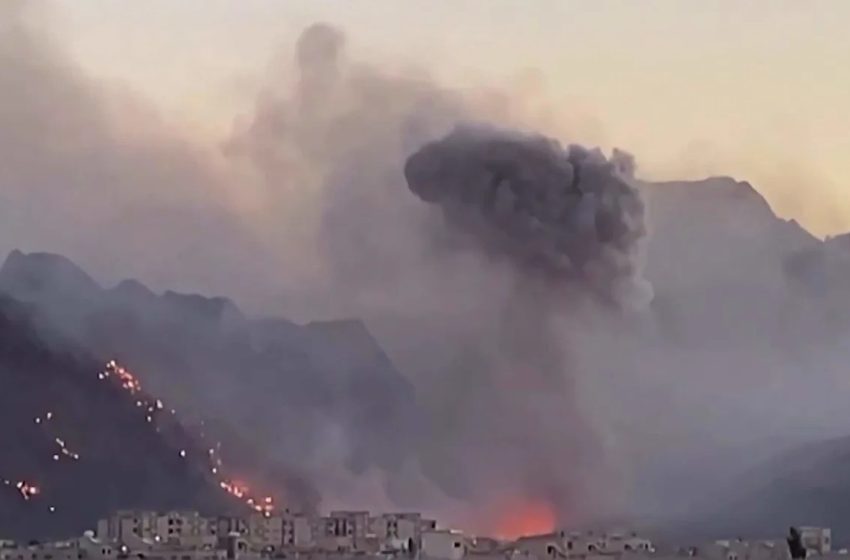
Iran ‘repairing missile bunkers within hours’
Iran is returning missile bunkers to operation within hours of them being struck by American and Israeli bombs, according to intelligence reports.
The reduction in Iranian drones and missile attacks since the war began has been cited by the White House as proof that it is eliminating Tehran’s ability to strike targets in the Gulf.
However, US intelligence reports published in The New York Times now say that Iran has retained a significant number of its missiles and mobile launchers and is repairing facilities damaged by air strikes quickly.
Analysts told The Telegraph earlier this week that a plateau in strike attempts suggested Iran was adapting and could be getting better at hiding launchers after firing them.
Israel is still being struck by Iranian missiles as intelligence reports say the Tehran regime is getting better at hiding launchers – Erik Marmor/Getty
American officials also said that the regime wished to retain as much of its missile launch capacity as possible, so it could continue to apply pressure if the war dragged on, or could threaten the region after it ended, The New York Times reported.
At a briefing earlier this week, the Pentagon said it had struck 11,000 targets in Iran within the first five weeks of war while, the Israel Defense Forces reported that three quarters of Iran’s missile launchers had been destroyed by March 7.
But the new reports cast doubt on how close the joint US-Israeli operation is to destroying Tehran’s missile capability, as missiles and drones launched by Iran’s Revolutionary Guard continue to strike targets in the Gulf.
Missile launches have plummeted since the war began, from hundreds in the first few days to fewer than 40 per day more recently, with about 20 being targeted at Israel daily. However, Iran is launching between 50 and 100 attack drones per day at targets in the wider Middle East.
The vast majority are intercepted by the US, Israel and Gulf state forces.
Experts have warned that after destroying large numbers of launchers, military chiefs will probably face “diminishing returns” when it comes to locating and eliminating the remaining systems.
Regime forces also have a geographical advantage when it comes to hiding launchers in the country.
Historically, Iran and state-linked news agencies have boasted of having “underground missile bases” known as the “missile cities”.
On Monday, Pete Hegseth, the US defence secretary, said: “Yes, they will still shoot some missiles, but we will shoot them down.”
He added: “They will go underground, but we will find them.”

Pete Hegseth, the US defence secretary, pledged to find Iran’s missile launchers even if they ‘go underground’ – Manuel Balce Ceneta/AP
Despite the US and Israel claiming to have air superiority over Iran, American special forces were forced to enter the country to rescue the pilot of an F-15E fighter jet. They were still searching on Saturday for the aircraft’s weapons officer, who has not been seen since the jet was shot down on Friday.
Iranian officials are offering rewards of about £50,000 to citizens who help capture the missing crewman, according to regime-linked reports.
Overnight on Saturday, debris from a drone fell on the office of a US tech firm in Dubai. The weapon was intercepted and only shrapnel hit the building, the United Arab Emirates said in a statement.
In a post shared on X, Dubai’s media office said: “Authorities confirm that they responded to a minor incident caused by debris from an aerial interception that fell on the facade of the Oracle building in Dubai Internet City. No injuries were reported.”
The Tehran regime has previously threatened to target American technology firms in the Middle East.
First Appeared on
Source link






