


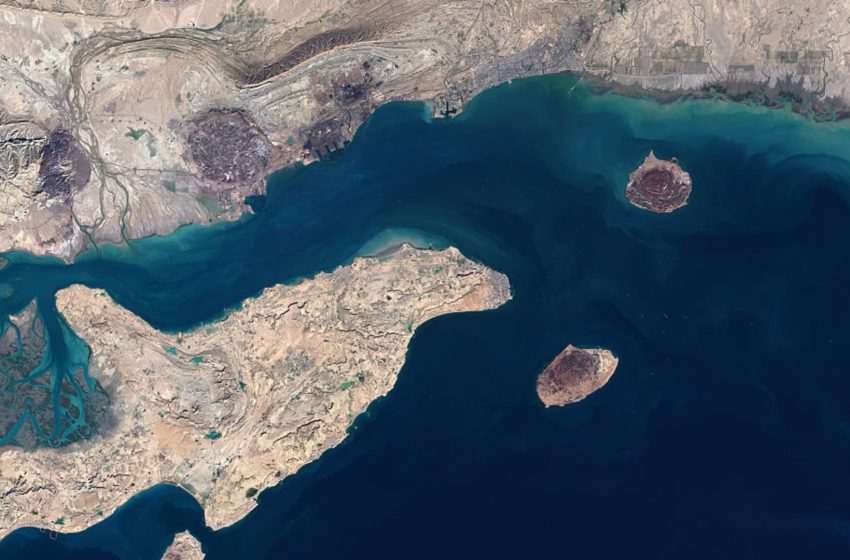
Iran turns Larak Island into oil checkpoint
While choking off most traffic through the Strait of Hormuz, Iran has quietly established a de facto safe-shipping corridor north of Larak Island, as Tehran seeks to monetize its grip on the world’s most important oil shipping artery. Traffic through the strait has fallen by 90% since the war began on Feb 28, with Iran targeting vessels attempting to transit the waterway, causing one of the world’s most devastating energy supply shocks in decades. Select vessels are being routed through Iranian territorial waters near Larak Island — off the coast of its Bandar Abbas port city — where the Islamic Revolutionary Guard Corps, or IRGC, and port authorities vet each ship before granting passage. “Iran’s IRGC has imposed a de facto ‘toll booth’ regime in the Strait of Hormuz,” said maritime research firm Lloyd’s List Intelligence. Nearly all transits recorded in the past three weeks have taken a detour through the narrow channel north of Larak Island, close to the Iranian coastline, signaling a “controlled, permission-based corridor with selective access,” said shipping intelligence firm Windward. All 57 transits logged since March 13 have taken the Larak detour, and almost none have followed the normal route, according to Lloyd’s. Ships were also observed queuing north of Larak Island, awaiting clearance, with multiple vessels being turned back in recent days, according to Windward. Iran is taking diligent steps to ensure only certain vessels are able to pass, prioritizing countries with friendlier relations or ships with links to their own trade. Senior risk and compliance analyst, Lloyd’s List Intelligence Bridget Diakun Iran’s parliament passed a bill on Tuesday to formalize toll collection on vessels transiting the strait — a measure that would institutionalize Tehran’s financial control over the chokepoint. The bill, which requires agreement from other countries bordering the strait, would impose fees on shipping, energy transit, and food supplies passing through the waterway. At least two vessels that have transited the strait paid a fee to the Iranian authority, with payment settled in Chinese yuan, according to Lloyd’s. One “transit was brokered by a Chinese maritime services company acting as an intermediary, which also handled the payment to Iranian authorities,” according to Lloyd’s , but the payment amount and method were not clear. “Iran is taking diligent steps to ensure only certain vessels are able to pass, prioritizing countries with friendlier relations or ships with links to their own trade,” said Bridget Diakun, senior risk and compliance analyst at Lloyd’s List Intelligence. As the conflict extended into its fifth week, Washington and Tehran have delivered conflicting messages on whether they are negotiating in earnest to bring the war to an end. Trump said Tuesday evening stateside that he expected the U.S. military forces to leave Iran in “two or three weeks” and appeared to be declaring victory . Iranian Foreign Minister Abbas Araghchi confirmed that messages had been exchanged with the U.S., but they did not constitute “negotiations.” How the ‘toll’ system works According to Lloyd’s List Intelligence, vessel operators first approach IRGC-linked intermediaries and submit detailed documentation, including the ship’s International Maritime Organization number, crew names, and final destination. The IRGC screens the information and, if approved, issues a clearance code and routing instructions. Once a vessel enters Iranian waters, IRGC commanders hail it over the marine radio channels to request the clearance code. If approved, an Iranian boat escorts the vessel through the territorial waters around Larak Island. Ships that fail the screening are turned away. Who is getting through — and how Identifying vessel ownership is complicated by the multiple layers through which ships are registered, such as flag state, registered owner, with crew members’ nationality and final destinations adding more opacity. But of the transits recorded, the majority involved Iranian, Greek and Chinese-linked vessels, with a handful of ships connected to Pakistan and India also making the crossing, according to Diakun. Several governments — including India, Pakistan, Iraq, Malaysia and China — have reportedly been in direct talks with Tehran to coordinate transits through the IRGC’s vetting system. Two ultra-large containerships linked to China’s state-owned Cosco Shipping completed the Larak route earlier this week after being initially refused. That marked the first confirmed crossing by a major Chinese container carrier since the war began, according to commodities intelligence provider Kpler. A spokesperson for China’s foreign ministry confirmed Tuesday that three Chinese ships recently transited the Strait of Hormuz, adding that the transits were done with “the facilitation and coordination of relevant sides.” “The Strait of Hormuz is an important route for international trade in goods and energy. China calls for an early ceasefire and a peaceful and stable Persian Gulf,” the spokesperson added. India has secured safe transits for Indian tankers without payment or prior permission, local media reported, citing a government official. New Delhi has hailed its direct talks with Iran as the most effective way to restart shipping through the Strait of Hormuz. Indian-flagged LPG tanker Pine Gas, which passed through the corridor last month, had received routing instructions from IRGC commanders to reroute to the Larak channel and was escorted by Indian warships during the transit, Reuters reported, citing Pine Gas Chief Officer Sohan Lal. It did not pay the transit fee, Lal said. Southeast Asian countries that have borne the brunt of the fuel supply shock, such as Malaysia and Thailand , have also reportedly secured assurances from Iran for the safe passage of their vessels following diplomatic intervention with Tehran. Does Iran have the right to charge toll? Iran’s assertion of control over an internationally recognized shipping lane runs afoul of the United Nations’ law of the sea treaty and is unlikely to draw support from neighboring countries, experts told CNBC. Under international law, Iran has no legal authority to impose blanket transit tolls on vessels passing through the Strait of Hormuz, said Shahla Ali, a professor of law at the University of Hong Kong. “While states can charge reasonable, non-discriminatory fees for specific services they actually provide within their territorial waters — such as pilotage or pollution response — these charges must be connected to services actually rendered,” Ali said. “Any unilateral parliamentary measure imposing a broad transit fee would therefore be inconsistent with established international maritime law and is likely to face strong diplomatic and legal challenges.” Comparisons of Hormuz Strait with the Suez and Panama canals lack merit. Both Suez and Panama that charge vessels transit fees are constructed, maintained, and operated by sovereign states rather than formed naturally — a legal distinction that offers their operators the right to levy tolls to cover construction, maintenance, and operations costs. The Panama Canal Authority charges fees based on the size and type of ships that are using the waterway and rates are uniform, impartial, and non-discriminatory , according to the European Parliamentary Research Service.
First Appeared on
Source link






