


Is the World Cup bump real? MLS is going to find out | World Cup 2026
In 1988, a full eight years before Major League Soccer debuted, it got its first “World Cup bump”.
Fifa had just awarded the 1994 World Cup to the United States, but there was a stipulation. The US could host the tournament, but only if there was a competitive club league in place by the time it rolled around, something that hadn’t been true since the North American Soccer League collapsed in 1985. Tournament organisers missed that 1994 deadline, but two years later, MLS became a reality. Thirty years on, it is still here.
MLS was in every way, shape and form a byproduct of that World Cup. Executives lured some of the tournament’s standout players to the league and ensured that many of its 10 teams were stocked with the US national team’s biggest names. It’s no exaggeration to suggest that MLS would not have been created without the tournament, and that it never would’ve survived without the initial excitement created by that World Cup.
That particular World Cup bump was transformative, and every four years since, minds all over the American soccer landscape have attempted to capitalize on that very same idea: that the coming World Cup, which drives millions of non-soccer fans and casual viewers to the game, will lead to a surge in interest in MLS.
With the tournament coming to the United States this summer for the first time in the league’s history, MLS executives and cheerleaders have taken a particular interest in maximizing the World Cup’s effect. Commissioner Don Garber has frequently suggested the tournament will be a major catalyst in the growth of his league and the game as a whole in the US.
“The next decade will redefine what’s possible for MLS and North American soccer,” Garber said in his “state of the league” address, this past December. “As the world turns towards North America, the 2026 World Cup will soon serve as rocket fuel for our entire ecosystem, and it will do so for MLS.”
If Garber’s take feels lacking in detail, that’s possibly by design. Though the commissioner has at times suggested that the idea of a World Cup bump is statistically proven – in one interview, he said research has found a 15-to-20% increase in domestic league interest off the World Cup – many studies have shown otherwise. Oftentimes, whatever marginal bump any given league has gotten off the back of any given tournament is impossible to divorce from other variables such as preexisting growth, planned expansion and increased investment.
It’s a question worth asking ahead of what’s been called the most pivotal moment in the history of American men’s soccer: is the World Cup bump even real?
Few are more familiar with the phenomenon of the World Cup bump than University of Michigan professor Stefan Szymanski, who co-authored Soccernomics with British journalist Simon Kuper. The 2009 book, which has become a bit of a bible in its field, seems to get reprinted every World Cup, receiving a far more defined bump than any particular league.
In 2020, Szymanskii published the result of his research on the effects of a major tournament on a country’s domestic league attendance, focusing on the World Cup and Euros from 1966 onwards. The research was exhaustive and detailed, and in the end did little to identify any conclusive truths surrounding the tournament’s effect.
“[The data] varied significantly,” Szymanski told the Guardian. “Generally speaking the league attendance in host countries was already on an upward trajectory around the time when the international championship was hosted, and then there were different narratives.
“There was a ‘step jump’ of sorts around the date of the event, which was true in various tournaments, and then an upward trend that was continuous across all seasons in other tournaments. Or one that starts around the time of the event. In several instances there was just a short-term spike.”
Other tournaments, such as the 2010 World Cup in South Africa and the 1984 Euros in France, had no effect whatsoever on league attendance. Some, such as the 2012 Euros in Poland and Ukraine and the 1990 World Cup in Italy, saw a decrease in post-tournament attendance.
“Generally speaking there is some observable trend which is not guaranteed, but possible in many cases,” said Szymanski. “And then the obvious question here is, what should we expect in the case of MLS?”
Garber and others are careful to frame a potential World Cup bump as being a boost in “relevance”, a nebulous metric open to interpretation. Focusing on attendance alone and leaving aside other factors, World Cups have generally proven positive for MLS. On average, attendance in the year after a World Cup has risen 9% throughout league history. In some cases, such as the 1998 and 2002 World Cups, the number remained more or less flat. In others it skyrocketed, as it did after the 2006 and 2010 World Cups.
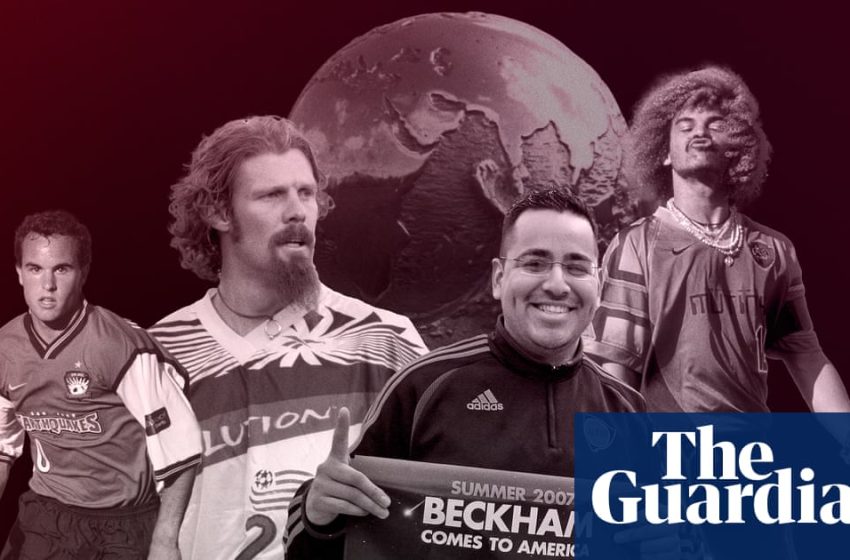
The issue with using total or even average attendance as a barometer for the bump is the ever-changing nature of MLS itself. 2007 was not just the year after a World Cup in MLS. It was the year David Beckham arrived and fundamentally changed the league, and the year Toronto FC, a well-supported expansion franchise, debuted. 2011 saw the addition of the Vancouver Whitecaps and Portland Timbers, two of the most historically well-supported teams.
Relevance feels much harder to measure than attendance, but league executives say they are focused on two specific metrics: brand interest and viewership, both in-person and via the league’s broadcast partners.
“We have a sense of what we believe – with zero marketing investment – what we think the World Cup would do for us along those two metrics,” MLS chief marketing officer Radhika Duggal told the Guardian. “You have a baseline, and then you say ‘I’m going to do these eight things – my campaign is made up of these eight things, and we believe they will take our two metrics, for which we have quantifiable goals, and take them from the baseline to twice the baseline or whatever it is.”
MLS last week rolled out its 2026 advertising campaign, a year-long effort that Duggal describes as being a “fully unified” approach across the league and its clubs. For the first time in the league’s history, Duggal said, most of MLS’s clubs are working with the league on specific marketing campaigns, and the league is supplementing those campaigns with in-market events before, during and after the World Cup. The league and its clubs are reportedly making an eight-figure investment into marketing efforts this year, the largest marketing spend in league history.
“What we want consumers to really understand about us is that we are fun. It is super simple and super clear. The secondary thing we want consumers to understand about us is that we are welcoming. Anyone is welcome to experience us. That’s it. Those are two really simple messages.”
“The one thing that we’re trying to do [with all of this],” added Duggal, “the calls to action we’re really focused on are ‘watch our matches’. It will be all about viewership and all about butts in seats at our stadiums, so that people can give us a try.”
Some 50 to 60 MLS players – Lionel Messi among them – will take part in the World Cup, which seems sure to give the league at least a short-term boost in brand awareness. It also feels certain enough that some fans, especially casuals, may turn to MLS after the World Cup ends in search of more soccer, whether they do so in person or on a screen.
“My feeling is that it’s going to be a bit of a mess,” says Szymanski. “In some ways they’re already more or less at capacity or close to capacity [in stadiums]. And the other thing is that they just don’t have a television audience to sort of build and maintain momentum. In some ways what MLS needs is not more people going to games. What they need is more people watching it on TV.”
MLS is in the fourth season of its $2.5bn media rights partnership with Apple TV, which airs all of the league’s matches. The league has tweaked its strategy with Apple this season, doing away with “MLS Season Pass”, the standalone subscription viewers needed to watch many MLS games on Apple TV. Despite this, nearly all of the league’s matches remain behind a paywall and are largely unavailable on linear television.
Times have changed, of course, and many consumers won’t even turn to traditional TV to begin with. Apple’s streaming platform is massive, with an estimated 45 million subscribers worldwide as of 2025, giving the league ample opportunity to expose its product to the uninitiated.
And while the quality of play in MLS has grown exponentially in the last decade or so, there will likely still be a large drop-off between what a viewer sees at the World Cup and what they’ll see when they tune in to watch Colorado Rapids v Houston Dynamo on a Wednesday night.
“That’s the big question,” says Szymanski. “Will this generate new television audiences? I doubt it because the quality of play is so low. If you had the World Cup in England now, with the Premier League, that’s comparable quality. If you had it in Spain or France or a lot of the other [more traditional footballing] countries, that would be true as well. It’s not necessarily true in a place like the United States.”
The history of American soccer is full of tentpole events leagues and decision-makers have identified as catalysts for explosive growth. And while MLS’s own history is dotted with significant events that pushed it along – the arrivals of Beckham or Messi, for example – its own trajectory towards stability and success has been much more tempered and gradual.
The language the league uses to talk about the World Cup has softened in recent weeks. In a conversation with Sports Business Journal this week, Garber seemed, for once, to forget the rocket fuel. Whether he intended to or not, his remarks seemed to temper some of the hyperbole league officials have employed for years now.
“I don’t think that the energy behind investing in this sport, at all levels, has been driven by the World Cup,” Garber said. “The World Cup gives us something to rally around and a great moment of truth, which will break through lots of different things going on in our country. But MLS would’ve continued to grow without the World Cup, and will continue to grow after the World Cup. We will continue our focus on player development, investing in facilities, growing a fanbase, ensuring that our teams are embedded in their community and that players view us as a league of choice.”
After the World Cup, league executives won’t have to look far to find the next big event they can circle. The 2028 Summer Olympics will be in Los Angeles, and the United States will co-host the women’s World Cup three years later.
Neither of those events feels like rocket fuel, so to speak, and in many ways the 2026 World Cup doesn’t either. MLS very badly needed its initial World Cup bump, which quite literally birthed it into existence. Three decades later, it could still use a boost in notoriety and quality.
This summer’s World Cup may help, but it feels increasingly unlikely it will fundamentally change the trajectory of the league in any truly significant way.
First Appeared on
Source link






