


Israel Is Quietly Annexing the West Bank
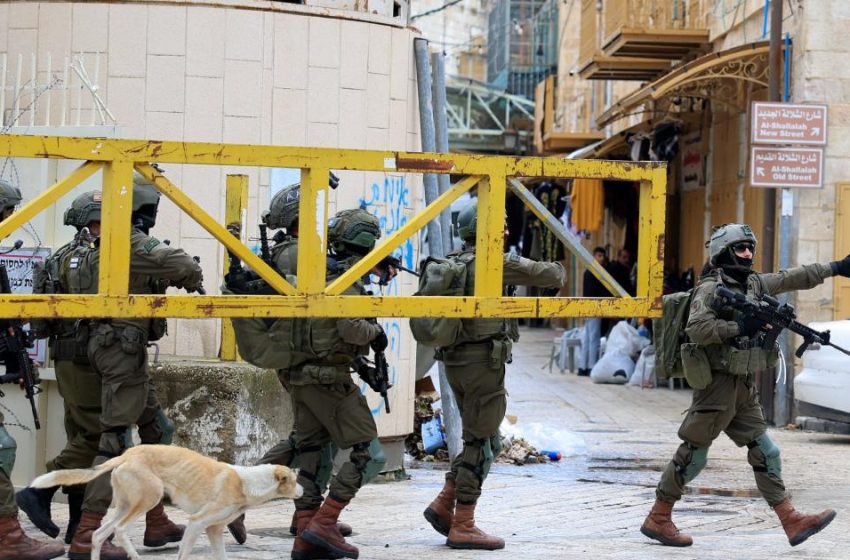
There is no shortage of volatility in the Middle East. In the wake of protests in Iran, Washington has threatened to strike; violence in Gaza continues despite a cease-fire; Hezbollah is rearming in Lebanon; and factional rivalries are destabilizing Syria. But the next front to explode may be one that policymakers keep treating as an afterthought—the West Bank. Since Hamas’s October 7, 2023, massacre and Israel’s subsequent military assault on Gaza, the Israeli government has mounted a de facto annexation drive, stepping up its military presence in the West Bank, exerting sustained pressure on the Palestinian Authority (PA) to weaken it, accelerating the approval of Jewish settlements, and retroactively legalizing illicit outposts. Acts of violence perpetrated by settlers have become a near-daily occurrence.
Then, on Sunday, Israeli Prime Minister Benjamin Netanyahu’s security cabinet approved an extraordinary set of measures that convert the ongoing de facto annexation of the West Bank into de jure policy. The move’s timing was especially brazen, coming just ahead of yesterday’s visit to the White House by Netanyahu. Israel will ease limits on land sales to settlers and assume the power to decide how land is used in areas A and B, which had officially been under PA rule. The goal, Israeli Finance Minister Bezalel Smotrich declared, is to “kill the idea of a Palestinian state.”
This move is only the latest development that has brought the West Bank to the brink of outright crisis. The PA could become functionally insolvent within months, ending the provision of basic services to millions of Palestinians and aborting a security-cooperation effort with Israel that, until now, has prevented widespread unrest. Ramadan begins next week, an event that historically inflames tensions around the al-Aqsa compound in East Jerusalem—known to Muslims as Haram al-Sharif and to Jews as the Temple Mount. Shifts in Israeli policing that weaken restraints on provocative behavior, paired with the absence of effective external mediation channels to help de-escalate tensions, creates a real risk that sacred‑site incidents could spark wider unrest.
The fact that these flash points exist is no accident. It is an Israeli strategy. Influential Israeli government ministers have long argued that the West Bank must be folded into Israel’s political and administrative orbit. A 2017 manifesto penned by Smotrich called the “Decisive Plan” laid out the road map: Israel should create irreversible facts on the ground that will foreclose any possibility of Palestinian statehood and force Palestinians to accept permanently subordinate status or leave the West Bank.
Since October 7, Smotrich and other right-wing Israeli leaders have exploited the fog of war to turn this vision into policy. Although Netanyahu’s position is more ambiguous—he has repeatedly insisted that Israel does not want to assume full governance over the Palestinian territories—his political survival depends on nationalist‑religious voters, limiting his ability and incentive to rein in leaders who want annexation. Many Israeli moderates and international actors cling to the comforting assumption that an upcoming Israeli election later this year can reset the country’s approach to the West Bank. But depending on such a reset is much too risky. Many of the past two years’ changes are irreversible, especially as the Israeli opposition presented no clear alternative to the annexationists’ vision.
If the annexationists’ momentum is not checked very soon, their cumulative acts will increase the odds of renewed unrest, necessitate sustained Israel Defense Forces (IDF) mobilizations, deepen Israel’s diplomatic isolation, and force Israel to shoulder the burdens of civil governance in the West Bank, no matter how much Netanyahu claims he wants otherwise. It would also fatally undermine implementation of U.S. President Donald Trump’s 20‑point peace plan for Gaza, which depends on a reformed PA returning to govern that territory. Already, conditions on the ground are rendering the stabilization of the territory impossible—and creating the conditions for it to become an irrevocably permanent insurgency zone.
BREAKING THE BANK
Israel’s security establishment operates in the West Bank according to a set of uneasy but functional principles: prevent Hamas from taking over, contain violence through intelligence, and rely on the PA’s security forces as a partner (however flawed those forces may be) to keep a large‑scale, coordinated insurgency from taking hold. For years before October 7, the number of Israeli troops and the tempo of IDF operations in the West Bank had remained relatively steady. After October 7, the IDF declared war on Hamas everywhere, amping up its West Bank raids and expanding checkpoints and temporary closures across the territory, including in refugee camps. These operations drove mass displacements, but they also initially disrupted militant networks and prevented terror attacks—in large part thanks to increased security coordination between the IDF and the PA. According to the IDF, in 2023 there were 397 “significant” terror attacks in Israel and the West Bank, while in 2024 that number dropped to 255 and in 2025, to 54. That is no minor accomplishment, since forestalling acts of terror is a central pillar of Israel’s domestic security.
Yet parts of the Israeli government are working to undo these security gains by destabilizing the West Bank and weakening the very institution—the PA—that has helped prevent a sustained uprising. At the vanguard of the effort to alter the West Bank is Israel’s settlement movement, which has shaped Israeli government policy by marshaling a disciplined voting bloc, lobbying key ministers, and getting its members appointed to key bureaucratic posts—an effort that reached an apex with Smotrich’s 2022 appointment as both finance minister and an adjunct minister within Israel’s defense department, where he is responsible for many aspects of West Bank planning. Armed with more leverage and benefiting from a fractured and demoralized opposition, the movement has taken advantage of Israelis’ nervousness and the distraction of Gaza to reconfigure the status quo in the West Bank with a breathtakingly ambitious program of spatial engineering.
According to Tamrur Politography—a research institution that gathers data on Israeli control in Palestinian territories—this Israeli government has presided over an explosion in the expansion of settlements in the West Bank since 2023. In 2025 alone, it issued nearly twice as many approvals for housing units as it did during 2019 and 2020. The recent burst far exceeds the prior decade’s typical multiyear totals and signals a clear acceleration in both new settlement approvals and the retroactive legalization of illicit outposts.
The settler movement has taken advantage of Israelis’ nervousness.
These moves do not only increase the number of Israelis living in the West Bank. They are also weakening the PA day by day and radically transforming the territory. The Israeli government has begun generating strategic corridors of control by expanding the boundaries of municipal jurisdictions, creating bypass roads, and linking infrastructure between settlements, making it far harder for Palestinian security forces and political leaders to exert authority in the short term and dismantling any long-term chance that a territorially contiguous Palestinian state could be established.
Few examples of this process are as clear as the effort to connect East Jerusalem to the existing large settlement of Maale Adumim, 4.5 miles to the east, by building thousands of housing units as well as tourism and industrial infrastructure. Previous prime ministers, under international pressure, refrained from substantially pushing the development project—first proposed in the late 1960s and now known as “E1”—recognizing that it would effectively sever the West Bank and foreclose any chance that Palestinians could exert authority over a territorially contiguous area there. Over the past year, however, the government fast-tracked E1; in August, Smotrich formally approved the construction of 3,400 homes in the corridor, bragging outright that “the Palestinian state is being erased from the table not with slogans but with actions. Every settlement, every neighborhood, every housing unit is another nail in the coffin” for the two-state solution.
E1 is not an exception. It is a blueprint. A similar logic underpins new construction projects and zoning plans around Gush Etzion, Ariel, and Maale Adumim: they serve to fortify blocs of Israeli control and fragment Palestinian lands. Meanwhile, smaller outposts are proliferating throughout the West Bank. Some appear to be grazing sites, but they serve an unmistakable political function by seizing territory and making Palestinian authority over meaningfully sized areas an impossibility.
The Israeli government has even shifted its language to confer legitimacy on outposts that used to be widely understood as illegal. It is increasingly promoting the necessity of creating “security farms,” a rebranding exercise that turns unauthorized outposts into purportedly strategic assets. Just last week, speaking by video link at a “conference of appreciation” for illegal farming outposts attended by Smotrich and Settlements Minister Orit Strook, Defense Minister Israel Katz announced that he would legalize around 140 unauthorized farming outposts in the West Bank; he lauded the illegal settlers as “the pioneers of our days,” “weakening the Palestinians’ efforts to establish themselves in the region.” Netanyahu himself has recently signaled his support for the formal recognition of these sites. This kind of territorial capture may be less dramatic than annexation, but it is no less effective.
PERMISSION SLIP
Palestinians also face a sharp rise in violence directly perpetrated by Israeli settlers—a kind of violence the Israeli government tacitly approves. In 2024 and 2025, settlers committed an unprecedented number of arson attacks, acts of vandalism, and physical assaults. According to statistics released last month by the IDF and the Shin Bet, Israel’s internal security agency, settler attacks against Palestinians and Israeli security forces in the West Bank rose by 27 percent between 2024 and 2025. The number of severe incidents classified as terrorism rose by over 50 percent, most of which were concentrated in hot spots such as Nablus, Hebron, and the Ramallah regions.
But the most consequential feature of these attacks is not their frequency. It is, rather, the Israeli government’s permission of them. Enforcement of laws banning settler violence has been inconsistent and often absent. Investigations are often minimal or never pursued at all. Prosecutions are rare, and conviction rates languish in the single digits. The IDF does not believe that its job is to detain Jewish extremists, and the police—controlled by the right-wing provocateur turned minister of national security Itamar Ben-Gvir—turn a blind eye. Last month, for the first time in Israel’s history, the Israeli defense establishment reported more Jewish acts of terror against Palestinians in the West Bank than Palestinian acts of terror against Jews there and inside Israel proper.
Decisions made at the highest level of Israel’s government have empowered these perpetrators. In November 2024, Katz announced that his office would stop using administrative detention, a preventive measure that allows detention without charge often used for Palestinians, against Jewish settlers—signaling the government’s acceptance of settler violence at precisely the moment Israel needed to signal more deterrence. In a late December interview with Fox News, Netanyahu claimed that the international press had pursued “bloated” coverage of the phenomenon of settler violence and chalked it up to the misbehavior of “about 70 kids” who came from “broken homes” outside the West Bank. Netanyahu never clarified the source of his data, but his implication that most settlers do not support such violence is wrong: in a June 2025 survey of settlers conducted by Reichman University, about half of respondents agreed that “currently, violent resistance by Jews against Palestinians might be justified” and only slightly over a third thought such violence should be punished.
HOSTILE TAKEOVER
For all his political opportunism, Netanyahu has historically avoided pushing the PA to total collapse. He understands that whatever short-term ideological satisfactions such a move would deliver, its long-term costs would be unbearable. Without the PA, Israel would have to assume the responsibility for providing civil services—salaries, health, education, policing—for millions of Palestinians.
But as he prioritizes his political survival, Netanyahu is no longer in full control of the West Bank brief; Smotrich and his partners are managing it. They have deliberately sought to stifle the territory’s economy and undermine the PA’s ability to operate effectively, slowing their approvals of Palestinian construction projects and restricting Palestinians’ ability to earn a living in Israel. And since May 2025, the Israeli government has stopped transferring customs and tax revenue to the PA; some—but not all—of these transfers are legally restricted due to the PA’s practice of making so-called martyr payments to prisoners, militants, and their families.
The PA can now pay only partial salaries to its 150,000 employees and many more pensioners and contractors. Schools have moved to four-day weeks, limiting parents’ ability to work. The provision of health care and the clearing of trash have been reduced, eroding the standard of living.
Israel’s executive branch has been leading the annexationist effort, but the Israeli parliament has assisted the attempt to strangle the West Bank, making it far more difficult to reverse. Over the past two years, the Knesset has pursued legislation that systematically tightens Israel’s fiscal, economic, and legal control over the West Bank and directly weakens the PA. In addition, lawmakers have recently advanced proposals to allow Israeli victims to bring retroactive civil suits against the PA for past terror attacks—which, if enacted, would strain the PA past its breaking point.
TURN THE SHIP
The PA is deeply flawed and very brittle. Years of corruption, governance failures, and an inability to negotiate statehood with Israel have eroded its credibility among Palestinians. But Israel needs a better functioning PA, not a more fragile one. So does Trump: his 20-point Gaza peace plan stipulates that a reformed PA will eventually retake authority over Gaza. The peace process cannot survive if the Palestinians do not have legitimate, competent, and stable political representation, which at present depends on the PA’s institutions, if not its current leadership. And the Arab and European donors who are supposed to take responsibility for Gaza’s reconstruction have demanded a path toward a two-state solution—a path that runs only through the PA. There is currently no credible alternative with legal legitimacy and operational capacity. Torching the PA in the West Bank undermines Gaza’s recovery before it can even begin.
This is why steps must be taken immediately to halt Israel’s devastating approach to the West Bank. Avoiding an explosion in the West Bank does not require solving the entire Israeli-Palestinian conflict. It requires taking immediate steps to prevent the deliberate destruction of Palestinian institutions.
The only actor the Israeli government cannot refuse is Trump. Israel’s Arab partners, primarily the United Arab Emirates, also have leverage. Together, Washington and Israel’s Arab partners, especially the UAE and Morocco, must pressure Israel to impose strict limits on Ramadan-related provocations and help coordinate Ramadan security with Jordan.
The peace process in Gaza cannot survive the PA’s collapse.
If Washington wants to prevent the opening of another Middle East front while it stands on the verge of a confrontation with Iran, it also needs to do much more to ensure that Israel does not destroy the PA. This means working with Israel to restore revenue transfers, asking Israel to stop proceeding with anti-PA legislation, and demanding that Israel enforce its own laws against violent settlers. These concrete measures would remove the most immediate threats to the PA’s existence.
Then, the PA must do its part by undertaking reforms fast and visibly. The PA has already begun to increase transparency in its governance and finances—publishing budgetary outlines, engaging with international financial institutions, and promising audits of contested programs. It has signaled a willingness to tighten its “martyr payments” and moved to review its primary school curricula to meet international norms. And PA President Mahmoud Abbas has announced that on November 1, for the first time ever, the Palestinian Liberation Organization—the umbrella body representing Palestinians worldwide—will hold an election for its legislative council, an important step toward regenerating credibility. But the PA must accelerate and institutionalize these reforms by implementing full public reporting and external audits of contentious payment programs, undertaking comprehensive anticorruption initiatives and procurement transparency, ensuring the professionalism of its security forces, making voting credible, and improving basic service delivery at the municipal level.
European-led efforts to reform the PA have emphasized increasing the organization’s institutional capacity and promoting good governance, and rightly so. But they rely on process-heavy frameworks. Washington and its Arab partners should instead lead the charge with a clear, simple reform package—agreed on by key stakeholders, including Israel—and backed with real incentives.
THE ELEVENTH HOUR
In fact, Trump’s plan for Gaza offers a chance to stabilize the West Bank economically. There is a historic opportunity to amend the 30-year-old, outdated Paris Protocol, the agreement that gives Israel control over the collection and transfer of Palestinian tax revenues, which stunts the Palestinian economy’s independence by tying it to Israel’s trade policies and higher cost of living and has little relevance in today’s digitized world. And the “Board of Peace,” the new body Trump has established to reconstruct Gaza, could make the West Bank a central logistics hub for producing and assembling humanitarian supplies and, later on, infrastructure. There is no strategic reason Gaza’s reconstruction should enrich outsiders while leaving Palestinians, including those in the West Bank, economically stagnant.
Taking these immediate steps will not amount to defending an unsustainable status quo in the West Bank. Just the opposite: they have to be taken to salvage options down the line. The Israeli government is moving fast to foreclose options—much faster than an election can slow. Last month, the Israeli government put out a bid for construction tenders for thousands of houses in the E1 corridor that would split the West Bank in two. And although the measures approved on February 8 were presented as administrative necessities, they vastly increase Israeli authority over the West Bank, most notably by undercutting essential aspects of PA civilian control, including the management of Rachel’s Tomb in Bethlehem and the Hebron site known to Jews as the Cave of the Patriarchs and to Muslims as the Ibrahimi Mosque—places that are holy to Jews, Muslims, and Christians.
Israel’s far right seems to believe that destroying Palestinian governance will afford Israel more strength. On the contrary—it is a mistake that will become expensive, bloody, and self-destructive as it accelerates the cycles of resentment and violence. And Washington, too, stands to lose a great deal by turning a blind eye to the West Bank: the PA’s collapse will remove any plausible path toward the kind of regional stabilization and effective postwar settlement on which the Trump administration has staked much of its foreign policy legacy.
Loading…
First Appeared on
Source link






